
HDPE Geomembrane sheet for Construction and foundations
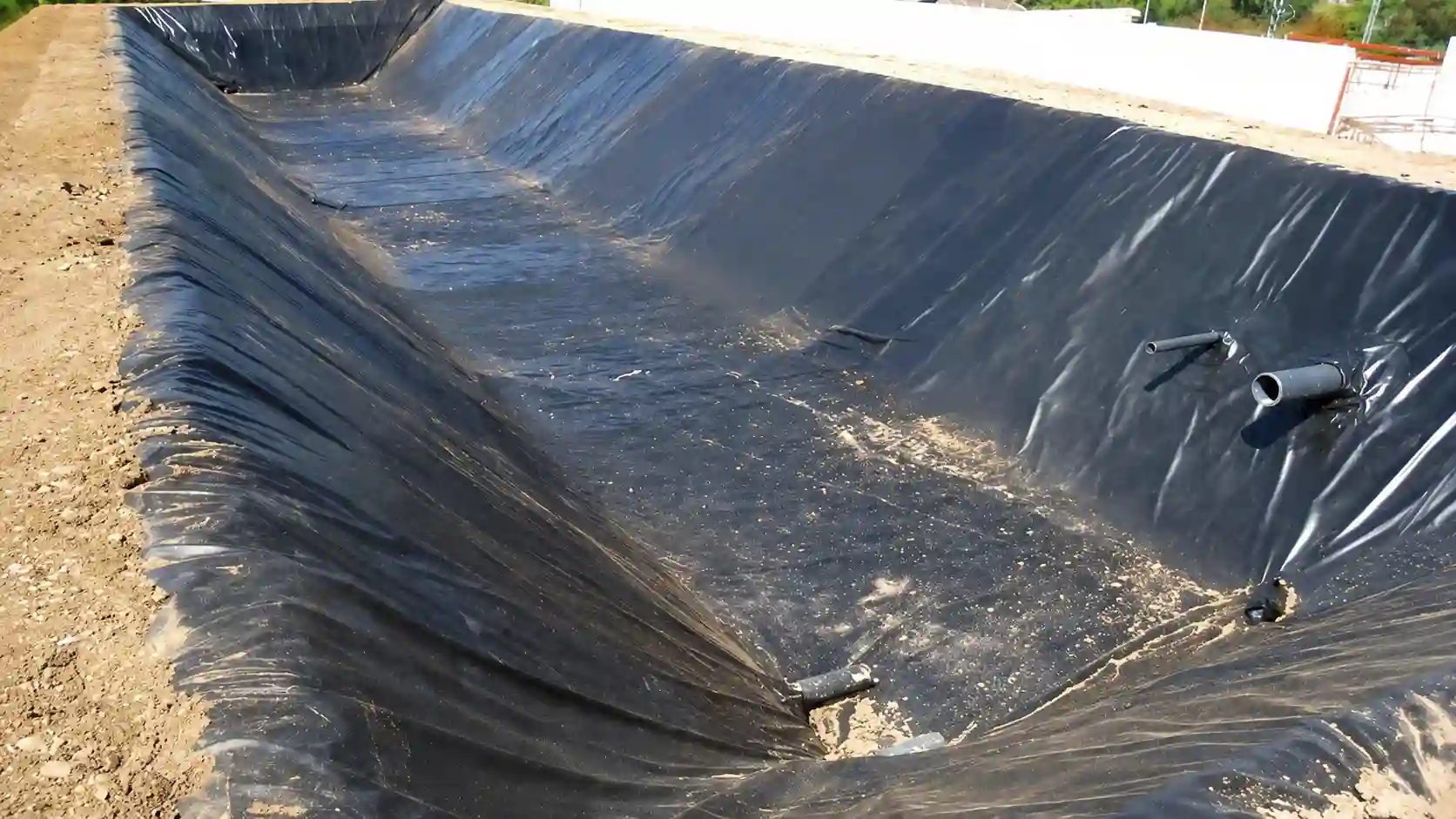
Water infiltration, groundwater pressure, soil moisture, and chemical exposure can significantly affect the durability of buildings and civil engineering structures. For this reason, an effective waterproofing and containment system is essential, particularly for underground construction. HDPE geomembrane sheet has become a practical solution for protecting foundations and other structural elements against water, moisture, chemicals, and aggressive soil conditions.
Made from high-density polyethylene, HDPE geomembrane sheet provides a durable, low-permeability barrier that can be installed beneath or around foundations, basements, retaining structures, tunnels, and other below-ground construction. Its combination of high tensile strength, chemical resistance, flexibility, and long service life makes it suitable for demanding construction environments.
This article explains the applications, advantages, installation methods, and important considerations when using HDPE geomembrane sheet for construction and foundations.
What Is HDPE Geomembrane Sheet?
An HDPE geomembrane sheet is a synthetic membrane manufactured primarily from high-density polyethylene resin. The material is formulated to create a strong and highly impermeable barrier capable of preventing the movement of liquids through protected surfaces.
HDPE geomembranes are manufactured in different thicknesses and configurations depending on project requirements. They are commonly supplied in large rolls that can be deployed over prepared surfaces and welded together on site.
Unlike conventional waterproofing coatings, HDPE geomembrane sheet creates a continuous physical barrier. Properly welded seams help form an integrated waterproofing system over large areas.
HDPE geomembranes are widely used in:
Building foundations
Basement waterproofing
Underground structures
Retaining walls
Tunnels
Raft foundations
Infrastructure projects
Water containment structures
Industrial construction
Soil and groundwater protection
Their versatility allows them to function as both waterproofing and containment materials.
Why Use HDPE Geomembrane Sheet for Foundations?
Foundations are continuously exposed to the surrounding soil. Depending on site conditions, this soil may contain moisture, groundwater, salts, chemicals, or other substances capable of affecting concrete and structural components.
Installing an HDPE geomembrane sheet provides an additional protective barrier between the structure and surrounding environment.
The membrane can help prevent groundwater and soil moisture from reaching the foundation while also reducing contact between structural materials and potentially aggressive substances in the soil.
This protection is particularly important for projects constructed in locations with high groundwater levels, aggressive soil conditions, underground construction, or demanding waterproofing requirements.
HDPE Geomembrane Sheet for Foundation Waterproofing
Waterproofing is one of the primary applications of HDPE geomembrane sheet in construction.
Concrete is strong and durable, but it is not completely impermeable. Water may penetrate through pores, construction joints, cracks, or imperfections. Over time, uncontrolled water penetration can contribute to deterioration and create moisture problems inside underground spaces.
An HDPE geomembrane sheet installed beneath or around the foundation acts as a low-permeability waterproofing layer.
Depending on the design, the membrane may be installed beneath a concrete raft, along foundation walls, or as part of a complete below-grade waterproofing system.
When sheets are correctly welded and detailed around penetrations, joints, and corners, they can create a continuous barrier around the protected structure.
Protection Against Groundwater
Groundwater can create significant challenges for underground construction.
In areas with a high water table, foundations and basement walls may experience continuous exposure to groundwater. Hydrostatic pressure can force water toward cracks, joints, and other vulnerable areas of the structure.
Using HDPE geomembrane sheet for foundation waterproofing helps isolate the structure from groundwater.
The membrane provides a physical barrier between the soil and foundation. When integrated with appropriate drainage and structural waterproofing systems, it can significantly improve protection against groundwater infiltration.
HDPE Geomembrane Sheet Beneath Raft Foundations
Raft foundations are frequently used for large buildings and structures where loads must be distributed across a broad area.
Waterproofing beneath these foundations can be challenging because access becomes impossible once the concrete structure has been completed.
Installing an HDPE geomembrane sheet beneath a raft foundation before concrete placement provides permanent protection below the structure.
A typical system may include:
Prepared subgrade → protective geotextile or specified substrate → HDPE geomembrane sheet → protection layer → reinforced concrete foundation.
The exact configuration depends on structural design, site conditions, groundwater levels, and engineering specifications.
Because the membrane is installed before the foundation is constructed, careful inspection of seams and penetrations is particularly important.
HDPE Geomembrane Sheet for Basement Waterproofing
Basements are among the most vulnerable areas of a building when it comes to groundwater and moisture infiltration.
A properly designed HDPE geomembrane sheet waterproofing system can be installed around basement floors and external walls to create a continuous barrier against surrounding soil moisture.
For basement applications, the membrane can be used beneath the basement slab and externally along basement walls.
This approach is especially beneficial for underground parking areas, commercial basements, storage areas, mechanical rooms, and other spaces where moisture control is important.
Application on Retaining Walls
Retaining walls remain in direct contact with soil for long periods. Water accumulating behind these walls can increase hydrostatic pressure and potentially contribute to structural and waterproofing problems.
An HDPE geomembrane sheet can be installed on the soil-facing side of the retaining wall to reduce direct water contact with the structure.
It may be combined with drainage boards, geotextiles, drainage pipes, or other systems designed to remove accumulated water.
The geomembrane provides waterproofing, while the drainage system reduces water pressure behind the wall. Together, these systems can improve long-term performance.
Key Advantages of HDPE Geomembrane Sheet in Construction
Excellent Waterproofing Performance
One of the primary advantages of HDPE geomembrane sheet is its very low permeability. This characteristic makes the material suitable for applications requiring reliable separation between water and structural elements.
High Chemical Resistance
Soil and groundwater can contain salts, acids, alkalis, hydrocarbons, and various contaminants depending on the project location.
HDPE offers resistance to a broad range of chemicals, making HDPE geomembrane sheet particularly valuable for industrial construction and projects built on potentially aggressive ground.
High Tensile Strength
Construction materials used underground may experience considerable stresses during installation and service.
HDPE geomembranes provide good tensile strength and mechanical performance, allowing them to withstand demanding site conditions when properly specified and protected.
Long Service Life
Foundation waterproofing should ideally last as long as the structure because repairing underground waterproofing after construction can be difficult and expensive.
A correctly designed and installed HDPE geomembrane sheet system can provide long-term performance in buried applications.
Large-Area Installation
HDPE geomembranes are supplied in relatively large rolls, allowing substantial areas to be covered efficiently.
Fewer individual sections can also mean fewer seams, which can simplify quality control when compared with systems involving numerous small waterproofing pieces.
Weldable Seams
HDPE sheets can be joined using specialized thermal welding equipment.
Heat welding creates strong seams between adjacent sheets and enables contractors to construct a continuous membrane system across large areas.
This is one of the major reasons HDPE geomembrane sheet is widely used in large-scale civil engineering and construction projects.
Installation of HDPE Geomembrane Sheet
Proper installation is essential for achieving reliable waterproofing performance.
1. Surface Preparation
The installation surface should be stable, smooth, and free from sharp objects that could damage the membrane.
Stones, construction debris, metal pieces, and other potentially damaging materials should be removed before installation.
2. Sheet Deployment
The HDPE geomembrane sheet rolls are deployed according to the approved installation layout.
The installer should minimize unnecessary wrinkles and ensure sufficient overlap between adjacent panels for welding.
3. Seam Welding
Adjacent sheets are joined using appropriate thermal welding equipment.
Depending on project requirements, hot-wedge welding or extrusion welding may be used. Main field seams are commonly produced using hot-wedge welding, while extrusion welding is frequently used for details, repairs, penetrations, and difficult areas.
4. Seam Testing
Weld quality is critical.
Depending on the welding method and project specification, seams can be checked using suitable non-destructive testing procedures. Quality assurance procedures help identify defects before the membrane becomes inaccessible.
5. Protection of the Membrane
After installation, the HDPE geomembrane sheet should be protected from puncture or mechanical damage caused by reinforcement work, concrete placement, backfilling, equipment, or construction traffic.
Protective geotextiles, boards, screeds, or other specified protection layers may be installed depending on the application.
Choosing the Right HDPE Geomembrane Thickness
HDPE geomembrane sheet is available in different thicknesses. Selection should be based on engineering requirements rather than simply choosing the thickest or cheapest material.
Important considerations include:
Ground conditions
Groundwater pressure
Type of structure
Expected mechanical loads
Installation conditions
Chemical exposure
Subgrade quality
Required design life
Applicable project standards
Thicker membranes generally provide increased mechanical robustness, but appropriate selection should always follow project specifications and engineering design.
HDPE Geomembrane Sheet vs. Traditional Waterproofing
Traditional foundation waterproofing may involve liquid coatings, bituminous systems, cementitious materials, or sheet membranes.
Each system has appropriate applications. However, HDPE geomembrane sheet offers several advantages where a durable, highly impermeable, and chemically resistant barrier is required.
Because the material is supplied in sheets and thermally welded, the waterproofing layer can be inspected before being covered.
HDPE geomembranes are particularly attractive for large underground structures and civil engineering projects where waterproofing must cover extensive areas.
Importance of Professional Installation
The performance of an HDPE geomembrane sheet depends not only on material quality but also on installation quality.
Even high-quality membrane can fail if seams are improperly welded, the substrate contains sharp objects, penetrations are incorrectly detailed, or the membrane is damaged during subsequent construction activities.
For this reason, trained installers and appropriate quality-control procedures should be used.
Special attention should be given to:
Corners
Pipe penetrations
Construction joints
Terminations
Drainage connections
Foundation edges
Membrane transitions
These areas typically require more detailed workmanship than large flat sections.
Applications in Large Construction Projects
The use of HDPE geomembrane sheet for construction is not limited to conventional residential foundations.
It can be incorporated into waterproofing and containment systems for:
High-rise building foundations
Underground parking structures
Metro and railway infrastructure
Tunnels
Industrial plants
Warehouses
Commercial complexes
Water treatment facilities
Power plants
Infrastructure developments
Its mechanical strength and chemical resistance make it particularly suitable for demanding civil and industrial environments.
HDPE Geomembrane Sheet for Harsh Ground Conditions
Some construction sites contain aggressive soils, saline groundwater, contaminated ground, or other conditions that require more than conventional moisture protection.
An HDPE geomembrane sheet can provide both waterproofing and separation between the building structure and surrounding soil.
This characteristic can be especially important in industrial zones, coastal environments, waste-management facilities, and sites where soil contamination has been identified.
However, compatibility with specific contaminants should always be evaluated as part of the engineering design.
Quality Considerations When Selecting HDPE Geomembrane Sheet
Not all geomembranes provide identical performance.
Before purchasing HDPE geomembrane sheet, project engineers and contractors should evaluate important technical properties such as:
Thickness
Density
Tensile strength
Elongation
Tear resistance
Puncture resistance
Carbon black content
Carbon black dispersion
Oxidative induction time
Dimensional stability
Chemical resistance
Material selection should be based on the relevant technical datasheet, applicable standards, project specifications, and expected service conditions.
Conclusion
HDPE geomembrane sheet provides an effective solution for waterproofing and protecting construction foundations, basements, retaining walls, raft foundations, and other underground structures.
Its low permeability, high tensile strength, chemical resistance, weldable seams, and long-term durability make it suitable for both conventional building projects and demanding civil engineering applications.
When correctly designed and professionally installed, HDPE geomembrane sheet for construction and foundations can create a continuous protective barrier between the structure and surrounding soil or groundwater. This helps reduce water infiltration, protects structural elements from aggressive ground conditions, and supports the long-term durability of the construction.
For projects where dependable below-ground waterproofing and containment are essential, selecting the correct HDPE geomembrane sheet, appropriate thickness, protection system, and installation method is critical to achieving reliable long-term performance.
Common thicknesses include 0.5 mm, 0.75 mm, 1.0 mm, 1.5 mm, 2.0 mm, and 2.5 mm, depending on project requirements.
Yes. HDPE has excellent resistance to many acids, alkalis, salts, and other chemicals, making it suitable for industrial, mining, and waste-containment projects.
Sheets are normally laid over a prepared surface and joined using hot-wedge welding or extrusion welding to create watertight seams.