

Bitumen 60/70 Supplier – Best UAE & Turkey Source in Drum & Jumbo Bag
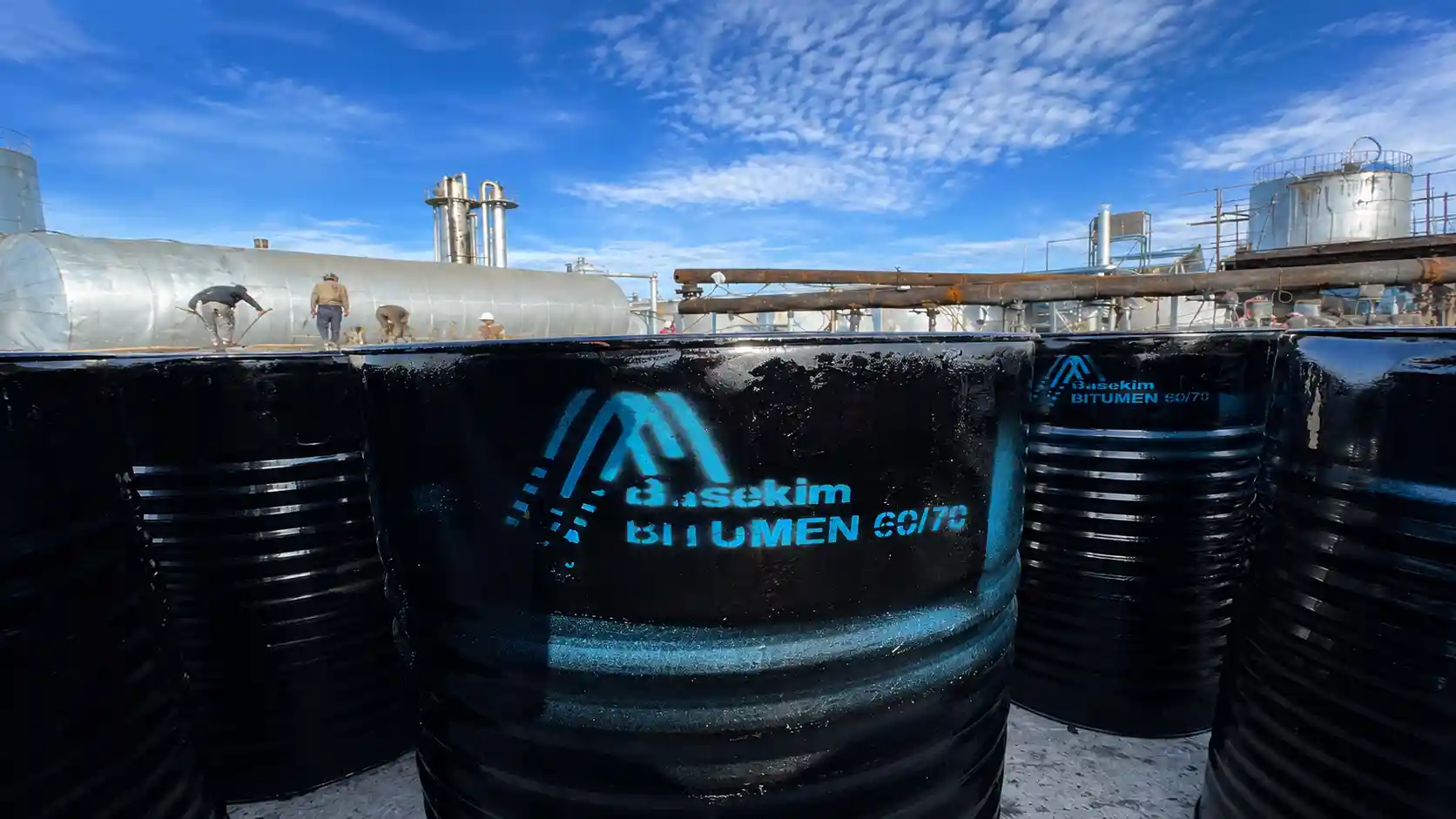
Bitumen 60/70 is one of the most popular penetration-grade bitumen products used in road construction and civil engineering projects. It is produced by refining crude oil and is mainly used as a binder in asphalt mixtures. This grade offers an excellent balance between hardness and flexibility, making it suitable for highways, city roads, airports, industrial areas, and many waterproofing applications.
The name Bitumen 60/70 comes from its penetration value, which ranges from 60 to 70 dmm (0.1 mm). This value shows how hard or soft the bitumen is under standard laboratory conditions. Compared with softer grades, Bitumen 60/70 provides better resistance to rutting and deformation under heavy traffic and high temperatures.
Because of its excellent adhesion, waterproof properties, and durability, Bitumen 60/70 has become one of the most commonly traded bitumen grades worldwide. Governments, contractors, and asphalt manufacturers use it for projects that require long service life and reliable performance.
Why Bitumen 60/70 is Popular
Many countries choose Bitumen 60/70 because it performs well in different weather conditions and traffic loads. It creates strong bonds between aggregates, reducing pavement cracking and improving road life.
Some of its main advantages include:
- Strong adhesion to aggregates
- Excellent waterproof properties
- Good flexibility
- High durability
- Long pavement life
- Easy mixing with asphalt
- Suitable for heavy traffic roads
- Widely available worldwide
- Cost-effective for infrastructure projects
These advantages make Bitumen 60/70 one of the preferred materials for both public and private construction projects.
How Bitumen 60/70 is Produced
Bitumen 60/70 is produced during the final stage of crude oil refining.
After lighter petroleum products such as gasoline, diesel, and kerosene are removed through atmospheric and vacuum distillation, the remaining heavy residue becomes the raw material for bitumen production.
The quality of Bitumen 60/70 depends greatly on:
- Crude oil quality
- Refining technology
- Production temperature
- Raw material selection
- Storage conditions
- Quality control procedures
Modern refineries use advanced production systems to maintain stable penetration, viscosity, and softening point.
Bitumen 60/70 vs Bitumen 80/100
Many buyers ask about the difference between Bitumen 60/70 and Bitumen 80/100. Although both grades are used for road construction, they perform differently.
| Property | Bitumen 60/70 | Bitumen 80/100 |
|---|---|---|
| Penetration | 60–70 dmm | 80–100 dmm |
| Softening Point | 48–52°C | 42–48°C |
| Hardness | Harder | Softer |
| Climate | Warm regions | Cold regions |
| Traffic | Heavy traffic | Medium traffic |
Bitumen 60/70 is harder than Bitumen 80/100. Because of this, it performs better in hot climates where roads are exposed to high temperatures.
Bitumen 80/100 is softer and provides greater flexibility. It is commonly used in colder regions where pavement movement caused by freezing temperatures is more likely.
Choosing the correct grade depends on:
- Local climate
- Traffic volume
- Pavement design
- Government specifications
- Engineering requirements
Main Uses of Bitumen 60/70
Bitumen 60/70 has many applications in the construction industry.
Road Construction
Road construction is the largest application of Bitumen 60/70.
It binds aggregates together to produce strong asphalt pavements capable of supporting heavy traffic for many years.
Road engineers use Bitumen 60/70 for:
- Highways
- Expressways
- Urban roads
- Rural roads
- Industrial roads
- Airport runways
- Taxiways
- Bus terminals
Its strong adhesive properties reduce pavement damage and improve road durability.
Hot Mix Asphalt (HMA)
Bitumen 60/70 is widely used in Hot Mix Asphalt production.
The binder coats every aggregate particle and creates a durable pavement capable of resisting weather and traffic loads.
Hot Mix Asphalt is commonly used for:
- Highways
- Parking areas
- Commercial roads
- Factory yards
- Container terminals
- Logistic centers
Proper asphalt design can significantly extend pavement life while reducing maintenance costs.
Surface Dressing
Surface dressing is another important application.
A thin layer of Bitumen 60/70 is sprayed onto the pavement surface before aggregates are applied.
This method helps:
- Improve skid resistance
- Protect pavement
- Seal small cracks
- Prevent water penetration
- Extend pavement life
Many local governments use this method because it is economical and effective.
Pavement Maintenance
Road maintenance companies use Bitumen 60/70 for repairing damaged asphalt surfaces.
Typical maintenance works include:
- Crack sealing
- Pothole repair
- Overlay projects
- Preventive maintenance
- Surface restoration
Regular maintenance helps reduce repair costs over the long term.
Roofing Applications
Bitumen 60/70 is also widely used in roofing materials.
Manufacturers produce:
- Asphalt roofing sheets
- Roofing membranes
- Waterproof roofing systems
- Modified bitumen membranes
These products protect buildings from rain, sunlight, and temperature changes.
Waterproofing Projects
Waterproofing is another important application.
Because Bitumen 60/70 naturally repels water, it protects structures from moisture damage.
Common waterproofing applications include:
- Foundations
- Basements
- Retaining walls
- Underground structures
- Concrete roofs
- Water tanks
- Bridges
- Tunnels
Using quality bitumen helps increase the service life of concrete structures.
Industrial Protective Coatings
Many industries use Bitumen 60/70 as a protective coating.
It helps prevent corrosion on:
- Steel pipelines
- Storage tanks
- Marine structures
- Industrial equipment
- Underground pipelines
These coatings reduce maintenance costs and extend equipment life.
Railway Construction
Railway projects also use Bitumen 60/70 for waterproofing and vibration protection.
It helps improve durability around railway structures exposed to weather and heavy loads.
Airport Construction
Airports require asphalt that can support heavy aircraft.
Bitumen 60/70 is commonly used in:
- Runways
- Taxiways
- Aprons
- Aircraft parking areas
Its higher stiffness provides better resistance against heavy wheel loads.
Advantages of Bitumen 60/70
There are many reasons why engineers prefer Bitumen 60/70.
High Durability
Roads built with quality Bitumen 60/70 generally last longer with proper maintenance.
Excellent Adhesion
It creates a strong bond between aggregates, producing stable asphalt mixtures.
Water Resistance
Its waterproof nature protects pavement from moisture damage.
Good Temperature Performance
It performs well in warm climates where softer bitumen grades may deform.
Long Service Life
Properly designed pavements can provide many years of reliable service.
Easy Application
Bitumen 60/70 mixes well with aggregates and is easy to handle using standard asphalt equipment.
Cost Efficiency
Although quality bitumen may have a higher initial cost, it usually reduces long-term maintenance expenses.
Physical Properties of Bitumen 60/70
Several physical properties determine the quality of Bitumen 60/70.
The most important include:
- Penetration
- Softening point
- Viscosity
- Flash point
- Ductility
- Specific gravity
- Solubility
- Loss on heating
- Spot test
Each property helps engineers evaluate whether the material meets international standards.
Why Quality Matters
Not all Bitumen 60/70 available in the market has the same quality.
Even if two suppliers offer similar specifications, differences in raw materials and production methods can greatly affect pavement performance.
Poor-quality bitumen may cause:
- Early cracking
- Rutting
- Bleeding
- Reduced durability
- Higher maintenance costs
- Shorter pavement life
For this reason, buyers should always evaluate both laboratory test results and the reputation of the supplier before placing an order.
How to Identify High-Quality Bitumen 60/70
Choosing high-quality Bitumen 60/70 is important for the success of any road or construction project. A lower price does not always mean better value. Poor-quality bitumen may cause pavement failure, increase maintenance costs, and shorten the life of the road.
Before buying Bitumen 60/70, buyers should review the technical specifications, inspect the packing, and purchase from a reliable supplier with a proven track record.
What Affects Bitumen 60/70 Quality?
Several factors determine the quality of Bitumen 60/70.
These include:
- Type of crude oil
- Quality of Vacuum Bottom (VB)
- Refining technology
- Production process
- Heating temperature
- Storage conditions
- Loading method
- Quality control during production
When all these factors are properly controlled, the final product offers stable performance and meets international standards.
Important Quality Tests
Professional buyers normally request a Certificate of Analysis (COA) before purchasing. The COA contains laboratory test results that confirm whether the bitumen meets the required specifications.
Some of the most important quality tests include the following.
Penetration Test
The penetration test measures the hardness of bitumen.
For Bitumen 60/70, the penetration value should remain between 60 and 70 dmm at 25°C.
If the value is lower, the bitumen is harder than required. If it is higher, the product is softer and may not perform well in hot climates.
Softening Point
The softening point indicates the temperature at which bitumen begins to soften.
For Bitumen 60/70, this value normally ranges between 48°C and 52°C.
A higher softening point usually means better resistance to deformation in warm weather.
Viscosity Test
Viscosity measures the flow characteristics of bitumen.
Good-quality Bitumen 60/70 should have stable viscosity to ensure proper coating of aggregates during asphalt production.
Bitumen made from high-quality Vacuum Bottom generally shows more stable viscosity than products containing large amounts of Vacuum Residue (VR).
Flash Point
Flash point measures the temperature at which bitumen vapors may ignite.
For safe transportation and application, the flash point should normally be at least 250°C.
A higher flash point provides better safety during heating and asphalt production.
Ductility Test
Ductility measures how much bitumen can stretch before breaking.
Higher ductility allows asphalt pavement to absorb traffic movement and temperature changes without cracking.
Most quality Bitumen 60/70 products have ductility values greater than 100 cm.
Spot Test
The spot test checks whether bitumen has been overheated during production.
A negative spot test is considered acceptable.
A positive result may indicate that the product has been damaged by excessive heating, which can reduce long-term performance.
Solubility Test
High-quality Bitumen 60/70 should have a solubility of at least 99.5% in Carbon Disulfide (CS₂).
Low solubility may indicate contamination or poor-quality raw materials.
Simple Ways to Check Bitumen Quality
Besides laboratory tests, experienced buyers often perform simple inspections before accepting a shipment.
Check the Odor
Quality bitumen usually has a mild petroleum smell.
A strong sulfur odor may indicate that excessive sulfur has been added during production.
Check the Color
Fresh Bitumen 60/70 normally appears deep black with a smooth and uniform surface.
Unusual colors may suggest contamination or oxidation.
Inspect the Packing
Drums should be clean, undamaged, and properly sealed.
Damaged drums may allow contamination or leakage during transportation.
Verify the Documents
Always compare the Certificate of Analysis with the purchase contract.
The laboratory values should match the agreed specifications.
Why Bitumen Prices Differ Between Suppliers
Many customers wonder why Bitumen 60/70 prices vary so much.
Several factors influence the final selling price.
Quality of Raw Materials
The largest cost difference comes from the raw materials used.
Manufacturers that use high-quality Vacuum Bottom (VB) usually produce better bitumen, but their production costs are higher.
Some factories blend cheaper Vacuum Residue (VR) into the product to reduce costs.
Although this lowers the selling price, it may also reduce viscosity stability and overall pavement performance.
Production Technology
Modern refineries invest heavily in advanced production systems.
Better technology produces more consistent quality but also increases production costs.
Factories using outdated equipment often offer lower prices but may produce inconsistent products.
Quality Control
Reliable manufacturers test every production batch.
These laboratory tests increase operating costs but help maintain consistent product quality.
Packing Type
Different packing options have different costs.
Steel drums generally cost more than jumbo bags because of higher material and handling expenses.
Large bulk shipments often have the lowest cost per metric ton.
Shipping Distance
Ocean freight, inland transportation, insurance, and destination port charges all influence the final delivered price.
Customers located farther from the loading port usually pay higher freight costs.
Market Conditions
Bitumen prices also change with global market conditions.
Some important market factors include:
- Crude oil prices
- Supply and demand
- Currency exchange rates
- Freight costs
- Seasonal demand
- Government infrastructure projects
Because of these factors, bitumen prices may change frequently throughout the year.
Public Refineries vs Private Refineries
Not all refineries produce the same quality.
Understanding the differences helps buyers make better purchasing decisions.
Public Refineries
Public refineries usually operate under strict quality standards.
Advantages include:
- Stable production
- Consistent quality
- Better laboratory testing
- Higher reliability
- Strong international reputation
Because of these advantages, their products usually cost more.
Private Refineries
Many private refineries also produce good-quality Bitumen 60/70.
However, product quality depends on:
- Raw materials
- Equipment
- Quality control
- Production methods
Some private manufacturers produce excellent products, while others focus mainly on reducing production costs.
What Are Embossed Bitumen Drums?
Many international buyers prefer embossed steel drums.
An embossed drum has the refinery name or logo stamped directly into the steel.
This indicates that the drum was filled at the refinery instead of being repacked elsewhere.
Benefits of embossed drums include:
- Better product traceability
- Lower risk of product substitution
- Stronger brand protection
- Greater buyer confidence
Although embossed drums do not guarantee quality, they usually indicate that the product came directly from the original manufacturer.
Types of Bitumen Production Plants
The production method has a significant impact on the final quality of Bitumen 60/70.
Continuous Production Plant
Continuous plants produce bitumen without frequent interruptions.
Advantages include:
- Stable quality
- Uniform heating
- Better viscosity control
- Lower risk of overheating
- Higher production efficiency
This method generally produces the highest-quality bitumen.
Batch Plant with Hot Oil Heating
This system heats bitumen indirectly using circulating hot oil.
Advantages include:
- Uniform heating
- Good temperature control
- Lower burning risk
However, some batches may not fully satisfy certain aging tests depending on production conditions.
Direct Heating Batch Plant
Some factories heat bitumen directly with burners.
Although this method is less expensive, poor temperature control may overheat the product.
Excessive heating can change the molecular structure of bitumen and reduce its long-term performance.
Blending Plants
Blending plants combine different petroleum materials to achieve the required penetration value.
If blending is carefully controlled, acceptable quality can be produced.
However, excessive use of low-cost materials may result in:
- Unstable viscosity
- High wax content
- Reduced durability
- Poor asphalt performance
Because of these risks, buyers should carefully review laboratory reports before purchasing blended bitumen.
Why Manufacturing Method Matters
Even if two products have similar penetration values, they may perform differently in real construction projects.
Bitumen produced with high-quality raw materials, modern equipment, and proper temperature control generally offers:
- Better aging resistance
- Longer pavement life
- Improved flexibility
- Higher viscosity stability
- Better resistance to rutting
- Lower maintenance costs
For long-term infrastructure projects, choosing a reliable manufacturer is often more important than selecting the lowest price.
Bitumen 60/70 Packing Options
Choosing the right packing is just as important as choosing the right bitumen. The packing method affects transportation costs, loading time, storage, and handling at the destination. We supply Bitumen 60/70 in several packing options to meet different project requirements and shipping methods.
Steel Drums
Steel drums are the most common packing option for international exports. They are strong, easy to handle, and protect the product during transportation.
Available drum sizes include:
- 150 kg
- 180 kg
- 200/210 kg
- 2,000 kg (2-ton steel drum)
The new 2-ton steel drum is becoming more popular because it reduces labor costs and unloading time. Fewer drums are needed for the same shipment, making loading and handling more efficient.
Steel drums are widely used for container shipments to Africa, Asia, Europe, and South America.
Jumbo Bags
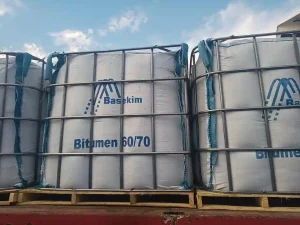
Jumbo bags are a cost-effective alternative to steel drums.
Available sizes include:
- 300 kg
- 380 kg
- 1,000 kg
Container loading capacity depends on the bag size and destination country’s road regulations.
Typical loading capacity:
- 20ft Container
- Up to 24 MT using 300 kg bags
- Around 20 MT using 1-ton jumbo bags
- 40ft Container
- Up to 28.8 MT depending on road weight limits
Jumbo bags reduce packing costs and are easy to store at construction sites.
Flexitank
A flexitank is designed for transporting liquid bitumen in containers.
Typical capacity:
- Around 20 MT in a 20ft container
- Up to 24 MT in a 40ft container, depending on destination regulations
Flexitanks reduce packaging waste and allow quick loading and unloading.
Metal Tin Cans
Metal tin cans are commonly used for smaller quantities and waterproofing products.
They are suitable for:
- Liquid waterproofing
- Industrial coatings
- Small distribution orders
A 20ft container can normally carry up to 26 MT without pallets.
Bitutainer
A Bitutainer is a heated tank container specially designed for transporting hot bitumen.
Typical loading capacity ranges from 22 to 25 MT, depending on the product temperature and filling conditions.
Bitutainers help maintain the required temperature during transportation and eliminate the need for repacking.
Bulk Vessel
Bulk vessels are the most economical solution for large infrastructure projects.
Typical shipment sizes range from:
- 1,500 MT
- 5,000 MT
- 10,000 MT
- Up to 70,000 MT
Bulk loading speed is approximately 300 MT per hour, allowing fast loading once the vessel is positioned at the loading terminal.
Bulk shipments significantly reduce packaging costs and are preferred for government road projects and large asphalt plants.
Bitumen Tank Trucks
Bitumen can also be delivered by insulated tanker trucks.
Typical truck capacity ranges between 22 and 26 MT.
Double-layer insulated tankers maintain product temperature much longer than single-layer tanks, reducing heat loss during transportation.
Truck delivery is commonly used for local distribution from terminals to asphalt plants and construction sites.
Technical Properties of Bitumen 60/70
Understanding the technical properties of Bitumen 60/70 helps engineers choose the right material for their projects.
Specific Gravity
Specific gravity generally ranges between 1.01 and 1.06 at 25°C. This value indicates the density of the material and helps during asphalt mix design.
Viscosity
Typical viscosity ranges between 1600 and 2400.
Stable viscosity ensures proper coating of aggregates and improves asphalt performance.
Lower wax content generally results in better workability and stronger pavement.
Ductility
Bitumen 60/70 normally has ductility greater than 100 cm.
Higher ductility allows pavement to resist cracking caused by traffic and temperature changes.
In some formulations, adding small amounts of sulfur, rubber, or extender oils can further improve flexibility.
Flash Point
The flash point should be at least 220°C, although many suppliers provide products with flash points above 250°C.
A higher flash point improves safety during transportation, storage, and asphalt production.
Typical Specification of Bitumen 60/70
| Property | Typical Value | Test Method |
|---|---|---|
| Penetration | 60–70 dmm | ASTM / EN Standard |
| Softening Point | 48–52°C | Ring & Ball |
| Ductility | ≥100 cm | ASTM D113 |
| Specific Gravity | 1.01–1.06 | @25°C |
| Flash Point | ≥250°C | Cleveland Open Cup |
| Loss on Heating | ≤0.2% | TFOT |
| Penetration After Heating | ≤20% Reduction | TFOT |
| Solubility in CS₂ | ≥99.5% | ASTM Standard |
| Spot Test | Negative | Standard Test |
Actual specifications may vary slightly depending on refinery standards and customer requirements.
What Affects Bitumen 60/70 Prices?
Bitumen prices change frequently due to market conditions. Understanding these factors helps buyers plan purchases more effectively.
Major pricing factors include:
- Crude oil prices
- Vacuum Bottom (VB) cost
- Supply and demand
- Ocean freight rates
- Exchange rates
- Packaging type
- Shipment quantity
- Port charges
- Insurance costs
- Seasonal demand
Large orders usually receive better pricing because transportation and handling costs are spread across more material.
Why Choose High-Quality Bitumen?
Selecting high-quality Bitumen 60/70 provides long-term benefits beyond the initial purchase price.
Quality products offer:
- Longer pavement life
- Better resistance to rutting
- Improved waterproofing
- Higher durability
- Lower maintenance costs
- Consistent performance
- Reliable laboratory specifications
- Better value over the lifetime of the project
For road construction and infrastructure projects, investing in quality bitumen often reduces total project costs over time.
In short
Bitumen 60/70 is one of the most reliable and widely used paving grades for road construction, waterproofing, roofing, and industrial applications. Its excellent balance of hardness, flexibility, adhesion, and durability makes it suitable for a wide range of infrastructure projects around the world.
Choosing the right supplier is just as important as selecting the right grade. High-quality raw materials, modern production methods, strict quality control, and proper packaging all contribute to better pavement performance and a longer service life.
Whether your project requires steel drums, jumbo bags, flexitanks, bitutainers, tanker trucks, or bulk vessel shipments, selecting the appropriate packing and transportation method can reduce logistics costs and improve efficiency.
If you are looking for a dependable supplier of Bitumen 60/70, we offer consistent quality, competitive prices, flexible packing options, worldwide shipping, and professional technical support. Contact us today for the latest prices, technical specifications, or a customized quotation for your next project.