
Manufacturer of Bitumen Emulsion K1-60
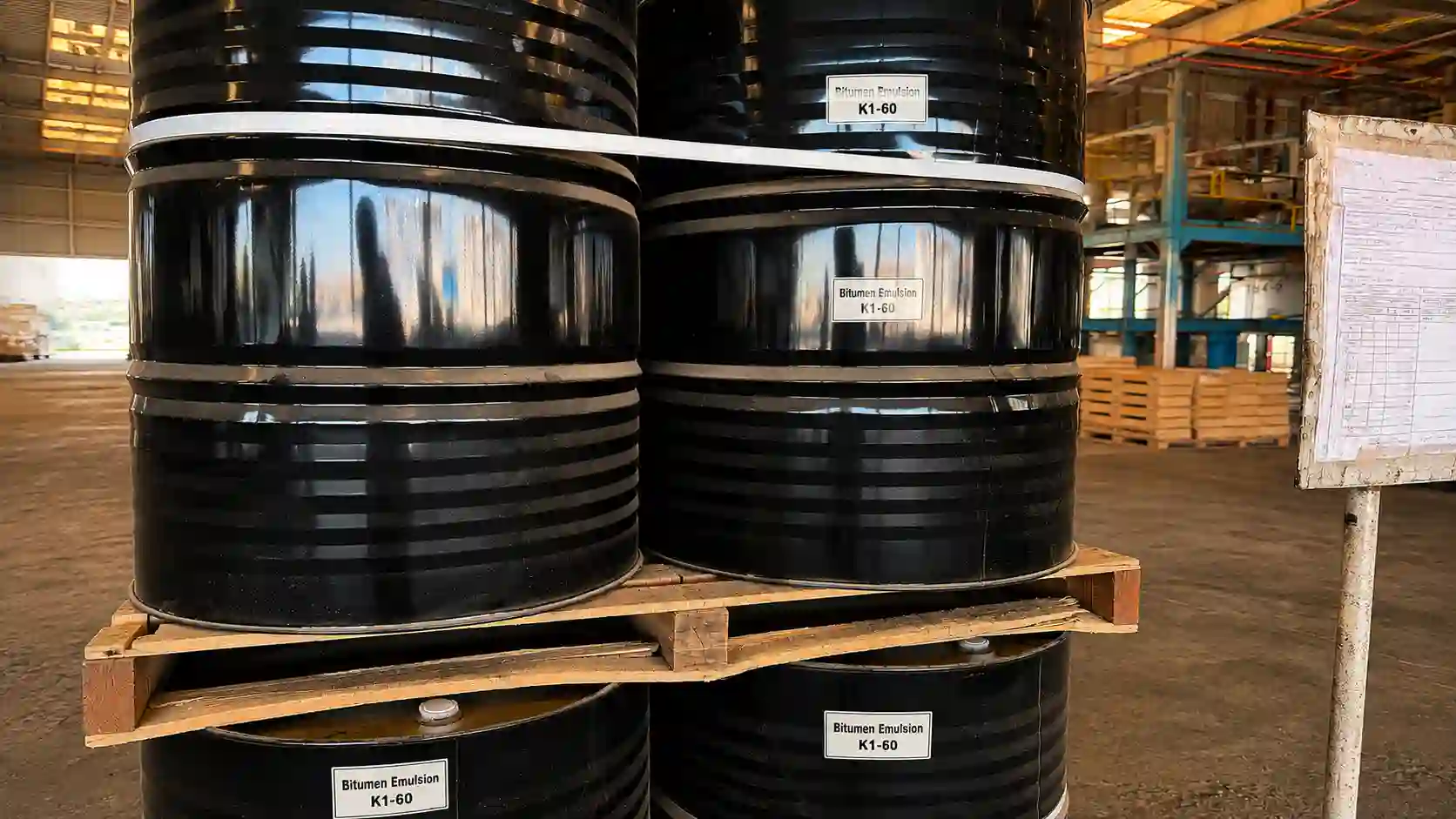
Bitumen K1-60 is a cationic rapid-setting bitumen emulsion widely used in road construction, pavement maintenance, asphalt rehabilitation, surface treatment, and bonding applications. It is produced by dispersing small particles of bitumen in water with the help of a specially formulated cationic emulsifying agent.
Unlike conventional hot bitumen, Bitumen K1-60 can generally be applied without the high heating temperatures required for traditional paving-grade bitumen. This makes the product easier to handle on many job sites while reducing energy consumption during application.
The term K1-60 generally identifies a cationic, rapid-breaking bitumen emulsion with approximately 60% bituminous binder content. Once the emulsion is sprayed or mixed with aggregate, the water separates from the bitumen in a process commonly known as "breaking." The remaining bituminous binder then creates a durable adhesive film over the pavement or aggregate.
Because of its quick-breaking characteristics and excellent adhesion, Bitumen K1-60 is particularly suitable for road projects where contractors require efficient bonding between pavement layers and relatively fast progress of construction work.
We supply Bitumen K1-60 for road contractors, asphalt companies, infrastructure developers, government projects, distributors, and international trading companies requiring dependable bitumen emulsion for construction and maintenance applications.
Main Characteristics of Bitumen K1-60
One of the major advantages of Bitumen K1-60 is the combination of rapid setting, good aggregate adhesion, convenient application, and reliable pavement performance.
The main characteristics normally associated with this grade include:
Cationic bitumen emulsion
Rapid-setting or rapid-breaking behavior
Approximately 57–60% bituminous binder, depending on applicable specification
Positive particle charge
Good adhesion to mineral aggregates
Excellent bonding between asphalt pavement layers
Cold or relatively low-temperature application
Easy sprayability
Uniform surface coverage
Reduced requirement for high-temperature heating
Suitable for road construction and maintenance
Useful under humid working conditions when correctly applied
Good penetration and coating characteristics
Fast development of a continuous bitumen film after breaking
The actual technical properties of Bitumen K1-60 may vary according to the required national or international standard, production formulation, project specification, and raw materials.
For major projects, buyers should therefore request a current Technical Data Sheet, Certificate of Analysis, and applicable test standard before confirming the order.
Bitumen K1-60 Uses
The versatility of Bitumen K1-60 makes it suitable for several different road construction and maintenance operations.
Its most important applications include:
1. Bitumen K1-60 for Tack Coat
Tack coating is one of the most important and common uses of Bitumen K1-60.
A tack coat is a thin layer of bituminous material applied between an existing pavement surface and a new asphalt layer. Its main purpose is to create proper adhesion between the two pavement courses.
Without adequate bonding, asphalt layers can move independently under traffic. This may contribute to:
Slippage
Shoving
Premature cracking
Delamination
Reduced pavement strength
Water penetration
Early pavement failure
When Bitumen K1-60 is sprayed uniformly over a clean pavement surface, the emulsion breaks and leaves a thin adhesive bitumen film.
The new asphalt layer can then bond effectively with the existing surface.
This makes Bitumen K1-60 tack coat particularly useful before installing:
Asphalt concrete overlays
Hot mix asphalt
Wearing courses
Binder courses
Macadam layers
Pavement patches
Road repair sections
Resurfacing layers
Correct tack coat application is especially important in heavily trafficked highways, intersections, industrial roads, container terminals, parking areas, and locations exposed to significant braking or acceleration forces.
2. Surface Dressing
Another major application of Bitumen K1-60 is surface dressing.
Surface dressing is a preventive road maintenance technique in which a bituminous binder is sprayed over an existing pavement and then covered with suitable aggregate.
The treatment helps protect the road from environmental damage while improving surface characteristics.
Bitumen K1-60 can provide a strong adhesive bond between the road surface and selected aggregate.
Surface dressing may help:
Seal minor surface defects
Reduce water penetration
Protect the pavement against oxidation
Restore surface texture
Improve skid resistance
Extend pavement service life
Reduce the need for more expensive rehabilitation
Depending on engineering design and traffic conditions, the technique may involve single or multiple surface treatments.
Using the correct aggregate size, spray rate, rolling procedure, surface condition, and emulsion grade is essential for successful results.
3. Road Patching and Maintenance
Road authorities and contractors frequently require a practical binder for localized pavement repairs.
Bitumen K1-60 can be used in various patching and maintenance operations because it is comparatively easy to apply and develops good adhesion with asphalt and aggregates.
Typical maintenance work may include:
Edge repairs
Failed pavement sections
Utility cut repairs
Small pothole maintenance
Surface defects
Reinstatement work
Before patching, loose particles, dust, mud, standing water, oil, and other contaminants should be removed.
A controlled application of Bitumen K1-60 can then create a bonding layer before the repair asphalt is placed.
Better adhesion between the original pavement and the repair material can significantly improve the durability of the repaired area.
4. Bitumen K1-60 for Asphalt Overlay Projects
Road resurfacing does not always require complete reconstruction.
Where the existing pavement remains structurally suitable, contractors may install a new asphalt overlay.
However, the performance of the overlay depends heavily on bonding between the old pavement and new asphalt.
Bitumen K1-60 can be applied as a tack coat before the new layer is installed.
Once the emulsion has broken correctly, the residual bitumen provides a strong adhesive interface between pavement layers.
This can help minimize movement between the old and new courses and improve overall pavement behavior under traffic.
Bitumen K1-60 is therefore commonly considered for:
Highway resurfacing
Urban street rehabilitation
Airport service roads
Industrial pavement
Parking areas
Access roads
Residential streets
Commercial developments
5. Single and Multiple Surface Treatments
Bitumen K1-60 may also be used in suitable single or multiple surface treatment systems.
In a typical single surface treatment, the emulsion is sprayed over the prepared pavement followed by an application of aggregate.
Multiple treatments repeat the process using additional binder and aggregate layers according to the road design.
These systems can provide economical protection for existing roads, particularly where complete asphalt resurfacing is unnecessary.
Their performance depends on several factors, including:
Existing pavement condition
Aggregate quality
Aggregate cleanliness
Aggregate size
Traffic level
Ambient temperature
Spray rate
Rolling
Curing conditions
Contractors should always determine the final application method according to the project specification.
6. Sand Seal Applications
A sand seal generally involves the application of bituminous emulsion followed by fine aggregate or sand.
Where specified by the pavement engineer, Bitumen K1-60 can be considered for suitable sealing operations.
Sand sealing can help protect an aged pavement surface, close small surface voids, and reduce moisture infiltration.
It is commonly associated with preventive maintenance rather than major structural pavement rehabilitation.
Why Use Bitumen K1-60?
The popularity of Bitumen K1-60 comes from both technical and operational advantages.
Strong Adhesion to Aggregate
Cationic emulsions contain positively charged bitumen droplets. Many mineral aggregates have surface characteristics that promote interaction with cationic emulsions.
This helps Bitumen K1-60 develop strong adhesion to aggregates and existing pavement surfaces.
Good adhesion is especially important for surface treatment and tack coat applications.
Rapid Breaking
Bitumen K1-60 is designed as a rapid-setting emulsion.
After application, the dispersed bitumen particles begin separating from the water phase and form a continuous bitumen film.
Rapid breaking can help contractors move efficiently through road maintenance and paving operations when environmental and site conditions are appropriate.
Lower Application Temperature
Traditional hot bitumen may require significant heating before pumping, spraying, or mixing.
In comparison, Bitumen K1-60 is normally suitable for application at much lower temperatures.
This can provide operational advantages such as:
Lower heating requirements
Reduced fuel consumption
Easier handling
Less exposure to extremely hot binder
Lower energy demand during application
Greater convenience for small maintenance jobs
Exact handling temperature should always follow the producer's Technical Data Sheet.
Excellent Bond Between Asphalt Layers
Good interlayer bonding is critical to pavement performance.
A properly applied Bitumen K1-60 tack coat creates an adhesive bitumen film between the existing surface and new asphalt.
This bonding helps the pavement layers behave together rather than sliding independently under traffic loads.
Suitable for Road Maintenance Operations
Bitumen K1-60 is particularly useful for maintenance teams because it can be sprayed efficiently over relatively small areas without requiring the same heating infrastructure associated with hot paving-grade bitumen.
It can therefore be practical for both major road projects and smaller maintenance operations.
How to Apply Bitumen K1-60
Correct application has a major influence on performance.
Simply purchasing high-quality Bitumen K1-60 is not enough. The surface must also be prepared properly and the correct quantity of emulsion must be applied.
Step 1: Inspect the Surface
Before application, examine the road or pavement carefully.
The surface should be structurally suitable for the intended treatment.
Serious structural defects should normally be repaired before applying a tack coat or surface treatment.
Step 2: Clean the Surface
The pavement should be free from:
Dust
Loose aggregate
Mud
Soil
Oil
Fuel
Grease
Vegetation
Construction waste
Excessive standing water
Mechanical sweeping, compressed air, or other suitable cleaning methods may be used.
A clean substrate allows Bitumen K1-60 to contact the actual pavement rather than bonding to dust or loose contamination.
Step 3: Prepare the Emulsion
Bitumen emulsion must remain homogeneous before spraying.
Long storage without circulation can sometimes allow separation or settlement.
Where required by the supplier's instructions, gently circulate or mix the material before application.
Excessively aggressive pumping should be avoided because unsuitable handling can damage an emulsion.
Step 4: Spray Uniformly
Uniform application is essential.
A calibrated bitumen distributor or suitable spraying equipment should provide consistent coverage across the pavement.
Areas receiving too little emulsion may develop poor bonding, while excessive application may create an unstable or slippery interface.
For tack coat work, application rates are often relatively low and should be selected according to:
Surface texture
Existing pavement type
Degree of absorption
Traffic requirements
Residual binder requirement
Project specification
Typical published rates for K1-60 tack coat applications can be around 0.25–0.70 L/m², but this should not be treated as a universal specification. The project engineer should determine the final rate according to pavement conditions and required residual binder.
Step 5: Allow Bitumen K1-60 to Break
Fresh Bitumen K1-60 has the appearance and behavior of an emulsion because bitumen particles are dispersed in water.
After application, the emulsion starts to break.
The appearance normally changes as the water separates and the dark bituminous film develops.
The next pavement layer should generally be installed only when the emulsion has reached the appropriate condition specified for the project.
Placing asphalt too early can reduce bonding performance.
Factors Affecting the Performance of Bitumen K1-60
Several conditions influence how rapidly and effectively Bitumen K1-60 breaks and bonds.
These include:
Temperature
Higher temperatures can accelerate water evaporation and breaking, while cold temperatures may increase curing time.
Humidity
High relative humidity can slow the evaporation of water from the emulsion.
Surface Condition
A porous or absorptive surface behaves differently from a dense asphalt pavement.
Aggregate Type
Mineralogy, cleanliness, moisture, and aggregate surface properties can influence the interaction between the emulsion and stone.
Application Rate
Both excessive and insufficient application can negatively affect pavement performance.
Wind and Sunlight
Air movement and solar radiation can influence drying and curing rates.
For this reason, contractors should evaluate actual site conditions rather than relying on one fixed curing time.
Bitumen K1-60 vs Hot Bitumen
Both hot bitumen and bitumen emulsions have important roles in road construction, but they are handled differently.
Bitumen K1-60 offers several advantages when a cold-applied or lower-temperature binder is preferred.
Unlike conventional hot bitumen, the emulsion contains water that provides temporary fluidity. After application, the water separates and the remaining bitumen develops its adhesive and waterproofing properties.
This can reduce dependence on high-temperature heating equipment during application.
For contractors working on maintenance projects, urban roads, localized repairs, or sites where large heating units are inconvenient, Bitumen K1-60 can provide an efficient alternative.
However, the product should always be selected according to the engineering requirements of the project rather than simply substituting it for every conventional bitumen application.
Storage and Handling of Bitumen K1-60
Proper storage is important for maintaining the stability and quality of Bitumen K1-60.
The product should normally be stored in clean, compatible tanks or properly sealed containers.
Several good practices should be followed:
Protect the product from contamination.
Keep storage tanks clean.
Avoid contamination with other emulsion grades.
Avoid mixing cationic and anionic emulsions.
Protect the emulsion from freezing.
Avoid unnecessary overheating.
Follow the manufacturer's recommended storage temperature.
Use suitable pumps and pipelines.
Circulate gently when required.
Keep drums, IBCs, or tanks properly closed when not in use.
Water, chemicals, cement, lime, incompatible emulsions, and other contaminants can affect emulsion stability.
For long storage periods, buyers should request specific storage recommendations from the manufacturer.
Packaging of Bitumen K1-60
Depending on order quantity, destination, project requirements, and available production facilities, Bitumen K1-60 can be supplied in different commercial packaging systems.
Possible supply options may include:
New steel drums
IBC tanks
Bulk road tankers
Dedicated bulk storage systems
The most suitable packaging should be selected according to shipment distance, destination infrastructure, required quantity, unloading facilities, and local transportation conditions.
For export orders, our commercial team can recommend a suitable packing and logistics solution according to the buyer's destination.
Bitumen K1-60 for International Road Projects
Infrastructure contractors increasingly require bituminous materials that are easy to transport, apply, and control on site.
Bitumen K1-60 is used for road construction and maintenance projects across different climatic regions, including projects in Africa, the Middle East, Asia, and other international markets.
The product can be supplied for:
Government road projects
Highway contractors
Municipal road maintenance
Asphalt plants
Infrastructure contractors
EPC projects
Industrial developments
Airport infrastructure
Ports and logistics zones
Residential developments
Road maintenance companies
Bitumen distributors
When sourcing Bitumen K1-60 internationally, buyers should evaluate not only the price but also product quality, production consistency, documentation, packaging, loading ability, and logistics support.
Quality Control for Bitumen K1-60
Quality control is essential when purchasing bitumen emulsion.
Depending on the applicable specification, laboratory evaluation of Bitumen K1-60 may include properties such as:
Binder or residue content
Viscosity
Particle charge
Residue on sieving
Storage stability
Breaking characteristics
Residual bitumen properties
Required parameters and test methods vary according to the applicable national standard, international standard, buyer's specification, and project requirements.
For this reason, technical limits should always be confirmed using the actual Certificate of Analysis and Technical Data Sheet supplied for the product.
Independent inspection can also be arranged when required by the commercial agreement.
Why Buy Bitumen K1-60 From a Reliable Supplier?
Price is important when purchasing road construction materials, but consistency is equally critical.
A variation in emulsion quality can affect spraying, breaking behavior, adhesion, aggregate retention, and construction progress.
A professional Bitumen K1-60 supplier should provide buyers with:
Consistent product quality
Technical Data Sheet
Certificate of Analysis
MSDS/SDS
Suitable export packaging
Reliable production capacity
Professional loading procedures
Export documentation
Shipping support
Inspection options when required
FOB, CFR, or CIF quotation where available
Working with an experienced supplier also makes it easier for international contractors to coordinate production, shipment, documentation, and destination requirements.
Bitumen K1-60 Supplier and Exporter
We supply Bitumen K1-60 for international road construction, asphalt maintenance, and infrastructure projects.
Our commercial team can support customers requiring small project quantities as well as regular bulk supplies.
Depending on the destination and contract requirements, quotations can be prepared on different delivery bases, including:
EXW – FOB – CFR – CIF
To receive an accurate Bitumen K1-60 quotation, buyers should provide:
Required quantity
Destination country
Destination port
Required packing
Applicable standard or specification
Required delivery date
Inspection requirement
Preferred Incoterm
Providing complete inquiry information allows our sales team to calculate the most competitive supply and freight solution.
Order Bitumen K1-60 for Your Project
Choosing the correct bitumen emulsion can directly influence the quality, durability, and efficiency of a pavement project.
With rapid-breaking properties, strong aggregate adhesion, practical application, and excellent suitability for tack coating and road maintenance, Bitumen K1-60 remains an important material for contractors and infrastructure developers worldwide.
Whether you require Bitumen K1-60 for a highway project, asphalt overlay, surface dressing, municipal maintenance program, industrial road, or pavement repair, selecting the correct quality and application procedure is essential.
We provide Bitumen K1-60 supply and export services for international customers and can prepare commercial offers according to quantity, packing, destination, specification, and delivery terms.
Frequently Asked Questions About Bitumen K1-60
Yes. Bitumen K1-60 is classified as a cationic bitumen emulsion, meaning the dispersed bitumen particles carry a positive electrical charge.
Store the emulsion in clean, compatible tanks or sealed containers, protect it from freezing, contamination, excessive heat, and incompatible materials, and follow the supplier's recommended storage conditions.
Cationic emulsions generally provide good adhesion under slightly damp or humid conditions. However, application during heavy rain or over standing water should be avoided unless specifically approved by the project engineer.