

Viscosity Grade Bitumen VG 20
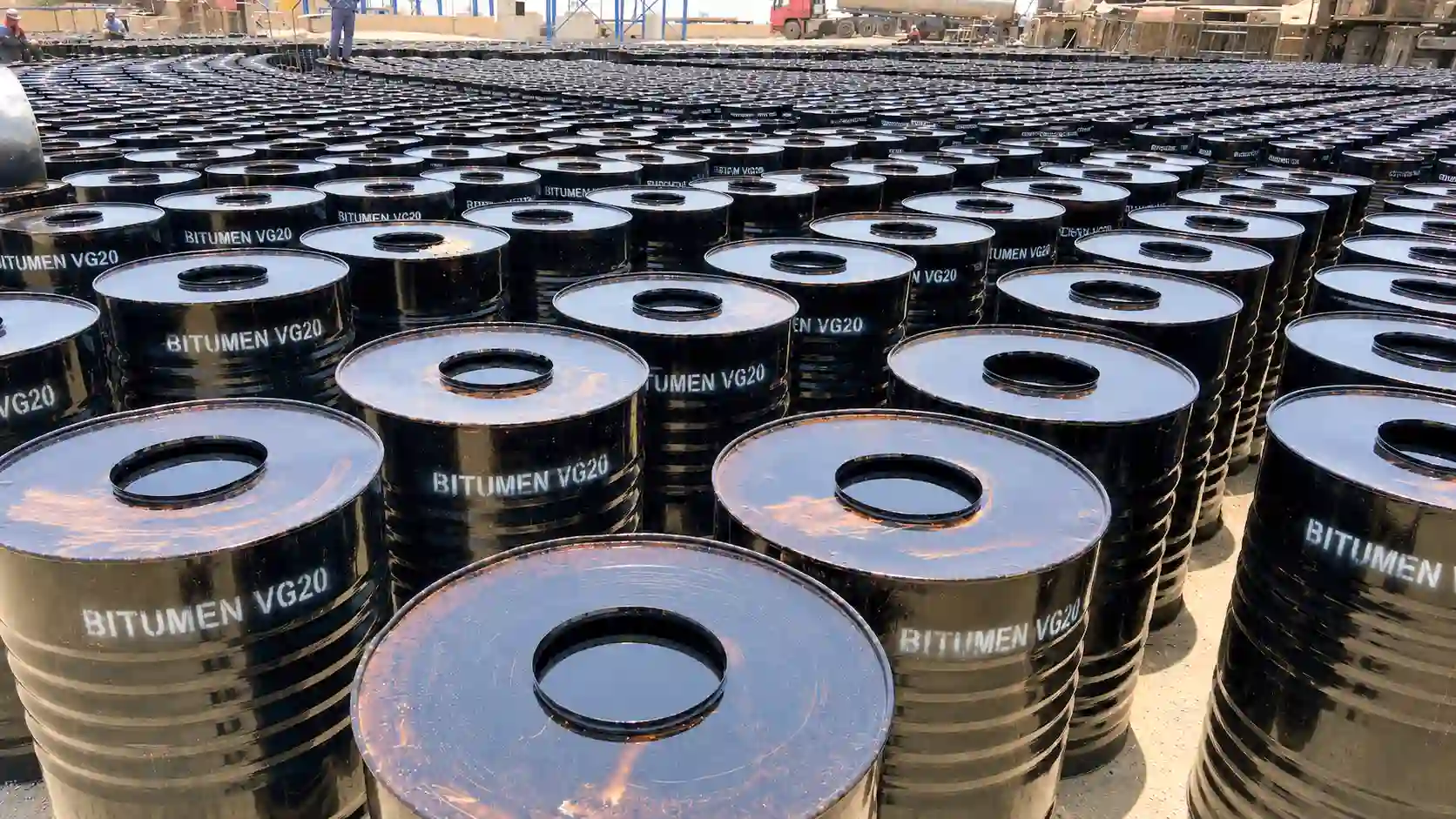
Viscosity Grade Bitumen VG 20 is a paving-grade asphalt binder designed to provide controlled viscosity, reliable workability, and stable road performance. Contractors commonly consider this grade for asphalt paving, flexible pavements, road maintenance, and infrastructure projects where the project specification calls for an intermediate viscosity level. Moreover, VG 20 Bitumen provides higher viscosity than VG 10 while remaining softer than VG 30 and VG 40. Therefore, it can offer a practical balance between mixing performance and resistance to pavement deformation. Asphalt manufacturers, contractors, and international buyers should select the grade according to climate, traffic loading, pavement design, and applicable standards. In addition, buyers should always confirm the final specification through the supplier’s Technical Data Sheet and Certificate of Analysis.
What Is Viscosity Grade Bitumen VG 20?
Viscosity Grade Bitumen VG 20 belongs to the viscosity-graded system for paving bitumen. Instead of classifying the binder mainly by penetration, this system focuses directly on viscosity at defined temperatures.
For example, viscosity at 60°C helps engineers evaluate binder consistency near pavement service temperatures. Meanwhile, viscosity at 135°C provides useful information about handling and asphalt mixing behavior.
Under IS 73:2013, VG 20 has an absolute viscosity range of 1,600–2,400 poise at 60°C. The standard also requires a minimum kinematic viscosity of 300 cSt at 135°C.
Therefore, engineers can use viscosity grading to make more performance-focused binder selections. However, they must still consider pavement design, aggregate properties, traffic, and local construction requirements.
VG 20 Bitumen Properties
VG 20 Bitumen combines several properties that influence asphalt production and pavement performance.
Viscosity represents one of its most important characteristics. VG 20 provides more resistance to flow than VG 10. Consequently, it can offer greater stability when the pavement faces higher service temperatures or loading.
Penetration indicates binder consistency at 25°C. According to IS 73:2013, VG 20 requires a minimum penetration value of 60 in 0.1 mm units.
Additionally, the softening point helps indicate the binder’s response as temperature rises. IS 73:2013 specifies a minimum Ring and Ball softening point of 45°C for VG 20.
The flash point also matters during heating and handling. Under the same standard, VG 20 requires a minimum Cleveland Open Cup flash point of 220°C. Therefore, operators must control heating temperatures and follow the supplier’s safety instructions.
Furthermore, good binder-to-aggregate adhesion supports asphalt cohesion and pavement durability. Proper mix design also helps reduce stripping and premature deterioration.
Finally, aging resistance affects long-term asphalt performance. The viscosity ratio and ductility of aged residue help engineers evaluate how strongly the binder changes after laboratory aging.
VG 20 Bitumen Specification
The following table summarizes VG 20 Bitumen specification requirements under IS 73:2013. However, buyers should treat these values as one applicable reference standard rather than universal specifications. Contract requirements, national standards, and supplier specifications may differ.
| Property | IS 73:2013 Test Method | VG 20 Requirement |
|---|---|---|
| Absolute viscosity at 60°C | IS 1206 (Part 2) | 1,600–2,400 poise |
| Kinematic viscosity at 135°C | IS 1206 (Part 3) | Minimum 300 cSt |
| Penetration at 25°C, 100 g, 5 sec | IS 1203 | Minimum 60 (0.1 mm) |
| Softening point, Ring & Ball | IS 1205 | Minimum 45°C |
| Flash point, Cleveland Open Cup | IS 1448 [P:69] | Minimum 220°C |
| Solubility in trichloroethylene | IS 1216 | Minimum 99.0% |
| Viscosity ratio at 60°C after aging | IS 1206 (Part 2) | Maximum 4.0 |
| Ductility at 25°C after aging | IS 1208 | Minimum 50 cm |
These limits come from the VG 20 requirements shown in IS 73:2013.
Importantly, a supplier’s VG 20 Bitumen technical data sheet may also show typical production values. Typical values do not replace formal contractual limits. Therefore, buyers should compare the TDS, Certificate of Analysis, and purchase specification before approving a shipment.
VG 20 Bitumen Applications
VG 20 Bitumen applications mainly involve asphalt paving and road infrastructure. Because the grade offers intermediate viscosity, engineers can use it where the pavement design requires more stiffness than VG 10 without moving directly to harder grades.
Common VG 20 Bitumen uses include:
Flexible pavement construction
Asphalt road paving
Hot mix asphalt production
Road rehabilitation and maintenance
Asphalt manufacturing plants
Infrastructure and municipal road projects
Moderate-temperature paving conditions
Selected wearing, binder, or base-course mixtures where specifications allow
For example, an asphalt producer may select VG 20 Bitumen for hot mix asphalt when its approved mix design calls for this viscosity grade.
However, binder grade alone cannot guarantee pavement performance. Aggregate quality, gradation, binder content, compaction, drainage, temperature, and traffic loading also affect the finished pavement.
Therefore, contractors should use VG 20 Bitumen for road construction only when the project design or relevant authority approves the grade.
Advantages of VG 20 Bitumen
One important advantage of VG 20 paving bitumen comes from its controlled viscosity range. Consequently, asphalt manufacturers can assess binder consistency using measurable viscosity requirements.
Moreover, VG 20 can provide useful workability during asphalt production when contractors maintain suitable mixing and compaction temperatures.
Strong adhesion with properly prepared aggregate can also support mixture integrity. Additionally, consistent binder properties help asphalt plants control production from batch to batch.
VG 20 may also offer greater deformation resistance than a softer VG 10 binder under comparable conditions. However, the final pavement response depends on the complete asphalt mixture and project environment.
Furthermore, viscosity grading helps procurement teams compare material against defined test requirements. As a result, buyers can review TDS and COA documents more effectively before accepting material.
Ultimately, VG 20 asphalt binder offers a balanced option when the engineering specification requires an intermediate viscosity grade.
VG 20 vs VG 10, VG 30 and VG 40 Bitumen
VG grades mainly differ in viscosity and related consistency characteristics. As the grade number rises, the binder generally becomes more viscous and harder.
| Factor | VG 10 | VG 20 | VG 30 | VG 40 |
|---|---|---|---|---|
| Relative viscosity | Lowest | Low-medium | Medium-high | Highest |
| Relative hardness | Softer | Intermediate | Harder | Hardest |
| Temperature suitability | Generally cooler conditions | Moderate conditions | Warmer conditions | Higher-temperature conditions |
| Traffic suitability* | Lighter/moderate | Moderate | Moderate/heavier | Higher loading where specified |
| Common use | Paving and colder conditions | General paving where specified | Highway/asphalt paving | High-temperature/heavy-duty designs |
| High-temperature resistance | Lower | Moderate | Higher | Highest |
Traffic suitability remains project-specific and depends on pavement design, climate, mixture properties, and local standards.
The difference between VG 20 and VG 10 Bitumen mainly involves viscosity. VG 20 provides an absolute viscosity of 1,600–2,400 poise at 60°C under IS 73:2013, while VG 10 provides 800–1,200 poise.
In contrast, VG 30 and VG 40 provide progressively higher viscosity ranges. Therefore, VG 20 grade bitumen sits between the softer VG 10 and harder VG 30/VG 40 options.
Nevertheless, buyers should never assume that a harder binder always performs better. Instead, engineers should select the grade according to climate, design temperature, traffic, pavement structure, and governing specifications.
Likewise, VG Bitumen vs penetration grade bitumen represents a difference in grading approach. Viscosity grading emphasizes viscosity at defined temperatures, while penetration grading primarily classifies conventional bitumen through penetration consistency.
VG 20 Bitumen Packaging
Suppliers can provide VG 20 Bitumen in drums for export markets where containerized transport offers practical handling.
New steel drums commonly support international shipment because they protect the product and simplify loading, unloading, and storage. However, drum size and net weight can vary by supplier and destination.
For larger orders, suppliers may offer bulk VG 20 Bitumen through suitable tankers, vessels, or heated transport systems. Accordingly, bulk shipment can reduce packaging requirements for buyers with appropriate receiving and storage facilities.
Other export packaging may also exist. Therefore, buyers should confirm packing type, net weight, container loading quantity, destination requirements, and transportation limitations before ordering.
VG 20 Bitumen Price
The VG 20 Bitumen price changes with petroleum and logistics markets. Therefore, a fixed website price can quickly become outdated.
Crude oil and refinery feedstock costs strongly influence bitumen pricing. Moreover, refinery production conditions and regional supply-demand balances can affect availability.
Order quantity also matters. For instance, the commercial structure for a bulk shipment can differ considerably from a drum-packed container order.
Additionally, drum costs, inland transportation, port handling, ocean freight, insurance, and destination charges can influence the final landed cost.
Currency movements and international energy markets may create further changes. Consequently, buyers should request a current quotation based on:
Required quantity
Packaging type
Destination port or country
Incoterm
Required specification
Shipment schedule
This approach gives procurement teams a more useful VG 20 Bitumen price than a general market estimate.
VG 20 Bitumen Supplier and Exporter
Choosing a reliable VG 20 Bitumen supplier requires more than comparing price. First, buyers should verify product consistency and confirm the relevant technical specification.
Second, procurement teams should request a VG 20 Bitumen TDS, VG 20 Bitumen MSDS, and Certificate of Analysis where applicable. These documents help buyers review technical properties and safe handling requirements.
Furthermore, buyers should evaluate packaging quality, inspection arrangements, loading capability, shipping experience, and delivery terms.
A capable VG 20 Bitumen exporter should also provide clear packing information and coordinate suitable logistics for the destination market.
Basekim supplies VG 20 Bitumen for international buyers and can provide commercial and technical information according to order and destination requirements.
Nevertheless, buyers should always define the governing standard and acceptance criteria in the purchase agreement.
Storage and Handling of VG 20 Bitumen
Store VG 20 Bitumen in suitable heated tanks designed for asphalt binder. Additionally, use controlled heating systems that distribute heat evenly.
Avoid unnecessary overheating because excessive temperature can accelerate binder aging and create additional safety risks. Therefore, operators should maintain only the temperature required for pumping, transfer, mixing, or application.
Moreover, workers should wear suitable protective clothing, gloves, eye protection, and other PPE required by the site risk assessment.
Keep storage tanks, valves, pumps, and transfer lines in good condition. Finally, follow the supplier’s VG 20 Bitumen MSDS for handling, first aid, fire precautions, and transportation guidance.
FAQ for Bitumen VG 20
Viscosity Grade Bitumen VG 20 supports asphalt paving, flexible pavement construction, hot mix asphalt production, maintenance, and other road infrastructure applications. However, engineers should confirm its suitability according to climate, traffic loading, pavement design, aggregate properties, and the governing project specification.
The typical softening point is 42–50°C, measured according to ASTM D36.
Under IS 73:2013, key VG 20 requirements include 1,600–2,400 poise absolute viscosity at 60°C, minimum 300 cSt kinematic viscosity at 135°C, minimum 60 penetration, minimum 45°C softening point, and minimum 220°C flash point.