
SBS Bitumen Membrane, Waterproofing Solution for Cold Climates
SBS bitumen membrane is a flexible and durable waterproofing material widely used for roofs, foundations, basements, bridges, tunnels, and other construction applications. Manufactured using bitumen modified with Styrene-Butadiene-Styrene (SBS) polymer, the membrane provides excellent elasticity, waterproofing performance, and resistance to cracking.
Compared with conventional bituminous waterproofing materials, SBS bitumen membrane offers greater flexibility, especially at low temperatures. This makes it a reliable solution for construction projects where the waterproofing layer may be exposed to structural movement, temperature changes, and demanding environmental conditions.
What Is SBS Bitumen Membrane?
SBS bitumen membrane is a polymer-modified bituminous waterproofing sheet. SBS stands for Styrene-Butadiene-Styrene, a thermoplastic elastomer added to bitumen to improve its flexibility, elasticity, and overall performance.
The SBS polymer gives modified bitumen rubber-like characteristics. As a result, the membrane can stretch and recover when exposed to movement or thermal expansion and contraction.
A typical SBS waterproofing membrane consists of several components:
- SBS-modified bitumen compound
- Polyester or fiberglass reinforcement
- Upper surface finish
- Lower polyethylene film or other protective layer
Depending on the application, the upper surface may be covered with mineral granules, sand, polyethylene film, aluminum foil, or another protective finish.
How Does SBS Modification Improve Bitumen?
Standard bitumen provides excellent water resistance but can become harder and more brittle at low temperatures. Adding SBS polymer modifies the physical characteristics of the bitumen.
The resulting SBS bitumen membrane provides improved:
- Low-temperature flexibility
- Elasticity and elongation
- Crack resistance
- Fatigue resistance
- Adhesion
- Dimensional stability
- Resistance to structural movement
- Long-term waterproofing performance
These characteristics make SBS-modified membranes particularly suitable for structures exposed to movement and changing climatic conditions.
Structure of SBS Bitumen Membrane
The performance of an SBS bitumen membrane depends not only on the modified bitumen but also on its reinforcement and surface finish.
Polyester Reinforced SBS Membrane
Polyester reinforcement provides high tensile strength and excellent elongation. It is commonly selected for roofing systems and applications where structural movement or cracking may occur.
Fiberglass Reinforced SBS Membrane
Fiberglass reinforcement provides excellent dimensional stability and helps control expansion and contraction. It can be suitable for applications where dimensional stability is particularly important.
Composite Reinforcement
Some specialized SBS membranes use composite reinforcement systems designed to combine tensile strength, dimensional stability, and flexibility.
Main Advantages of SBS Bitumen Membrane
1. Excellent Waterproofing Performance
One of the primary functions of SBS bitumen membrane is to create a continuous waterproof barrier that protects structures against rainwater, groundwater, and moisture penetration.
2. High Flexibility
SBS-modified bitumen remains flexible over a wide temperature range. This characteristic is particularly valuable in colder environments where conventional bituminous materials may become brittle.
3. High Elasticity
The elastomeric characteristics of SBS allow the membrane to accommodate limited structural movement without immediately cracking or losing waterproofing integrity.
4. Crack-Bridging Ability
Buildings naturally experience minor movements caused by temperature changes, settlement, vibration, and other factors. SBS membranes can provide good crack-bridging capability when correctly specified and installed.
5. Strong Mechanical Properties
When combined with high-quality polyester or fiberglass reinforcement, SBS bitumen membrane can provide excellent tensile strength, tear resistance, and dimensional stability.
6. Strong Adhesion
SBS-modified membranes provide good adhesion to properly prepared substrates. Depending on the membrane type, installation may be performed using torch application, hot asphalt, cold adhesive, or self-adhesive technology.
7. Long Service Life
Correct membrane selection, substrate preparation, installation, drainage, and protection can provide a durable waterproofing system with a long operational life.
Applications of SBS Bitumen Membrane
The versatility of SBS bitumen membrane makes it suitable for many waterproofing projects.
Roof Waterproofing
SBS membranes are extensively used in flat and low-slope roofing systems. They can be installed as a single-layer or multi-layer waterproofing system depending on project specifications.
Common roofing applications include:
- Residential buildings
- Commercial buildings
- Industrial facilities
- Warehouses
- Shopping centers
- Public buildings
Basement Waterproofing
Underground structures require reliable protection against soil moisture and groundwater. SBS bitumen membrane can be installed on basement walls and slabs to provide an effective waterproof barrier.
Foundation Waterproofing
Foundations are continuously exposed to moisture from surrounding soil. SBS membranes help prevent water penetration and protect structural components.
Bridge Deck Waterproofing
Specialized SBS membranes can be used beneath asphalt pavement on bridge decks to protect concrete structures against water and moisture penetration.
Tunnel Waterproofing
Depending on engineering requirements and system design, SBS-modified membranes can be used in tunnel and underground infrastructure waterproofing systems.
Podiums and Terraces
SBS membranes are suitable for waterproofing podium decks, balconies, terraces, and other horizontal construction surfaces.
Wet Areas
Appropriate SBS membrane systems may also be used beneath protective finishes in certain wet-area applications.
SBS Bitumen Membrane for Cold Climates
One of the most important advantages of SBS bitumen membrane is its low-temperature flexibility.
In cold weather, ordinary bitumen tends to become harder. SBS modification improves the ability of the membrane to remain flexible under lower temperatures.
This characteristic helps reduce the risk of cracking caused by thermal contraction and makes SBS membrane particularly suitable for regions experiencing cold winters or significant temperature variations.
The exact low-temperature flexibility depends on the membrane formulation, polymer content, reinforcement, thickness, and manufacturer specification.
SBS Bitumen Membrane Thickness
SBS membranes are manufactured in different thicknesses according to application and waterproofing-system requirements. Common thicknesses include:
- 2 mm
- 3 mm
- 4 mm
- 5 mm
Thicker membranes generally provide greater material mass and mechanical protection, but membrane selection should always be based on the complete waterproofing-system design rather than thickness alone.
For example, a two-layer system may use separate base and cap sheets with different reinforcement and surface finishes.
Surface Finishes of SBS Bitumen Membrane
Different surface finishes are available depending on installation method and exposure conditions.
PE Film Finish
Polyethylene film is commonly used on torch-applied membranes. The film melts during torch installation and assists application.
Mineral Granule Finish
Mineral granules provide additional surface protection and are commonly used for exposed roofing membranes. Different granule colors may also be available.
Sanded Finish
Sand-finished membranes may be used as intermediate or base layers in multi-layer waterproofing systems.
Aluminum-Faced Membrane
Certain membranes incorporate an aluminum surface for specialized roofing and waterproofing applications.
SBS Bitumen Membrane Installation Methods
Correct installation is essential to the performance of any waterproofing system.
Torch-Applied SBS Membrane
Torch application is one of the most common installation methods. The underside of the membrane is heated using a suitable gas torch until the bituminous compound reaches the required bonding condition. The membrane is then bonded to the prepared substrate.
Self-Adhesive SBS Membrane
Self-adhesive membranes use a factory-applied adhesive layer, allowing installation without direct flame. They can be useful where torch application is restricted or undesirable.
Cold Adhesive Application
Certain SBS membrane systems can be installed using compatible cold-applied bituminous adhesives.
Hot Asphalt Application
Some membrane systems may be bonded using hot bitumen or asphalt according to the system specification.
Installation methods should always follow the membrane manufacturer’s technical instructions and applicable safety requirements.
Importance of Surface Preparation
Even a high-quality SBS bitumen membrane can fail if installed over an unsuitable substrate.
Before installation, the surface should generally be:
- Clean
- Dry
- Smooth
- Structurally sound
- Free from dust and loose particles
- Free from oil and contamination
- Properly primed when required
Corners, joints, penetrations, drains, expansion joints, and other critical details should receive particular attention.
SBS Bitumen Membrane vs APP Bitumen Membrane
SBS and APP are two major types of polymer-modified bituminous membranes, but their properties differ.
SBS bitumen membrane uses Styrene-Butadiene-Styrene polymer and behaves more like an elastomer. Its primary advantages are flexibility, elasticity, and good performance at lower temperatures.
APP membrane uses Atactic Polypropylene modification and generally provides excellent heat resistance and dimensional stability at elevated temperatures.
In simplified terms:
| Property | SBS Bitumen Membrane | APP Bitumen Membrane |
|---|---|---|
| Polymer Type | Styrene-Butadiene-Styrene | Atactic Polypropylene |
| Modification | Elastomeric | Plastomeric |
| Flexibility | Excellent | Good |
| Low-Temperature Performance | Excellent | Moderate to Good |
| Elasticity | High | Lower than SBS |
| Heat Resistance | Good | Excellent |
| Typical Selection | Cold/variable climates, movement | Hot climates, high heat exposure |
The correct membrane should be selected according to climate, substrate conditions, installation method, waterproofing design, and project specifications.
SBS Bitumen Membrane Reinforcement
Reinforcement plays an important role in membrane performance.
Polyester Carrier
Polyester provides high tensile strength and elongation. It is frequently used when the waterproofing system must accommodate movement.
Fiberglass Carrier
Fiberglass provides high dimensional stability with relatively low elongation. It can be appropriate where dimensional stability is a primary requirement.
The reinforcement weight and mechanical properties can vary significantly between membrane grades.
Quality Characteristics to Consider
When purchasing SBS bitumen membrane, price and thickness should not be the only considerations. Buyers, contractors, and project engineers should evaluate the complete technical specification.
Important parameters may include:
- Membrane thickness
- Roll dimensions
- Reinforcement type
- Reinforcement weight
- Tensile strength
- Elongation
- Low-temperature flexibility
- Heat resistance
- Watertightness
- Tear resistance
- Dimensional stability
- Surface finish
- Application method
- Roll weight
- Applicable testing standard
Technical requirements should be defined according to the intended application and relevant project standards.
SBS Bitumen Membrane for Roofing Systems
Roof waterproofing is one of the largest application areas for SBS membranes.
A typical multi-layer roofing system may include:
- Prepared concrete or structural substrate
- Bituminous primer
- Vapor-control layer where required
- Thermal insulation where specified
- Base waterproofing membrane
- SBS cap sheet
- Protective or decorative finish
Actual roofing-system construction varies according to building design, climate, local standards, and engineering requirements.
Storage and Handling
Proper storage helps maintain the quality of SBS bitumen membrane before installation.
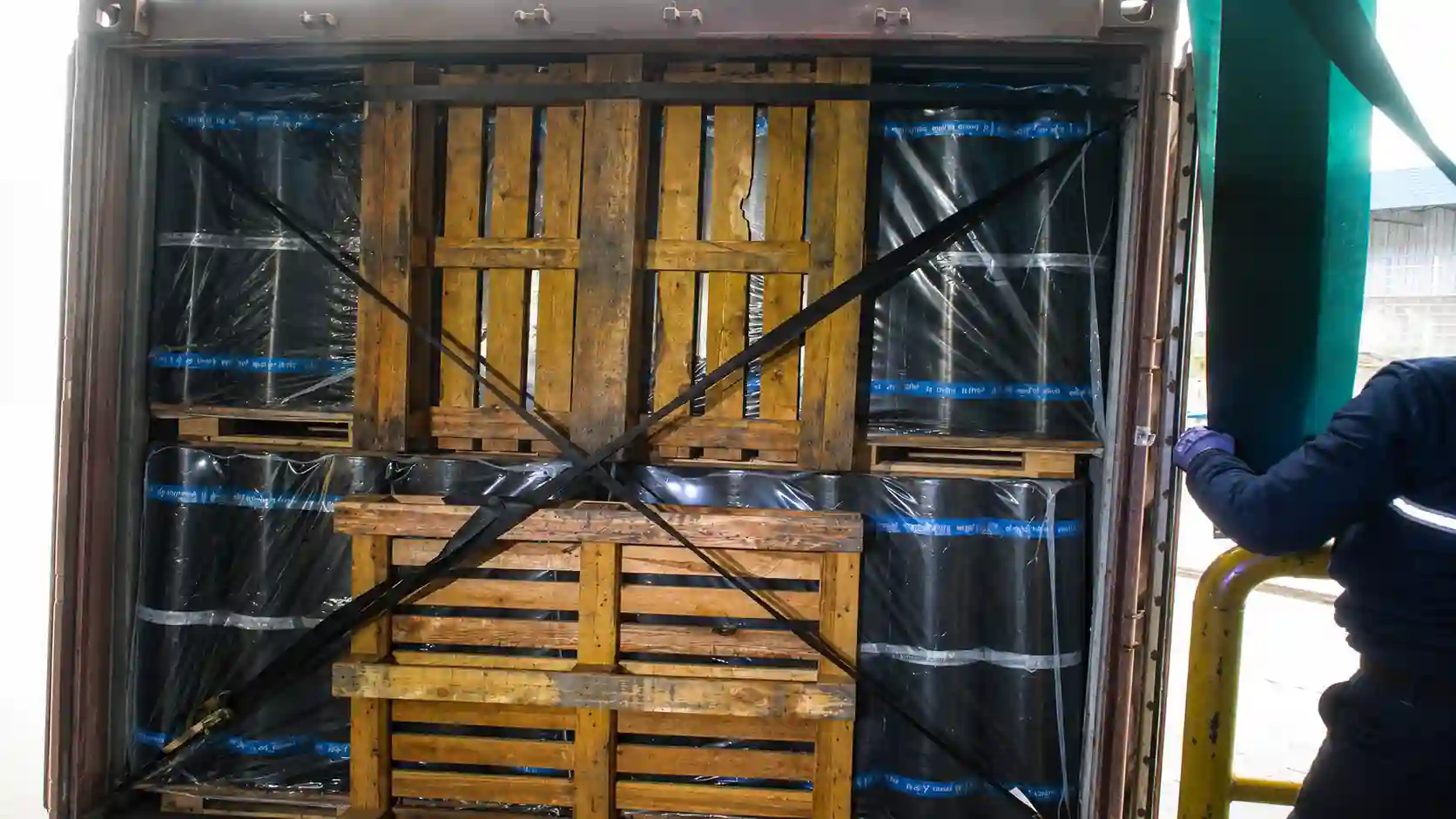
Membrane rolls should normally be stored vertically on pallets in a dry, covered area. They should be protected against excessive heat, direct sunlight, moisture, and mechanical damage.
Rolls should not be improperly stacked or stored in conditions that can cause deformation.
Manufacturer-specific storage requirements should always be followed.
Why Choose SBS Bitumen Membrane?
For projects requiring a combination of waterproofing, flexibility, mechanical strength, and resistance to movement, SBS bitumen membrane is one of the most established solutions in modern construction.
Its elastomeric characteristics allow it to perform effectively in demanding waterproofing applications, particularly where temperature variation and substrate movement are important considerations.
By selecting the appropriate thickness, reinforcement, surface finish, and installation method, SBS membranes can be incorporated into reliable waterproofing systems for both above-ground and below-ground structures.
Conclusion
SBS bitumen membrane is a high-performance polymer-modified waterproofing material designed to provide excellent flexibility, elasticity, adhesion, and water resistance. Its ability to accommodate temperature changes and limited structural movement makes it particularly valuable for roofing, foundations, basements, bridges, tunnels, terraces, and other demanding waterproofing applications.
Choosing the correct SBS bitumen membrane requires consideration of membrane thickness, reinforcement, surface finish, low-temperature flexibility, mechanical properties, installation method, and project conditions.
For contractors, distributors, and construction-material buyers looking for a durable and versatile waterproofing solution, SBS-modified bituminous membranes remain an important option for both building and infrastructure projects.
FAQ about SBS Bitumen Membrane
SBS bitumen membrane is used for waterproofing roofs, basements, foundations, terraces, podiums, bridge decks, tunnels, and other building and infrastructure structures.
Common membrane thicknesses include 2 mm, 3 mm, 4 mm, and 5 mm, although availability varies according to manufacturer and product design.
Yes. Many SBS membranes are designed for torch application. Self-adhesive, cold-applied, and hot-asphalt systems are also available.