

Chinese Grade Bitumen AH 110
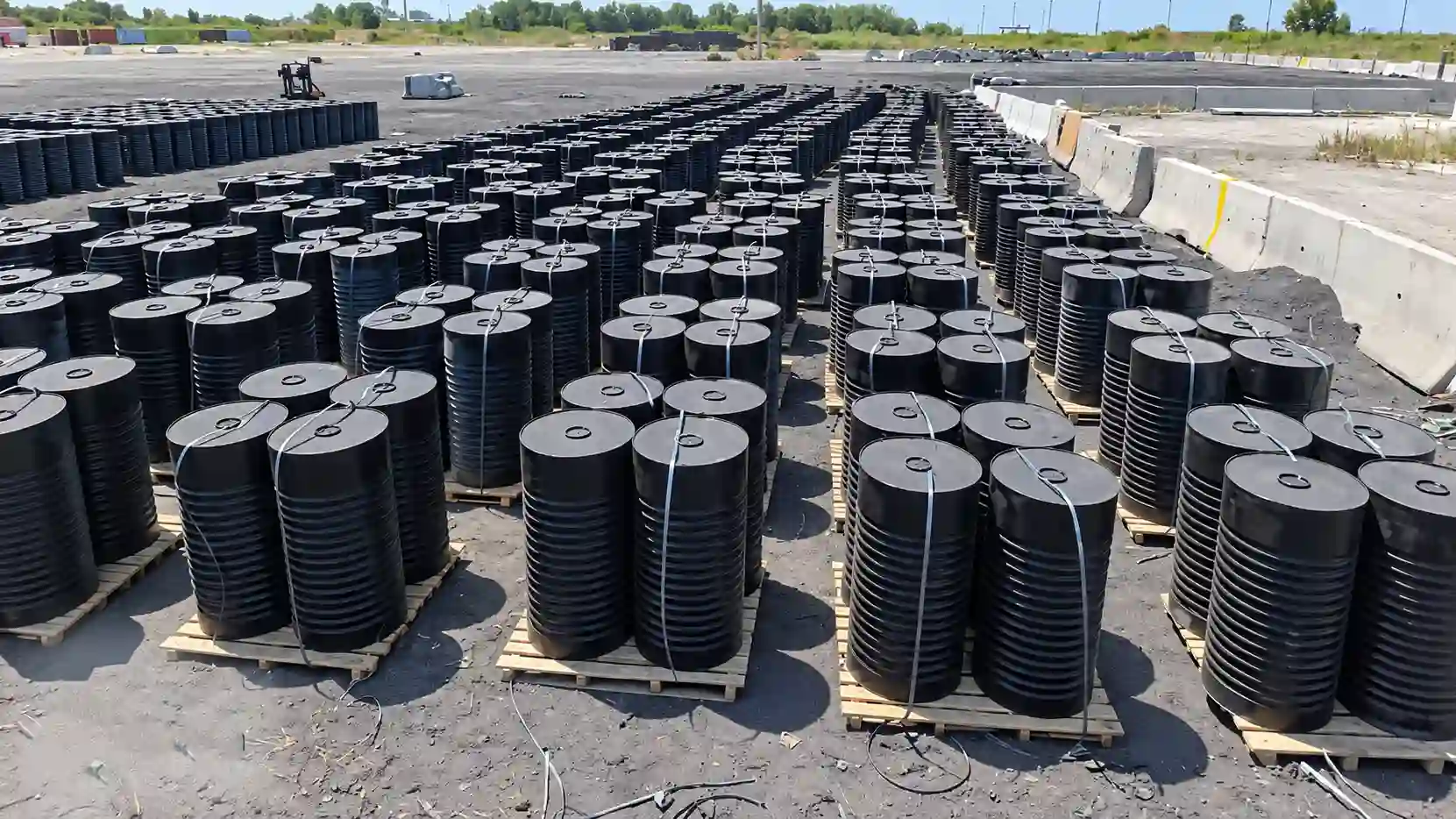
Chinese Grade Bitumen AH 110 offers a relatively soft paving-grade bitumen for road construction, asphalt production, maintenance work, and other infrastructure applications. Manufacturers produce this petroleum-based binder from carefully processed refinery residue and control its physical properties to meet the requirements of Chinese paving bitumen standards.
Road contractors choose AH 110 when they need a softer asphalt binder with suitable adhesion, flexibility, and workability. In addition, the grade can perform effectively in applications where pavement designers need greater flexibility at moderate or lower service temperatures.
Basekim supplies and exports Chinese Grade Bitumen AH 110 for international projects. The company can support bulk orders, suitable export packaging, documentation, and international shipment requirements.
What Makes Chinese Grade Bitumen AH 110 Different?
The AH classification identifies penetration-grade paving bitumen commonly associated with Chinese road construction specifications. The numerical designation generally reflects the penetration range and therefore helps buyers understand the relative hardness or softness of the binder.
Chinese Grade Bitumen AH 110 provides a softer consistency than lower-penetration grades such as AH 70. Consequently, it can offer improved flexibility where pavement conditions require a binder that can tolerate movement and temperature changes.
At the same time, engineers must consider climate, traffic volume, aggregate type, pavement design, and local specifications before selecting a final asphalt binder.
AH 110 can provide several important properties:
Good adhesion to suitable mineral aggregates
Flexible behavior under appropriate service conditions
Reliable asphalt mixture workability
Consistent binder distribution during mixing
Suitable waterproofing characteristics
Controlled penetration and softening behavior
Good compatibility with common hot-mix asphalt systems
Therefore, contractors can use this grade in several pavement construction and maintenance processes.
Chinese Grade Bitumen AH 110 Specifications
Technical specifications play a major role in every bitumen purchase. Buyers usually evaluate penetration, softening point, ductility, flash point, solubility, and aging characteristics before approving a shipment.
The following table presents typical reference properties for AH 110. Actual values can vary according to the applicable Chinese standard, refinery source, contract requirements, and production batch. Therefore, buyers should always confirm the latest TDS and COA before placing an order.
| Property | Typical Requirement / Reference |
|---|---|
| Grade | AH 110 |
| Appearance | Black, homogeneous material |
| Penetration at 25°C | Typical range associated with soft paving grade |
| Softening Point | According to applicable specification |
| Ductility | High ductility required for paving applications |
| Flash Point | Suitable for hot asphalt processing |
| Solubility | High purity bituminous material |
| Water Content | Very low |
| Density | Typically around normal paving-bitumen range |
| Application | Road paving and asphalt production |
Because standards and project specifications may differ, purchasing teams should request a Certificate of Analysis for the actual shipment rather than rely only on general reference values.
Penetration and Consistency
Penetration represents one of the most important indicators when evaluating paving bitumen. Laboratories measure how far a standardized needle penetrates the binder under controlled conditions.
A higher penetration value usually indicates a softer binder. Therefore, AH 110 normally offers greater softness than harder grades such as AH 50 or AH 70.
This property influences asphalt flexibility, mixing performance, temperature sensitivity, and pavement behavior. However, engineers should never select bitumen according to penetration alone. They should also evaluate softening point, ductility, aging resistance, climate conditions, and traffic loading.
Softening Point and Temperature Performance
The softening point indicates the temperature at which the material reaches a specified level of softness under laboratory conditions.
Since Chinese Grade Bitumen AH 110 belongs to the softer side of paving-grade binders, its thermal behavior differs from that of harder penetration grades. As a result, road designers should match the binder with the expected pavement temperature range.
For example, extremely hot climates and very heavy traffic may require a harder binder or a modified asphalt solution. Conversely, a softer binder can provide useful flexibility where cold-temperature cracking creates a greater concern.
Therefore, proper binder selection can significantly affect pavement durability.
Ductility and Flexibility
Ductility shows how far bitumen can stretch before breaking under controlled test conditions. This characteristic helps engineers evaluate the binder’s ability to accommodate deformation.
Good ductility supports pavement flexibility. Moreover, it can help asphalt mixtures resist certain forms of cracking when engineers design the entire mixture correctly.
However, aggregate properties, asphalt content, air voids, pavement thickness, compaction, and construction quality also influence final road performance. For this reason, contractors should view the binder as one part of the complete pavement system.
Main Applications of AH 110 Bitumen
Contractors mainly use AH 110 as an asphalt binder for road and infrastructure applications. Its relatively soft consistency can support projects that require greater flexibility and suitable workability.
Common applications include:
Hot Mix Asphalt Production
Asphalt plants combine heated aggregates with controlled quantities of bituminous binder. AH 110 can coat properly prepared aggregates and create a cohesive asphalt mixture.
The plant must control temperature carefully because excessive heat can accelerate binder aging.
Road Construction
Contractors can use AH 110 in selected pavement layers when the project specification allows this grade. Engineers should evaluate local weather, axle loads, road classification, and mixture design before final approval.
Road Maintenance
Some maintenance mixtures may use softer paving binders because they need good workability and adhesion. Nevertheless, the exact formulation depends on the maintenance method and engineering requirements.
Flexible Pavement Systems
Flexible pavement relies on bituminous materials to bind aggregates while allowing controlled movement under traffic and environmental changes.
Because AH 110 offers relatively soft characteristics, it may fit specific flexible pavement designs where engineers prioritize binder flexibility.
AH 110 vs AH 70
Buyers often compare AH 110 with Bitumen AH 70 because both grades can serve paving applications.
The most important difference involves consistency. AH 110 generally provides a softer binder, while AH 70 offers greater hardness and usually better resistance to deformation under hotter or heavier-service conditions.
| Feature | AH 110 | AH 70 |
|---|---|---|
| Relative Consistency | Softer | Harder |
| Flexibility | Higher | Moderate |
| High-Temperature Stability | Lower relative resistance | Higher relative resistance |
| Typical Selection | Cooler/moderate conditions or specific designs | General paving and warmer conditions |
| Penetration | Higher | Lower |
However, contractors should follow project specifications rather than select a grade only from a general comparison.
AH 110 vs AH 90
AH 90 generally sits between AH 70 and AH 110 in terms of relative softness.
Therefore, engineers may consider AH 90 when they need a balance between the harder characteristics of AH 70 and the softer behavior of AH 110. Still, final selection depends on laboratory testing, pavement design, climate, and applicable construction standards.
Production of Chinese Grade Bitumen AH 110
Refineries produce paving bitumen from heavy petroleum fractions that remain after crude oil distillation.
First, the refinery separates lighter petroleum fractions. Next, it processes the remaining heavy residue until the material reaches the required binder characteristics. Producers then control important parameters such as penetration, viscosity, softening point, ductility, and purity.
After production, laboratories test representative samples. Quality-control teams compare the results with the requested specifications. Finally, the supplier prepares the approved material for storage, packing, and shipment.
Consistent production and quality control remain especially important for large road construction projects because variations in binder properties can affect asphalt mixture behavior.
Storage and Handling
Companies should store AH 110 in suitable bitumen tanks, drums, or approved industrial containers.
Operators should prevent contamination from water, fuel, dust, chemicals, and incompatible materials. In addition, they should control heating carefully during storage and processing.
Excessive heating can damage bitumen and accelerate oxidation. Therefore, operators should heat only to the temperature necessary for pumping, mixing, or application.
Workers should also use proper protective equipment when handling hot material because heated bitumen can cause severe thermal burns.
Packaging Options for Export
International buyers often select packaging according to destination, unloading equipment, project consumption, and transportation cost.
Common export solutions can include:
New steel drums: Steel drums simplify handling and support conventional containerized shipments.
Jumbo bags: Suitable bitumen bag systems can reduce steel packaging requirements for certain destinations and operating conditions.
Bulk transportation: Large-volume projects may receive bitumen through bulk tankers, vessels, or specialized transport systems where infrastructure allows.
Before shipment, buyers should confirm packaging dimensions, net weight, container loading capacity, and destination-country requirements.
Chinese Grade Bitumen AH 110 Price
The price of AH 110 changes according to several market factors. Therefore, suppliers normally provide quotations according to current market conditions.
Major price factors include:
Crude oil and refinery feedstock prices
Production costs
Order quantity
Packaging type
Steel drum costs
Freight rates
Port charges
Shipping destination
Exchange rates
Market supply and demand
Required technical specification
In addition, Incoterms can significantly affect the final quotation. An EXW, FOB, CFR, or CIF offer may show a different total cost structure.
Consequently, buyers should provide the required quantity, destination port, packaging, and required specification when requesting a commercial quotation.
Quality Control and Export Documents
Professional buyers usually require technical and commercial documentation before accepting an international shipment.
Depending on the contract, documents may include:
Technical Data Sheet
Material Safety Data Sheet
Certificate of Analysis
Commercial invoice
Packing list
Certificate of origin
Bill of lading
Inspection certificate when requested
Moreover, third-party inspection can help buyers verify quantity, packaging, and quality before shipment when the contract requires independent confirmation.
Chinese Grade Bitumen AH 110 Supplier
Selecting a reliable Chinese Grade Bitumen AH 110 supplier involves more than comparing prices. Buyers should also evaluate product consistency, export experience, documentation, packing quality, loading capability, and communication.
Basekim acts as a supplier and exporter of Chinese Grade Bitumen AH 110 for international road construction and asphalt projects. Buyers can request technical information, available packaging, shipment terms, and commercial quotations according to their destination and required volume.
For large projects, customers should send the applicable specification or required test limits before ordering. This approach allows the supplier to confirm technical compatibility before production and shipment.
FAQ for Bitumen AH 110
Companies mainly use AH 110 as a paving binder in asphalt production, road construction, maintenance mixtures, and selected flexible pavement applications.
Yes. AH 110 generally provides a softer consistency and higher penetration than AH 70. Therefore, the two grades can behave differently under traffic and temperature conditions.
Yes. Export suppliers can offer steel drum packaging depending on order quantity, destination, and commercial requirements.