
Gilsonite Supplier from Turkey
Gilsonite is a naturally occurring solid hydrocarbon widely used in industries such as oil and gas drilling, asphalt and road construction, foundry products, paints and coatings, inks, waterproofing materials, and industrial compounds. Because of its high carbon content, strong bonding properties, chemical resistance, and compatibility with bitumen and hydrocarbon systems, Gilsonite has become an important industrial raw material in international markets.
A reliable Gilsonite Supplier can provide different grades based on ash content, softening point, particle size, purity, and the requirements of the final application. Selecting the correct grade is important because Gilsonite used in drilling fluids may require different characteristics from material intended for asphalt modification, foundry applications, or coatings.
Gilsonite is also commonly associated with the term Asphaltite, although these terms are not always technically identical. Asphaltite describes a broader group of naturally occurring solid or semi-solid bituminous hydrocarbons, while Gilsonite is a particular naturally occurring asphaltic material with distinctive physical and chemical characteristics.
This guide explains what Gilsonite is, the relationship between Gilsonite and Asphaltite, its properties, grades, applications, packaging, storage, and the main factors buyers should consider when selecting a Gilsonite Supplier.
What Is Gilsonite?
Gilsonite is a naturally occurring, solid, black, shiny hydrocarbon material. It occurs in underground veins and deposits and is extracted through mining rather than produced as a conventional petroleum-refinery residue.
In its natural state, Gilsonite generally appears as a hard, brittle, black material with a glossy appearance. After mining, producers crush, grind, screen, and classify the material according to the particle size and quality required by different industries.
Gilsonite contains a complex mixture of hydrocarbons and is valued particularly for its carbon content, hydrocarbon compatibility, bonding characteristics, relatively high softening point, and ability to modify the properties of other materials.
Unlike conventional refinery bitumen, Gilsonite originates naturally in geological deposits. This distinction is particularly important when comparing natural asphalt products with petroleum bitumen.
A professional Gilsonite Supplier should therefore specify the material according to measurable properties rather than simply offering it as a generic black powder.
What Is Asphaltite?
Asphaltite is a general term used for naturally occurring solid or relatively hard bituminous hydrocarbons. These materials occur naturally as deposits rather than being manufactured through crude-oil refining.
Gilsonite is commonly described commercially as a type of natural asphalt or Asphaltite.
Other terms encountered in international trade include:
Natural asphalt
Natural bitumen
Asphaltite
Mineral bitumen
Natural hydrocarbon
Gilsonite powder
However, buyers should not assume that every natural asphalt or Asphaltite product has exactly the same composition and performance as Gilsonite.
The geological origin, mineral impurities, ash content, hydrocarbon composition, softening point, moisture, particle size, and processing method can significantly influence product performance.
For this reason, purchasing specifications should define the required physical and chemical parameters instead of relying only on the product name.
Gilsonite vs. Asphaltite: Are They the Same?
The terms are frequently used interchangeably in commercial markets, but there is an important distinction.
Asphaltite is a broad category of naturally occurring solid bituminous substances.
Gilsonite refers to a particular natural asphaltic hydrocarbon material and is often used commercially as a recognizable type of Asphaltite.
Therefore, it is reasonable to describe Gilsonite as an Asphaltite, but not every material marketed as Asphaltite necessarily has the same properties as Gilsonite.
Industrial buyers should evaluate the actual specification before purchasing.
A qualified Gilsonite Supplier should normally be able to provide information such as ash content, moisture, softening point, particle size, and other relevant characteristics.
Main Properties of Gilsonite
The exact properties of Gilsonite depend on its source and grade. Nevertheless, several characteristics explain its industrial value.
1. High Carbon Content
Gilsonite contains a substantial carbonaceous fraction. This makes it valuable in applications where carbon contribution, bonding, thermal behavior, or hydrocarbon compatibility is required.
Its carbon characteristics are particularly relevant in foundry applications and certain industrial formulations.
2. Natural Hydrocarbon Composition
Gilsonite is fundamentally a natural hydrocarbon material rather than an inorganic mineral powder.
This gives it useful compatibility with many petroleum-derived and bituminous materials.
3. High Softening Point
Gilsonite generally has a higher softening point than many conventional paving bitumens.
When incorporated into bituminous systems, it can influence hardness, stiffness, temperature response, and other rheological characteristics.
The exact effect depends strongly on formulation and dosage.
4. Black Color
Gilsonite naturally has a deep black appearance.
This characteristic contributes to its use in black inks, coatings, paints, sealants, and related products where both functional and color properties may be useful.
5. Brittle Solid Form
Raw Gilsonite is normally hard and brittle at ambient temperature.
It can therefore be crushed and milled into different particle sizes according to industrial requirements.
6. Hydrocarbon Compatibility
Gilsonite can be incorporated into many hydrocarbon-based formulations. This characteristic is important in bitumen modification, drilling products, coatings, sealants, and certain industrial compounds.
7. Binding Properties
Its natural resinous and hydrocarbon characteristics can contribute to adhesion and binding in appropriately designed formulations.
This explains its use in foundry binders, coatings, asphalt systems, and other industrial products.
Typical Gilsonite Specifications
There is no universal specification suitable for every application. Buyers should establish the required parameters based on their production process.
A Gilsonite Supplier may offer products according to parameters such as:
| Property | Typical Commercial Consideration |
|---|---|
| Appearance | Black, shiny solid or black powder |
| Ash Content | Grade-dependent |
| Moisture | Usually controlled at low levels |
| Softening Point | Selected according to application |
| Particle Size | Lump, granule, powder or mesh-specific |
| Carbon Content | Depends on deposit and grade |
| Volatile Matter | Grade-dependent |
| Sulfur | Depends on geological source |
| Specific Gravity | Product/source dependent |
| Solubility | Depends on solvent and product characteristics |
These values should not be treated as a fixed technical specification. A Certificate of Analysis should be used to confirm the actual characteristics of each supplied grade or shipment.
Gilsonite Grades
One of the most important responsibilities of a Gilsonite Supplier is matching the appropriate grade to the customer's application.
Gilsonite is commonly classified according to several parameters.
Gilsonite by Ash Content
Ash content represents the inorganic residue remaining after combustion under specified test conditions.
Commercial markets may classify Gilsonite into categories such as:
Low-Ash Gilsonite
Low-ash material contains relatively small quantities of mineral impurities.
It may be preferred for applications where higher purity, cleaner combustion characteristics, better compatibility, or lower inorganic residue is important.
Potential applications include selected coatings, inks, high-quality industrial compounds, and specialized formulations.
Medium-Ash Gilsonite
Medium-ash grades can provide a balance between performance and commercial cost.
Depending on the formulation, they may be suitable for drilling, asphalt modification, foundry applications, and other industrial uses.
High-Ash Gilsonite
Higher-ash grades contain more mineral matter.
They may still perform effectively in applications where very low ash is unnecessary, particularly when economic considerations are important.
However, the suitability of high-ash material should always be confirmed through formulation testing.
Gilsonite by Softening Point
Softening point is another important parameter.
Different applications may require different thermal behavior. For example, asphalt modification may require a grade selected specifically to influence the stiffness and high-temperature characteristics of the final binder.
The Gilsonite Supplier should therefore provide the softening-point range together with other relevant specifications.
Gilsonite by Particle Size
Gilsonite can be supplied in different physical forms.
Gilsonite Lump
Lump material consists of larger pieces of natural Gilsonite.
It can be suitable for customers that operate their own crushing, grinding, blending, or processing equipment.
Gilsonite Granules
Granular Gilsonite provides an intermediate particle size and may simplify handling in certain industrial processes.
Gilsonite Powder
Powdered Gilsonite is one of the most widely traded forms because it can be incorporated more easily into many formulations.
Different mesh sizes can be produced depending on the customer's requirements.
Particle-size selection can affect dispersion, mixing time, dust generation, dissolution behavior, handling, and processing efficiency.
Major Uses of Gilsonite
Gilsonite has a diverse range of industrial applications. The most important sectors include oil and gas drilling, asphalt modification, foundry products, inks, paints and coatings, waterproofing, sealants, and specialty industrial compounds.
1. Gilsonite for Oil and Gas Drilling
The oil and gas sector represents one of the most important markets for Gilsonite.
Gilsonite can be formulated into drilling-fluid and drilling-mud systems to help address specific downhole requirements.
Depending on the drilling-fluid formulation, properly selected Gilsonite products may contribute to:
Fluid-loss control
Wellbore stabilization
Sealing of microfractures
Bridging characteristics
Filter-cake development
Reduction of fluid invasion
Support for troublesome formations
In drilling applications, the particle-size distribution is particularly important.
Different particle sizes can provide different bridging and sealing behavior. Therefore, drilling-fluid formulations may use specially processed Gilsonite according to the required downhole conditions.
The performance depends on the entire drilling-fluid system, temperature, pressure, formation characteristics, concentration, and particle-size distribution.
For this reason, oilfield customers should discuss operating conditions and formulation requirements with their Gilsonite Supplier before selecting a grade.
2. Gilsonite for Asphalt and Road Construction
Gilsonite is widely known as a natural asphalt modifier.
When properly incorporated into petroleum bitumen, it can modify the characteristics of the resulting binder.
Potential benefits may include improvements in:
Binder stiffness
High-temperature performance
Resistance to deformation
Adhesive characteristics
Stability of asphalt mixtures
Resistance to certain forms of rutting
Overall binder consistency
Gilsonite can therefore be considered for heavy-duty pavement applications, industrial areas, roads carrying high traffic loads, and asphalt formulations requiring modified binder properties.
However, adding more Gilsonite does not automatically produce better asphalt.
Excessive stiffness can negatively affect low-temperature behavior and cracking resistance. The appropriate dosage must therefore be established through laboratory testing and pavement-design requirements.
A knowledgeable Gilsonite Supplier should recommend trial testing rather than presenting one dosage as universally suitable.
3. Gilsonite in Foundry Applications
Gilsonite has a long history of use in the foundry industry.
It can be incorporated into molding-sand systems and carbonaceous foundry formulations.
Depending on the foundry process, Gilsonite can contribute carbonaceous material and influence mold-metal interface behavior.
Potential advantages may include:
Carbon contribution
Improved surface characteristics
Reduction of certain casting defects
Improved mold performance
Support for cleaner casting surfaces
The actual performance depends on casting temperature, sand system, binder system, metal type, Gilsonite grade, particle size, and dosage.
Foundries should therefore test the selected grade under their specific production conditions.
4. Gilsonite for Printing Ink
Gilsonite has traditionally been used in certain printing-ink formulations because of its black color, resinous characteristics, and compatibility with suitable hydrocarbon systems.
It may be incorporated into formulations for:
Printing inks
Newspaper inks
Industrial inks
Black pigment systems
Specialty ink formulations
Depending on formulation requirements, Gilsonite may influence color, gloss, viscosity, adhesion, and film characteristics.
Low-ash or specially selected grades may be preferable when product cleanliness and consistency are particularly important.
5. Gilsonite for Paints and Coatings
Gilsonite can also function as an ingredient in certain paints, protective coatings, and industrial coating systems.
Potential roles include:
Black coloration
Binder modification
Film formation
Water resistance
Chemical resistance
Adhesion enhancement
Modification of hardness and durability
It can be particularly relevant in black industrial coatings and hydrocarbon-compatible protective formulations.
The suitability of Gilsonite depends on the solvent system, resin system, required drying characteristics, application method, and service environment.
6. Gilsonite for Waterproofing
Because Gilsonite is naturally hydrophobic and compatible with many bituminous systems, it can be incorporated into some waterproofing formulations.
Possible applications include:
Bituminous waterproofing compounds
Roofing products
Waterproof coatings
Foundation protection products
Sealants
Mastic compounds
Bituminous membranes
In these systems, Gilsonite may modify hardness, adhesion, consistency, temperature resistance, and water-resistant characteristics.
The required grade depends on the specific waterproofing formulation.
7. Gilsonite in Bituminous Membranes
Manufacturers of bituminous membranes can evaluate Gilsonite as one component of the bitumen compound.
Depending on formulation and processing conditions, Gilsonite may help modify properties such as:
Softening point
Hardness
Thermal behavior
Compound consistency
Adhesion
Dimensional characteristics
However, membrane manufacturers should carefully balance Gilsonite with bitumen, polymers, fillers, and other additives.
For SBS- and APP-modified membranes in particular, laboratory compatibility testing is important before commercial-scale production.
8. Gilsonite for Sealants and Mastics
Gilsonite can be used in certain bituminous sealants and mastic products.
Its compatibility with hydrocarbon materials allows formulators to use it for modifying viscosity, hardness, adhesion, and thermal characteristics.
Possible applications include:
Joint sealants
Roofing mastics
Bituminous adhesives
Crack-filling compounds
Protective mastics
Industrial sealing products
The required particle size and softening point depend on the manufacturing process and final product.
9. Gilsonite in Construction Materials
Gilsonite can also appear in specialized construction compounds where bituminous or hydrocarbon-based binding characteristics are useful.
Potential uses include selected:
Waterproofing compounds
Protective coatings
Asphalt-based products
Adhesives
Sealants
Joint compounds
Roofing materials
Its role varies significantly depending on the formulation.
10. Gilsonite in Industrial Compounds
Manufacturers may use Gilsonite as a functional additive in specialized industrial formulations.
Its combination of carbonaceous composition, black color, hydrocarbon compatibility, thermal characteristics, and binding properties provides opportunities in various specialty products.
These applications normally require customized grades rather than a universal Gilsonite specification.
Gilsonite in Drilling Mud: How Does It Work?
Gilsonite's function in drilling fluids deserves particular attention because oilfield applications can have demanding technical requirements.
During drilling, fractures, pores, and permeable zones can allow drilling fluid to invade the surrounding formation.
Properly formulated Gilsonite particles can participate in sealing and bridging these openings.
A distribution of particle sizes can be particularly useful because larger particles may bridge openings while smaller particles can contribute to filling remaining void spaces.
The effectiveness depends on several factors:
Formation characteristics
Fracture size
Downhole temperature
Drilling-fluid chemistry
Gilsonite concentration
Particle-size distribution
Other fluid additives
Therefore, the product should be evaluated as part of a complete drilling-fluid system rather than as an isolated additive.
Gilsonite as a Bitumen Modifier
Another major commercial application is modification of petroleum bitumen.
Gilsonite and refinery bitumen are both hydrocarbon-based materials, but their physical properties can differ substantially.
Gilsonite is generally harder and has a higher softening point than conventional paving bitumen. When blended under controlled conditions, it can therefore modify the rheological characteristics of the base binder.
The final performance depends on:
Base-bitumen properties
Gilsonite grade
Gilsonite dosage
Mixing temperature
Mixing time
Dispersion quality
Asphalt aggregate design
Target pavement performance
Laboratory evaluation should therefore precede full-scale production.
Tests may include penetration, softening point, viscosity, ductility, rheological testing, aging tests, and asphalt-mixture performance testing according to the applicable project specification.
Gilsonite vs. Petroleum Bitumen
Although Gilsonite is sometimes called natural bitumen, it should not be confused with conventional refinery-produced bitumen.
Petroleum bitumen is obtained from crude-oil refining and is commonly supplied in penetration grades, viscosity grades, performance grades, oxidized grades, emulsions, and cutback forms.
Gilsonite occurs naturally in geological deposits and is extracted by mining.
Another major difference is physical condition. Standard paving bitumen becomes relatively soft at elevated temperatures, whereas Gilsonite is normally a hard and brittle solid under ambient conditions.
For this reason, Gilsonite is frequently used as an additive or modifier rather than as a direct one-for-one replacement for paving bitumen.
Gilsonite vs. Coal
Gilsonite may visually resemble certain forms of coal because both can appear black and solid, but they are fundamentally different materials.
Gilsonite is a natural asphaltic hydrocarbon material.
Coal originates primarily from geological transformation of ancient organic plant matter and has different chemical, thermal, and industrial characteristics.
Buyers should therefore not classify Gilsonite simply as coal based on appearance.
Factors to Consider When Choosing a Gilsonite Supplier
Selecting the right Gilsonite Supplier requires more than comparing price per metric ton.
Industrial buyers should evaluate several technical and commercial factors.
Product Consistency
Consistency between shipments is essential.
Changes in ash content, softening point, moisture, or particle size can affect production processes and final-product performance.
Ash Content
Buyers should specify acceptable ash limits according to their application.
A lower ash percentage does not automatically make a grade better for every application. The correct specification depends on the formulation and intended use.
Softening Point
The softening-point range should match the manufacturing process and final performance requirements.
Particle Size
The required mesh size should be clearly specified.
This is particularly important for drilling fluids, coatings, inks, foundry products, and industrial blending operations.
Moisture
Excessive moisture can affect storage, handling, processing, and the effective concentration of the product.
Packaging
Packaging should protect Gilsonite against contamination and excessive moisture while allowing efficient transportation and handling.
Documentation
A professional Gilsonite Supplier should be able to provide relevant commercial and technical documents according to the transaction, potentially including:
Technical Data Sheet (TDS)
Material Safety Data Sheet / Safety Data Sheet (MSDS/SDS)
Certificate of Analysis (COA)
Packing List
Commercial Invoice
Certificate of Origin
Inspection documents when contractually required
Gilsonite Packaging
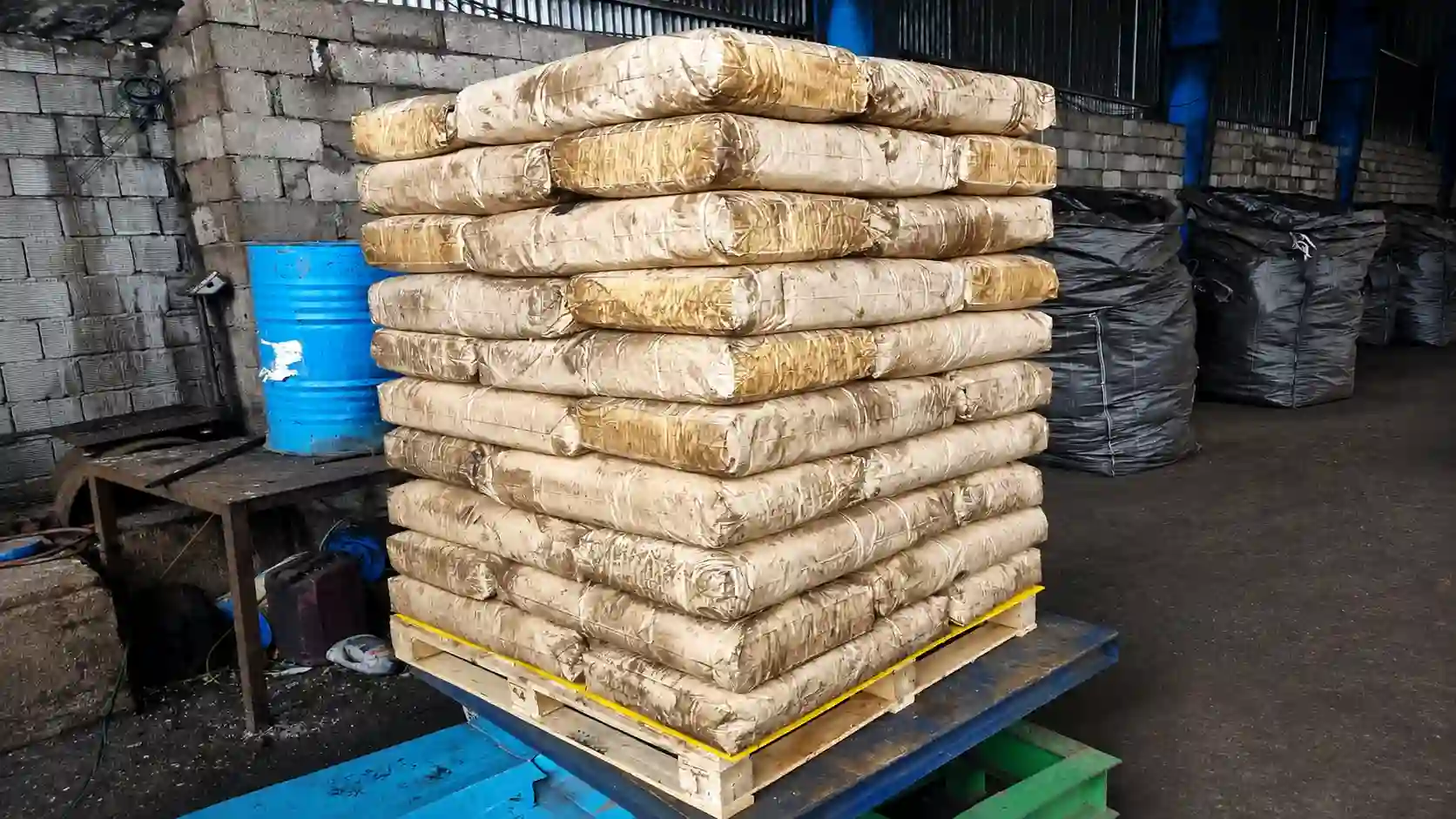
Gilsonite is generally supplied as powder, granules, or lumps.
Depending on the buyer's requirements and transportation method, packaging options may include:
Small industrial bags
Multi-layer bags
PP bags
Jumbo bags / FIBCs
Palletized bags
Customized export packaging
Packaging selection should consider particle size, dust control, moisture protection, container utilization, unloading method, and destination requirements.
For powdered Gilsonite, packaging quality is especially important because fine particles can create dust during handling.
Storage and Handling of Gilsonite
Gilsonite should be stored in a dry, properly ventilated location and protected from unnecessary exposure to moisture, contamination, ignition sources, and excessive heat.
The material should remain separated from incompatible substances.
For powdered products, facilities should use suitable industrial dust-control and housekeeping procedures. Workers should follow the product SDS and applicable occupational safety requirements.
Storage and handling practices should always follow local regulations and the supplier's safety documentation.
Transportation of Gilsonite
Gilsonite can be transported internationally by container, truck, rail, or other appropriate cargo systems depending on product form, packaging, origin, destination, and applicable transport requirements.
For export shipments, buyers should confirm:
Required quantity
Packaging
Loading quantity per container
Destination
Incoterm
Required documentation
Inspection requirements
Delivery schedule
Applicable customs classification
Transport and safety requirements
Because freight costs can represent an important portion of the landed cost, buyers should compare offers on the same Incoterm basis, such as FOB, CFR, or CIF.
How to Select the Correct Gilsonite Grade
Before requesting a quotation from a Gilsonite Supplier, buyers should ideally provide the intended application and technical requirements.
For example:
For drilling: specify drilling-fluid system, desired particle size, ash limit, softening point, and relevant performance requirements.
For asphalt: specify base bitumen, target binder or asphalt performance, softening point requirements, and intended dosage if already established.
For foundry: specify casting process, required carbonaceous characteristics, ash limits, and particle size.
For ink or coatings: specify solvent system, required ash content, particle size, color requirements, and processing conditions.
This information allows the supplier to recommend a more appropriate grade and reduces the risk of purchasing material that meets a generic specification but performs poorly in the customer's process.
Why Quality Control Is Important for Gilsonite
Gilsonite is a natural material. As with many mined products, its characteristics can vary according to geological deposit and processing.
Proper quality control is therefore essential.
Important parameters may include:
Ash
Moisture
Softening point
Particle-size distribution
Volatile matter
Specific gravity
Carbon-related characteristics
Sulfur
Solubility characteristics
Not every parameter is required for every customer.
The specification should focus on properties that influence the intended application.
Gilsonite Supplier for International Markets
International buyers generally require more than product availability. They need reliable specifications, consistent processing, appropriate packaging, export documentation, and predictable logistics.
A capable Gilsonite Supplier should understand both the technical and commercial sides of the transaction.
For bulk industrial inquiries, buyers should provide the supplier with the following information:
Product: Gilsonite / Asphaltite
Application
Required ash content
Required softening point
Required particle size or mesh
Quantity
Packaging
Destination port or delivery point
Preferred Incoterm
Required delivery schedule
Providing these details allows the supplier to prepare a more accurate technical and commercial offer.
Conclusion
Gilsonite is a versatile natural asphaltic hydrocarbon with applications across oil and gas drilling, road construction, asphalt modification, foundry manufacturing, printing inks, paints, coatings, waterproofing, sealants, and specialized industrial compounds.
Although Gilsonite is frequently called Asphaltite, natural asphalt, or natural bitumen, buyers should focus on actual technical properties rather than product terminology alone. Ash content, softening point, moisture, particle size, composition, and consistency can significantly influence performance.
Choosing an experienced Gilsonite Supplier is therefore an important part of the procurement process. The supplier should be capable of providing appropriate grades, consistent quality, technical documentation, suitable export packaging, and commercial support based on the customer's application.
For industrial and bulk purchasing, buyers should clearly communicate their required specification, application, quantity, packaging, destination, and delivery terms. This allows the Gilsonite Supplier to recommend the most suitable Gilsonite or Asphaltite grade and prepare an accurate commercial offer.
Common commercial descriptions include Asphaltite, natural asphalt, natural bitumen, mineral bitumen, and natural hydrocarbon. These terms should not automatically be considered technically identical because product characteristics can vary by source.
Gilsonite is a naturally occurring geological material. It is mined, crushed, ground, and classified rather than manufactured as conventional refinery bitumen.
Yes. Gilsonite can be used as a natural asphalt modifier in properly engineered bituminous formulations. The correct dosage should be determined through laboratory testing.
Yes. Gilsonite is commonly traded internationally in suitable packaged forms and can be shipped in containers, subject to applicable transport, documentation, packaging, and destination-country requirements.