

Viscosity Grade Bitumen VG 40
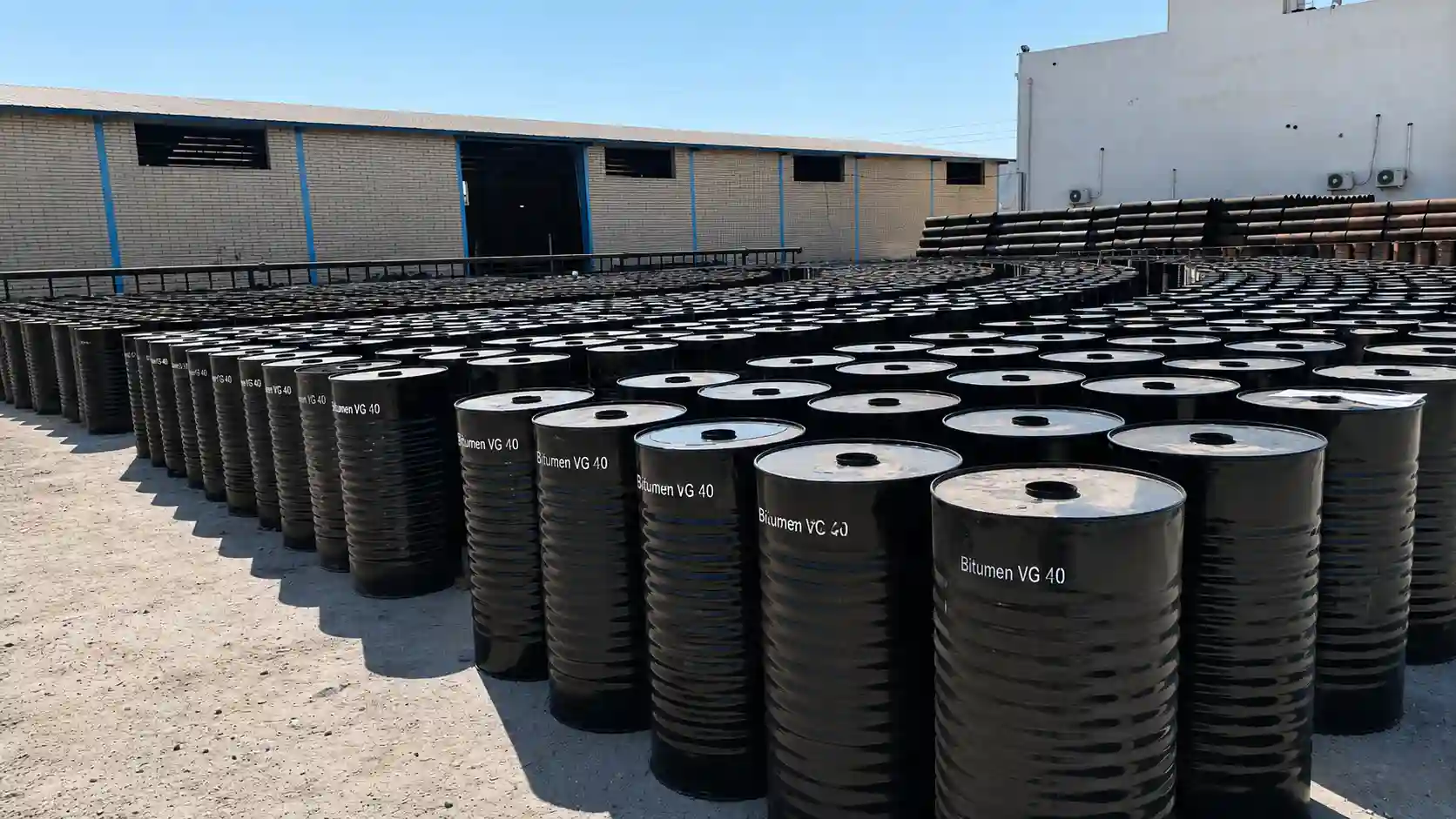
Bitumen VG 40 is a high-viscosity paving grade bitumen designed for heavy-duty road construction, highways, airport runways, intersections, and asphalt pavements exposed to high temperatures and severe traffic loads. As one of the strongest grades in the viscosity-graded bitumen classification, Bitumen VG 40 provides excellent resistance to rutting, deformation, and permanent pavement damage.
Compared with lower viscosity grades such as VG 10, VG 20, and VG 30, Bitumen VG 40 has higher viscosity and stiffness. These characteristics make it particularly suitable for regions with hot climates and roads carrying heavy commercial vehicles.
The VG classification system evaluates bitumen according to its viscosity at specified temperatures. This provides engineers and asphalt producers with a more accurate indication of how the binder will behave during mixing, compaction, and actual pavement service.
What Are the Properties of Bitumen VG 40?
Bitumen VG 40 is a viscosity grade bitumen commonly used as a binder in asphalt mixtures for heavy-duty pavement applications. The term “VG” stands for Viscosity Grade, while “40” represents its viscosity classification according to relevant testing standards.
The viscosity grading system evaluates bitumen primarily according to its viscosity at 60°C and 135°C. Testing at these temperatures provides valuable information about both pavement performance and asphalt production characteristics.
At approximately 60°C, the viscosity test indicates how the bitumen may perform under high pavement temperatures. At 135°C, viscosity helps determine the material’s workability during asphalt mixing and compaction.
Because Bitumen VG 40 is relatively stiff, it is particularly useful where pavement surfaces are exposed to heavy axle loads, slow-moving traffic, high ambient temperatures, and significant mechanical stress.
Key Properties of Bitumen VG 40
One of the main characteristics of Bitumen VG 40 is its high viscosity. Higher viscosity generally provides greater resistance against permanent deformation when asphalt pavement is subjected to heavy traffic and elevated temperatures.
Important characteristics include:
High viscosity and stiffness
Excellent resistance to rutting
Good adhesion with mineral aggregates
Strong performance under heavy traffic
Good resistance to pavement deformation
Suitable for high-temperature regions
Durable asphalt binder performance
Appropriate for heavy-duty pavement construction
These characteristics make Bitumen VG 40 particularly valuable for highways, industrial roads, intersections, bus lanes, truck terminals, and other pavement structures exposed to severe loading conditions.
Bitumen VG 40 Specifications
Typical Bitumen VG 40 specifications may include the following properties:
| Property | Typical Requirement |
|---|---|
| Absolute Viscosity at 60°C | 3200–4800 Poise |
| Kinematic Viscosity at 135°C | Min. 400 cSt |
| Flash Point, Cleveland Open Cup | Min. 220°C |
| Solubility in Trichloroethylene | Min. 99% |
| Penetration at 25°C, 100g, 5 sec | Min. 25 (0.1 mm) |
| Softening Point | Min. 50°C |
| Viscosity Ratio after RTFOT | Max. 4.0 |
Actual specifications can vary depending on the applicable national standard, refinery production parameters, and contractual requirements. Therefore, the Technical Data Sheet (TDS) and Certificate of Analysis (COA) should always be reviewed before purchase.
Applications of Bitumen VG 40
Bitumen VG 40 is primarily used for asphalt pavements where conventional softer grades may not provide sufficient resistance to traffic loading or high pavement temperatures.
Highway Construction
One of the most important applications of Bitumen VG 40 is highway construction. Highways carrying large volumes of buses, trucks, trailers, and other heavy vehicles require asphalt binders capable of resisting repeated axle loading.
VG 40 helps improve pavement stability and can reduce the risk of deformation under severe traffic conditions.
Heavy-Traffic Roads
Urban arterial roads, freight corridors, industrial access roads, and logistics routes frequently experience concentrated heavy traffic. The higher stiffness of Bitumen VG 40 makes it suitable for these demanding applications.
Airport Runways
Airport pavements are subjected to high wheel loads and considerable mechanical stress. Depending on the pavement design and project specifications, VG 40 can be used in asphalt mixtures for airport runways, taxiways, and other heavy-duty pavement areas.
Intersections and Bus Lanes
Intersections, bus stops, and bus lanes are particularly vulnerable to rutting because vehicles frequently brake, accelerate, or remain stationary on the pavement.
Using Bitumen VG 40 can provide greater resistance to shear stress and permanent deformation in these locations.
Industrial Pavements
Factories, ports, warehouses, container terminals, mining facilities, and logistics centers often require asphalt surfaces capable of supporting heavy machinery and commercial vehicles. VG 40 can be selected for such projects where high pavement stability is required.
Advantages of Bitumen VG 40
The primary advantage of Bitumen VG 40 is its ability to provide high-temperature stability in demanding pavement environments.
Excellent Rutting Resistance
Rutting occurs when asphalt pavement develops longitudinal depressions along vehicle wheel paths. High temperatures and repeated heavy loads are major contributors to this type of pavement distress.
The relatively high stiffness of VG 40 helps asphalt mixtures maintain their structural stability and resist permanent deformation.
Suitable for Heavy Axle Loads
Heavy trucks can generate significantly greater pavement stress than passenger vehicles. Roads designed for intensive freight transportation therefore require appropriate asphalt mixture design and binder selection.
Bitumen VG 40 is commonly considered for these heavy-duty pavement conditions.
Performance in Hot Climates
High pavement temperatures can soften asphalt binders and increase the possibility of rutting. Because VG 40 has relatively high viscosity, it can provide improved stability under elevated service temperatures.
This makes Bitumen VG 40 especially suitable for road projects in hot climatic regions.
Strong Aggregate Binding
Bitumen acts as the binding material that holds mineral aggregates together within an asphalt mixture. VG 40 provides strong cohesive and adhesive characteristics when correctly selected, mixed, and applied.
Long-Term Pavement Performance
Correct binder selection can contribute to reduced deformation, improved pavement stability, and longer service life. However, overall pavement performance also depends on aggregate quality, asphalt mix design, drainage, construction quality, compaction, traffic loading, and environmental conditions.
Bitumen VG 40 vs VG 30
Both VG 30 and VG 40 are widely used viscosity grades, but their applications differ because of their viscosity and stiffness.
Bitumen VG 30 is a commonly used paving grade for general road construction and asphalt production under moderate to heavy traffic conditions.
Bitumen VG 40, however, has higher viscosity and is generally selected for more demanding pavement conditions, particularly where high temperatures and heavy traffic increase the risk of rutting.
In simple terms:
VG 30 = General heavy-duty road paving
VG 40 = Higher-temperature and heavier-traffic applications
The correct choice should always be based on pavement design, climatic conditions, traffic loading, asphalt mixture requirements, and relevant engineering standards.
Production of Bitumen VG 40
Bitumen VG 40 is generally produced from carefully selected petroleum refinery streams. Crude oil is processed through atmospheric and vacuum distillation, separating lighter petroleum fractions and leaving heavier residual materials suitable for bitumen production.
Depending on the refinery configuration and required final specifications, further processing or blending may be performed to achieve the desired viscosity, penetration, softening point, and other physical characteristics.
Quality control testing is essential to ensure that the finished VG 40 meets the specified requirements before shipment.
Bitumen VG 40 Packing
Depending on supplier capability and customer requirements, Bitumen VG 40 can be supplied using different packaging and transportation methods.
Common options include:
New steel drums
Bulk bitumen tankers
Bitutainers
Jumbo bags where technically applicable
Specialized bitumen transportation systems
The appropriate packing method depends on destination, transportation infrastructure, project consumption rate, storage facilities, and required delivery volume.
For large road construction projects, bulk transportation can provide significant operational advantages where suitable heated storage and handling facilities are available.
Storage and Handling
Proper storage is important for maintaining the quality of Bitumen VG 40. Bulk bitumen should be stored in suitable insulated tanks equipped with controlled heating systems.
Excessive heating should be avoided because prolonged exposure to unnecessarily high temperatures may accelerate oxidation and alter binder characteristics.
During transportation and application, operators should follow appropriate safety procedures because hot bitumen can cause severe thermal burns. Personnel handling heated bitumen should use suitable personal protective equipment and follow the supplier’s Safety Data Sheet (SDS).
Why Choose Bitumen VG 40 for Heavy-Duty Pavements?
Selecting the correct binder is critical to asphalt pavement performance. For roads exposed to high temperatures, heavy axle loads, slow-moving vehicles, or concentrated traffic, a higher-viscosity binder can offer important performance advantages.
Bitumen VG 40 provides the stiffness required to improve asphalt mixture stability while maintaining the workability necessary for asphalt production and pavement construction when processed at appropriate temperatures.
For this reason, it is widely considered for:
Highways
Expressways
Heavy-traffic urban roads
Truck routes
Industrial roads
Airport pavements
Bus lanes
Intersections
Ports and container terminals
Logistics and freight facilities
Factors to Consider When Buying Bitumen VG 40
Before purchasing Bitumen VG 40, buyers should evaluate more than price alone. Product quality, consistency, documentation, packaging, logistics, and supplier reliability can directly influence project performance.
Buyers should request a recent Certificate of Analysis and compare the test results with the required project specifications. Important parameters such as viscosity, penetration, softening point, flash point, and solubility should be verified.
The supplier should also provide appropriate documentation such as a Technical Data Sheet and Safety Data Sheet when required.
For international shipments, buyers should additionally consider packing type, loading capacity, port conditions, transit time, storage requirements, and applicable Incoterms.
Conclusion
Bitumen VG 40 is a high-viscosity paving bitumen developed for demanding asphalt applications where resistance to high temperatures, heavy traffic, and permanent deformation is particularly important. Its combination of stiffness, adhesion, and high-temperature stability makes it an effective binder for highways, industrial roads, airport pavements, intersections, truck routes, and other heavy-duty infrastructure.
For projects operating under severe traffic or climatic conditions, selecting Bitumen VG 40 can contribute to improved asphalt stability, better rutting resistance, and longer pavement service life. Final binder selection, however, should always be based on project specifications, pavement design, local climate, traffic conditions, and applicable standards.
FAQ about Bitumen VG40
Yes. Its relatively high viscosity provides good resistance to softening and permanent pavement deformation at elevated temperatures, making it particularly suitable for hot climatic conditions when specified by the pavement design.
VG 40 has higher viscosity and stiffness than VG 30. Therefore, VG 40 is generally selected for more severe traffic and temperature conditions, while VG 30 is commonly used for broader road paving applications.
Yes. Bitumen VG 40 can be suitable for highways and other heavily trafficked roads where the pavement design requires a high-viscosity binder with strong resistance to rutting.