
PMB 40 – Polymer Modified Bitumen 40
PMB 40 is a high-performance grade of Polymer Modified Bitumen (PMB) designed for road construction and asphalt applications where conventional paving bitumen may not provide sufficient resistance to traffic loads, temperature variations and pavement deformation.
Polymer Modified Bitumen is produced by combining selected polymers with high-quality base bitumen under carefully controlled production conditions. The modification process improves the elasticity, flexibility, adhesion and temperature resistance of conventional bitumen.
As a result, PMB 40 provides better pavement performance under demanding road conditions and is widely considered for highways, urban roads, airport pavements, bridges, intersections and other areas exposed to heavy traffic.
Unlike ordinary paving bitumen, PMB 40 can offer improved resistance against rutting at high temperatures while maintaining better flexibility under lower-temperature conditions. These characteristics can contribute to longer pavement service life and reduced maintenance requirements when the material is properly selected and applied.
As an experienced bitumen supplier and exporter, we can supply PMB 40 for infrastructure, highway and asphalt projects with appropriate packing and shipping solutions according to project requirements.
What Is Polymer Modified Bitumen?
Polymer Modified Bitumen is produced when conventional bitumen is modified with suitable polymer materials to improve its physical and rheological characteristics.
Road pavements experience several types of stress during their service life. Heavy vehicles create repeated loading, hot weather can soften conventional bitumen, and colder temperatures can reduce flexibility. Over time, these conditions may result in rutting, cracking, fatigue and surface deterioration.
Modification with polymers allows the binder to perform more effectively under these conditions.
Depending on the formulation and project specification, different polymers may be used. One of the most commonly used polymer families in modified road bitumen is SBS – Styrene-Butadiene-Styrene.
SBS modification can create a flexible polymer network within the bitumen. This structure can improve elastic recovery and help the asphalt mixture recover after traffic-induced deformation.
PMB 40 is therefore particularly suitable for pavement systems where performance is more important than simply selecting the lowest-cost conventional binder.
Main Properties of PMB 40
The exact specification of PMB 40 should always be confirmed according to the applicable project standard, national road authority requirements and producer's Certificate of Analysis.
However, PMB 40 is generally selected because of characteristics such as:
High resistance to permanent deformation
Improved elasticity
Better elastic recovery
Good adhesion with aggregates
Improved resistance to rutting
Higher resistance to heavy traffic loading
Good flexibility
Improved fatigue resistance
Better performance over a wider temperature range
Stronger resistance to pavement cracking
Improved durability compared with ordinary paving bitumen
Better asphalt pavement stability under demanding service conditions
These properties make Polymer Modified Bitumen particularly important for modern road construction projects where traffic intensity, axle loads and environmental conditions continue to increase.
How PMB 40 Is Produced
The production of PMB 40 requires accurate control of several parameters, including bitumen quality, polymer dosage, mixing temperature, shear rate and mixing duration.
Production normally begins with a suitable paving-grade bitumen selected according to the required final characteristics.
The base bitumen is heated to an appropriate processing temperature. A selected polymer is then introduced into the bitumen using specialized high-shear mixing equipment.
During this stage, the polymer is dispersed throughout the bitumen and begins interacting with the binder.
The mixture must be processed carefully to achieve appropriate compatibility between the polymer and bitumen. Improper dispersion may lead to poor product stability or inconsistent performance.
After modification, the PMB is tested according to the required specification before delivery.
Important quality-control parameters may include penetration, softening point, elastic recovery, ductility, viscosity, storage stability and other characteristics required by the relevant specification.
Proper manufacturing is especially important with PMB 40, because the performance of modified bitumen depends not only on the quantity of polymer but also on the quality of the base bitumen, polymer compatibility and production process.
PMB 40 Uses and Applications
One of the major advantages of PMB 40 is its ability to perform in demanding pavement applications.
It can be used in several types of road and infrastructure projects.
1. Highway Construction
Highways are continuously exposed to repeated vehicle loads, particularly from trucks and commercial vehicles.
On heavily trafficked highways, ordinary bitumen may be more vulnerable to rutting and deformation, particularly in hot climates.
PMB 40 can provide greater pavement stability and improved resistance against permanent deformation.
For this reason, Polymer Modified Bitumen is commonly considered for major highways, expressways and arterial roads where longer pavement life is required.
2. Heavy-Traffic Roads
Industrial zones, logistics centers, container terminals and access roads may experience extremely high axle loads.
Repeated loading can create wheel-path deformation in asphalt surfaces.
The improved elasticity and deformation resistance of PMB 40 can help asphalt mixtures withstand these demanding traffic conditions more effectively.
This makes PMB 40 suitable for locations where heavy trucks operate frequently.
3. Intersections and Traffic Junctions
Road intersections are subjected to particularly severe pavement stress.
Vehicles constantly accelerate, brake and turn at these locations. These forces can create additional shear stress within the asphalt pavement.
Polymer Modified Bitumen provides better resistance to movement and deformation compared with many conventional binders.
Therefore, PMB 40 may be selected for intersections, roundabouts, traffic signals, bus lanes and other locations with frequent braking and acceleration.
4. Bridge Deck Paving
Bridge decks require pavement materials capable of handling vibration, movement and temperature fluctuations.
Because modified bitumen has improved flexibility and elastic properties, PMB 40 can be considered for asphalt layers used on bridge structures, subject to engineering specifications.
The enhanced flexibility of the binder helps the pavement accommodate movement more effectively while maintaining adhesion between asphalt components.
5. Airport Pavements
Airport runways, taxiways and service roads experience high loading from aircraft and specialized vehicles.
Pavement stability, resistance to deformation and durability are extremely important in these applications.
Where permitted by the project design and aviation specifications, Polymer Modified Bitumen can be incorporated into high-performance asphalt mixtures intended for airport infrastructure.
6. Urban Roads
High-traffic urban roads experience repeated stopping, acceleration and turning movements.
Bus stops, traffic signals and major junctions can be especially vulnerable to pavement deformation.
Using PMB 40 in appropriate asphalt mixtures can improve resistance to these stresses and help maintain a stable road surface.
7. Bus Lanes and Public Transportation Routes
Bus lanes often experience concentrated wheel loading because vehicles repeatedly follow nearly identical paths.
Bus stops create even greater pavement stress because vehicles stop and accelerate at the same locations throughout the day.
PMB 40 provides improved deformation resistance and may therefore be suitable for these demanding pavement areas.
8. Mountain and Temperature-Variable Roads
Roads located in areas with significant temperature variation require binders capable of maintaining useful properties over a broader temperature range.
High temperatures can cause conventional bitumen to soften, while lower temperatures may increase the possibility of cracking.
One of the principal advantages of polymer modification is its ability to improve binder performance across temperature variations.
PMB 40 can therefore be considered for projects where both temperature resistance and flexibility are important.
PMB 40 for Hot Climate Road Construction
High-temperature climates create significant challenges for asphalt pavement.
When pavement surface temperatures increase considerably, conventional bitumen may become softer. Under heavy traffic loading, this can contribute to permanent deformation and the development of wheel-path rutting.
Polymer modification improves the high-temperature characteristics of the binder.
For road projects in warm regions, PMB 40 can therefore offer an important advantage by improving asphalt stability under elevated pavement temperatures.
This characteristic makes Polymer Modified Bitumen relevant for road construction projects across the Middle East, Africa, South Asia and other regions where high summer temperatures and intense road traffic occur simultaneously.
However, final binder selection should always be based on pavement design, traffic conditions, aggregate properties, climate and the applicable engineering specification.
PMB 40 and Rutting Resistance
Rutting is one of the most common forms of asphalt pavement distress.
It appears as longitudinal depressions in vehicle wheel paths and is usually associated with permanent deformation within one or more pavement layers.
Several factors can contribute to rutting, including:
Heavy axle loads
High pavement temperatures
Improper asphalt mixture design
Insufficient pavement structure
Poor compaction
Weak aggregates
Binder selection
Using a higher-performance binder such as PMB 40 may help improve the rutting resistance of a properly designed asphalt mixture.
The polymer-modified binder has greater elastic characteristics and can provide improved resistance against permanent deformation.
For heavily trafficked roads, this can be a major advantage.
PMB 40 and Crack Resistance
Cracking is another major cause of asphalt pavement deterioration.
Roads experience millions of repeated traffic load cycles during their service life. These repeated stresses can eventually cause fatigue cracking.
Temperature variations may also create thermal stresses within pavement layers.
Because PMB 40 offers improved elasticity and flexibility, it may improve the asphalt mixture's ability to withstand repeated deformation.
This does not mean that Polymer Modified Bitumen alone can prevent every type of pavement cracking. Pavement design, aggregate quality, drainage, construction practices and compaction remain extremely important.
However, selecting an appropriate modified binder can substantially improve the performance potential of the asphalt mixture.
Advantages of PMB 40
There are several reasons road contractors and infrastructure authorities select PMB instead of conventional bitumen.
Improved Elasticity
The polymer component increases the elastic behavior of the binder. This helps the asphalt recover more effectively after deformation.
Better Rutting Resistance
One of the most important advantages of PMB 40 is improved resistance to permanent deformation, particularly under heavy traffic and elevated pavement temperatures.
Improved Adhesion
Good adhesion between binder and aggregate is essential for durable asphalt.
Polymer modification can contribute to improved bonding characteristics when the binder is combined with suitable aggregates.
Longer Pavement Service Life
Higher-performance pavement materials can reduce the speed at which certain forms of road deterioration develop.
When PMB 40 is correctly selected, mixed and applied, the resulting pavement may provide longer service life compared with similar pavement constructed using an unsuitable conventional binder.
Improved Fatigue Performance
Road surfaces experience continuous loading from vehicles.
The increased flexibility of Polymer Modified Bitumen can improve resistance to fatigue-related damage under repeated loading conditions.
Better Temperature Performance
PMB is designed to provide greater stability at higher temperatures while maintaining useful flexibility under cooler conditions.
This wider service-temperature capability is one of the main advantages of modified bitumen.
Reduced Maintenance Requirements
Higher initial pavement performance can result in fewer repairs and maintenance interventions over the service life of a road.
Although Polymer Modified Bitumen may have a higher initial material cost than conventional bitumen, reduced maintenance and longer pavement life can improve overall project economics.
PMB 40 vs Conventional Bitumen
Conventional paving grades such as penetration bitumen are widely used and remain suitable for many road construction applications.
However, demanding road conditions can require improved binder performance.
The key difference is that PMB 40 contains a polymer modification system designed to improve the mechanical and temperature-related characteristics of the binder.
Conventional bitumen provides good performance when appropriately selected for normal traffic and climate conditions.
PMB 40 is more commonly considered when the pavement is exposed to:
Heavy traffic
High axle loads
Extreme road temperatures
Frequent braking
High shear stress
Significant temperature variations
Demanding pavement design requirements
The correct choice between conventional bitumen and PMB should therefore be based on engineering performance requirements rather than price alone.
PMB 40 in Asphalt Mix Production
Proper handling of PMB 40 at the asphalt plant is essential.
Modified binders generally require more careful temperature management compared with conventional paving bitumen.
The binder must remain sufficiently fluid for pumping, mixing and coating the aggregates, but excessive heating should be avoided because prolonged exposure to unnecessarily high temperatures can affect material properties.
The asphalt plant operator should follow the supplier's recommended storage and handling temperatures.
During asphalt production, aggregates must be properly heated and dried before mixing with the binder.
Uniform binder distribution is important because every aggregate particle should receive adequate coating.
The final asphalt mixture must then be transported, placed and compacted within the appropriate temperature range.
Correct mixing and compaction are just as important as selecting a high-quality PMB.
Storage and Handling of PMB 40
Because PMB 40 contains polymer-modified components, correct storage is important for maintaining product quality.
Storage tanks should be clean and suitable for heated bitumen products.
Temperature must be controlled according to the producer's recommendations.
Extended storage at excessively high temperatures should be avoided.
Depending on the particular formulation, circulation or agitation may also be recommended during storage to maintain product homogeneity.
Safety precautions normally required for hot bitumen should always be followed, including suitable protective clothing, gloves, eye and face protection and proper loading procedures.
Personnel involved in handling hot PMB should be trained in safe bitumen handling practices.
Quality Control for PMB 40
Quality control is essential when purchasing Polymer Modified Bitumen for major road projects.
Each shipment should comply with the agreed specification.
Depending on the specification, testing may include:
Penetration
Softening point
Elastic recovery
Ductility
Viscosity
Flash point
Storage stability
Density
Aging characteristics
Additional project-specific performance tests
A Certificate of Analysis (COA) can be supplied according to the production batch and contractual requirements.
Where required by the buyer or project authority, third-party inspection may also be arranged according to agreed commercial conditions.
PMB 40 Packing and Transportation
The most appropriate method of delivering PMB 40 depends on the required quantity, destination and project infrastructure.
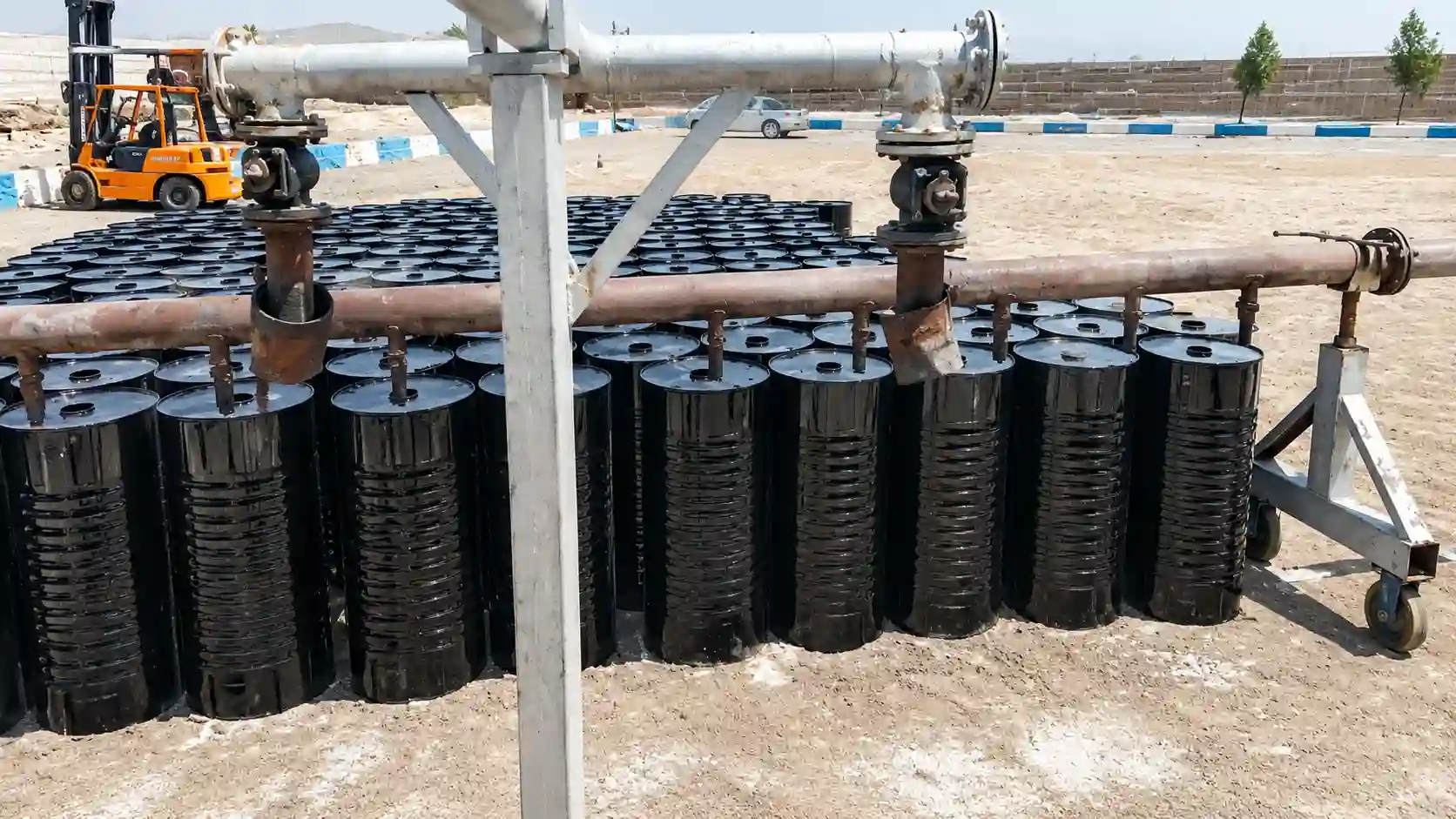
Possible transportation solutions may include bulk bitumen tankers, heated tanks, bitumen containers or other suitable packaging systems, depending on product requirements and destination facilities.
For international shipments, logistics planning is particularly important because Polymer Modified Bitumen requires controlled handling.
Before shipment, buyers should confirm:
Required quantity
Destination port
Applicable specification
Preferred packing
Project delivery schedule
Inspection requirements
Required shipping documents
Our commercial team can evaluate these details and recommend an appropriate supply arrangement.
Frequently Asked Questions About PMB 40
A properly selected Polymer Modified Bitumen can improve pavement durability and reduce certain types of deformation and cracking, which may contribute to longer service life and reduced maintenance.
Normal paving bitumen consists primarily of petroleum bitumen, while PMB 40 has been modified with selected polymers. This modification improves several performance characteristics, including elasticity and deformation resistance.
PMB 40 can improve rutting resistance when used as part of a correctly designed, manufactured and compacted asphalt mixture. Overall pavement performance also depends on aggregate quality, pavement thickness, traffic and construction practices.