
Self Adhesive Membrane: A Practical Solution for Waterproofing
Waterproofing is one of the most important considerations in modern construction. Buildings and structures are constantly exposed to rainwater, groundwater, moisture, and humidity, all of which can gradually damage concrete, insulation, finishes, and structural components. Choosing an effective waterproofing system is therefore essential for improving durability and reducing long-term maintenance costs.
A self adhesive membrane offers a practical, efficient, and reliable solution for many waterproofing applications. Unlike traditional torch-applied membranes, a self adhesive membrane can be installed without using an open flame. Its factory-applied adhesive layer allows the membrane to bond directly to a properly prepared substrate, simplifying installation while providing continuous protection against water and moisture.
Because of its convenient installation, strong adhesion, and versatility, self adhesive membrane systems are widely used for roofs, terraces, foundations, basements, wet areas, retaining walls, and other construction applications where dependable waterproofing is required.
What Is a Self Adhesive Membrane?
A self adhesive membrane is a prefabricated waterproofing sheet designed with an adhesive backing that allows it to bond directly to the substrate. The adhesive surface is normally protected by a removable release film. During installation, the film is peeled away and the membrane is carefully pressed onto the prepared surface.
Depending on the product design, self adhesive waterproofing membranes may be manufactured using modified bitumen combined with reinforcement materials and protective surface layers. The membrane is engineered to provide resistance against water penetration while maintaining sufficient flexibility to accommodate normal movements in the substrate.
The major difference between a self adhesive membrane and conventional torch-applied bituminous membranes is the installation method. Torch-applied systems require heating the underside of the membrane with a flame to activate and melt the bituminous compound. Self adhesive products rely on their integrated adhesive layer instead.
This flame-free installation method makes them particularly useful where working with an open flame is difficult, restricted, or undesirable.
Why Self Adhesive Membrane Is a Practical Waterproofing Solution
One of the main advantages of a self adhesive membrane is its practical installation process. Waterproofing projects can involve complicated details, confined spaces, vertical surfaces, or locations where traditional application methods are inconvenient.
Self adhesive technology simplifies many of these challenges.
The membrane can generally be applied using basic installation tools after appropriate surface preparation and priming where required. There is no need for burners, gas cylinders, or equipment used for heating conventional membranes.
This can make the waterproofing process cleaner and easier to organize, particularly on smaller projects or in areas with limited working space.
At the same time, a properly installed self adhesive membrane creates a continuous waterproofing barrier capable of protecting the underlying structure against moisture infiltration.
Flame-Free Waterproofing Installation
One of the most important characteristics of a self adhesive membrane is its flame-free application.
Traditional torch-on membranes require an installer to use an open flame during installation. Although torch-applied systems are well established in the waterproofing industry, certain projects have restrictions on hot works because of fire-safety requirements.
Self adhesive technology eliminates the torching stage.
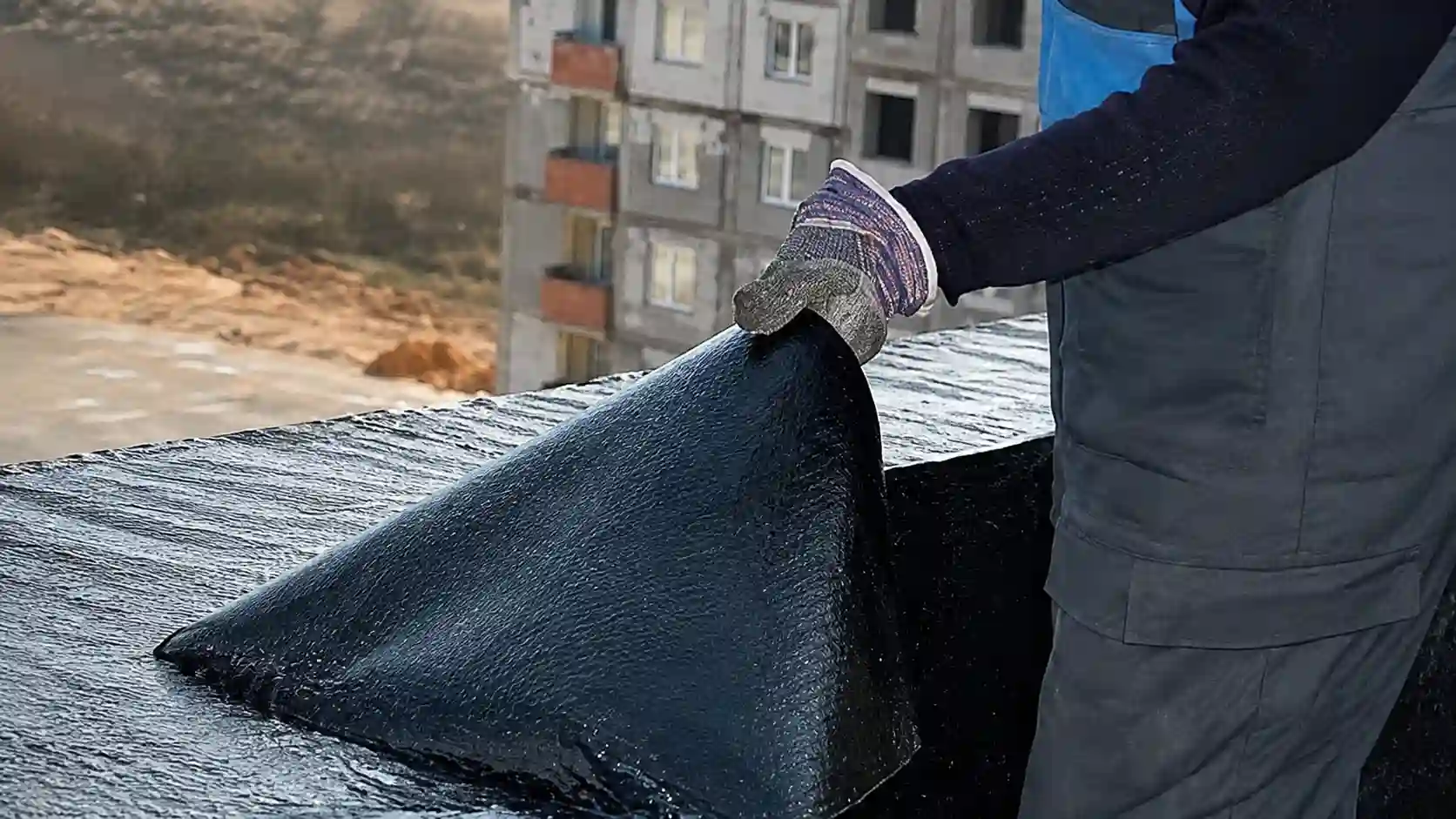
The installer removes the protective release film, positions the membrane, and applies pressure to establish adhesion to the substrate. This makes the system suitable for locations where the use of flames may be restricted.
Flame-free application can be particularly advantageous around combustible materials, renovation projects, confined spaces, wooden substrates, insulation systems, and sensitive construction environments.
Strong Adhesion to Prepared Surfaces
Effective waterproofing depends heavily on the bond between the waterproofing material and the substrate.
A high-quality self adhesive membrane is engineered to develop strong adhesion when installed on a clean, dry, smooth, and properly prepared surface.
Depending on manufacturer requirements and substrate conditions, an appropriate primer may be applied before membrane installation. Priming can improve adhesion, control surface dust, and prepare porous substrates for the membrane.
After removing the release liner, the membrane should be applied progressively to minimize wrinkles and trapped air. Pressure should then be applied across the membrane, especially along overlaps and edges.
Correct adhesion reduces the possibility of water migrating underneath the waterproofing layer and contributes to the overall reliability of the system.
Self Adhesive Membrane for Roof Waterproofing
Roofing is one of the common applications for self adhesive membrane systems.
Roofs are continuously exposed to environmental conditions including rain, temperature variations, humidity, and solar radiation. A waterproofing system must therefore prevent water penetration while maintaining its integrity throughout service.
A self adhesive membrane can be used in various roofing assemblies depending on the membrane specification and project design.
Typical applications may include:
Flat and low-slope roofs
Residential roofs
Roof refurbishment
Terraces and balconies
Roof details and upstands
Areas where torch application is restricted
When the membrane will remain exposed to sunlight, the selected product should have a suitable UV-resistant surface or receive an appropriate protective finish according to the waterproofing system design.
Waterproofing Basements and Foundations
Below-grade structures are particularly vulnerable to moisture and groundwater.
Concrete foundation walls and basement structures can develop cracks or construction joints through which water may penetrate. Persistent moisture can damage internal finishes, create damp conditions, and increase maintenance requirements.
A self adhesive membrane can be installed externally against foundation and basement walls to create a continuous barrier between the structure and surrounding soil.
For below-grade applications, the membrane is normally protected against mechanical damage before backfilling. Protection boards, drainage layers, or other protective systems may be installed according to project requirements.
Proper treatment of corners, penetrations, joints, and terminations is especially important in foundation waterproofing.
Self Adhesive Membrane for Bathrooms and Wet Areas
Bathrooms, kitchens, utility rooms, and other wet areas require reliable moisture protection beneath their final finishes.
A suitable self adhesive membrane can provide an additional waterproofing barrier underneath compatible flooring or wall systems. Because the membrane does not require flame application, it can be practical for internal construction areas.
Particular attention should be given to vulnerable locations such as floor-to-wall junctions, pipe penetrations, drains, corners, and changes in level.
The complete waterproofing system must also be compatible with the screed, adhesive, tiles, or other finishing materials installed above it.
Waterproofing Retaining Walls
Retaining walls frequently remain in direct contact with soil and moisture. Without appropriate waterproofing, water can migrate through cracks, pores, and construction joints in the wall.
Installing a self adhesive membrane on the soil-facing side of a retaining wall can help prevent moisture from reaching the structure.
After application, the waterproofing layer should normally be protected from damage caused by backfilling operations. Drainage systems may also be incorporated to reduce hydrostatic pressure against the waterproofed wall.
Combining waterproofing with proper drainage can significantly improve the performance of below-grade retaining structures.
Advantages of Self Adhesive Membrane
The growing use of self adhesive membrane products is associated with several practical advantages.
Easy Installation
The peel-and-stick concept simplifies membrane application compared with systems requiring heating equipment.
No Open Flame
A self adhesive membrane eliminates the need for torch application, making it useful where hot-work restrictions apply.
Strong Waterproofing Performance
When correctly selected and installed, the membrane creates a continuous barrier against water and moisture.
Flexible Application
Self adhesive membranes can be used on horizontal, vertical, and detailed surfaces depending on product specifications.
Cleaner Working Environment
The absence of torching and melted bitumen can help provide a cleaner installation process.
Convenient for Renovation
Because installation requires relatively limited equipment, self adhesive membrane systems can be particularly practical for refurbishment and repair projects.
Reliable Adhesion
The integrated adhesive layer is designed to provide direct bonding to compatible and correctly prepared substrates.
Importance of Surface Preparation
Although self adhesive waterproofing is relatively straightforward, surface preparation remains critical.
The substrate should generally be structurally sound, clean, smooth, and dry. Dust, loose particles, oil, grease, sharp projections, and contaminants should be removed before installation.
Cracks, holes, and irregular surfaces should be repaired as required. Sharp corners may need appropriate detailing, while internal corners may require fillets depending on the waterproofing specification.
Where recommended, a compatible primer should be applied and allowed to reach the appropriate condition before installing the self adhesive membrane.
Poor preparation can significantly reduce adhesion and compromise waterproofing performance.
How to Install Self Adhesive Membrane
Installation requirements vary between manufacturers, but the general procedure normally involves several key stages.
First, inspect and prepare the substrate. The surface should be cleaned and repaired so that the membrane can make consistent contact with it.
Next, apply the recommended primer where necessary and allow it to dry according to the manufacturer's instructions.
Measure and position the membrane before removing the release film. Proper alignment at this stage helps avoid unnecessary repositioning.
Gradually remove the release liner while pressing the self adhesive membrane firmly against the substrate. Working progressively can reduce wrinkles and trapped air.
Adjacent sheets should be overlapped according to the manufacturer's specified dimensions. Side laps and end laps should receive particular attention because they are critical points in the waterproofing system.
Finally, inspect the entire installation, including seams, corners, penetrations, terminations, and transitions.
Proper Treatment of Membrane Overlaps
Waterproofing membranes rely on continuity. Even a high-performance membrane can fail if overlaps and detailing are installed incorrectly.
The overlap width specified by the manufacturer should always be followed. The overlapping surfaces should be clean and correctly bonded.
Pressure should be applied along the seams to achieve proper contact between the layers. Some systems may require additional treatment at end laps, corners, or complex details.
The installer should avoid unnecessary wrinkles, folds, fish mouths, and air pockets.
Careful detailing is one of the most important factors affecting the long-term performance of a self adhesive membrane waterproofing system.
Self Adhesive Membrane vs. Torch Applied Membrane
Both self adhesive and torch-applied bituminous membranes can provide effective waterproofing, but their application methods are different.
A torch-applied membrane requires controlled heating to bond the bituminous layer to the substrate. This installation method is commonly used on large roofing and waterproofing projects but requires trained installers and appropriate fire-safety procedures.
A self adhesive membrane, by comparison, uses a factory-applied adhesive backing.
The main practical advantage is that no open flame is required. This can reduce the amount of installation equipment and make the system more convenient for sensitive locations and smaller or complicated areas.
However, product selection should always be based on the project environment, substrate, temperature conditions, exposure, expected movement, and applicable technical requirements.
Factors Affecting Waterproofing Performance
Several factors determine how effectively a self adhesive membrane performs.
Substrate Condition
A dusty, wet, contaminated, or irregular substrate can prevent proper bonding.
Installation Temperature
Self adhesive properties can be influenced by temperature. Installation should therefore be performed within the temperature range specified by the manufacturer.
Membrane Thickness
The appropriate thickness depends on the intended waterproofing application and project specification.
Detailing
Corners, joints, penetrations, drains, and terminations require careful installation.
Protection
Below-grade membranes should be protected against mechanical damage during subsequent construction and backfilling.
Product Quality
The performance of the finished waterproofing system depends heavily on the quality and specification of the membrane itself.
Choosing the Right Self Adhesive Membrane
Selecting the appropriate self adhesive membrane requires consideration of the actual project conditions.
Important factors include the application area, substrate type, expected water exposure, installation temperature, membrane thickness, reinforcement, surface finish, UV exposure, and compatibility with other construction materials.
For exposed roofs, weather and UV resistance may be important. For foundations, resistance to groundwater and protection against mechanical damage become priorities. For internal applications, compatibility with subsequent finishing systems should be evaluated.
Technical datasheets and installation instructions should therefore be reviewed before choosing a membrane.
Long-Term Benefits of Self Adhesive Waterproofing
Water intrusion can result in substantial repair costs if it reaches structural or interior building components. Effective waterproofing should therefore be considered a preventive investment rather than simply an additional construction layer.
A properly specified and installed self adhesive membrane can help protect concrete, insulation, finishes, and other building components from water-related deterioration.
The simple installation method can also make future repair or refurbishment work more manageable in certain applications.
For contractors and property owners, these characteristics can translate into improved construction efficiency and reduced long-term maintenance requirements.
Applications of Self Adhesive Membrane
Because of its versatility, self adhesive membrane can be considered for numerous waterproofing applications, including:
Roofs and terraces
Balconies
Foundations
Basement walls
Retaining walls
Bathrooms and wet areas
Concrete structures
Renovation projects
Waterproofing details and upstands
Areas where open-flame application is restricted
The suitability of a particular membrane should always be verified against the technical requirements of the project.
Conclusion
A self adhesive membrane provides a practical solution for waterproofing by combining convenient installation with reliable protection against water and moisture. Its integrated adhesive backing allows the membrane to bond directly to properly prepared surfaces without requiring torch application.
This flame-free installation method makes self adhesive membrane systems especially useful for roofs, terraces, basements, foundations, retaining walls, wet areas, renovations, and locations where traditional hot-applied waterproofing methods may be inconvenient.
However, successful waterproofing depends on more than the membrane itself. Proper product selection, substrate preparation, primer application where required, correct overlaps, careful detailing, and adequate protection are all essential to achieving reliable long-term performance.
For construction projects seeking an efficient and versatile waterproofing method, self adhesive membrane offers an effective combination of practicality, installation convenience, strong adhesion, and durable moisture protection.
No. It is a flame-free waterproofing system, making installation safer and more convenient, especially in areas where open flames are restricted.
Key advantages include easy installation, strong adhesion, good waterproofing performance, no torch requirement, and reduced installation time.
Yes. Self adhesive membrane is widely used for roof and terrace waterproofing, particularly where torch-applied membranes are not suitable.