

Chinese Standard Bitumen AH 70 Manufacturer and Supplier
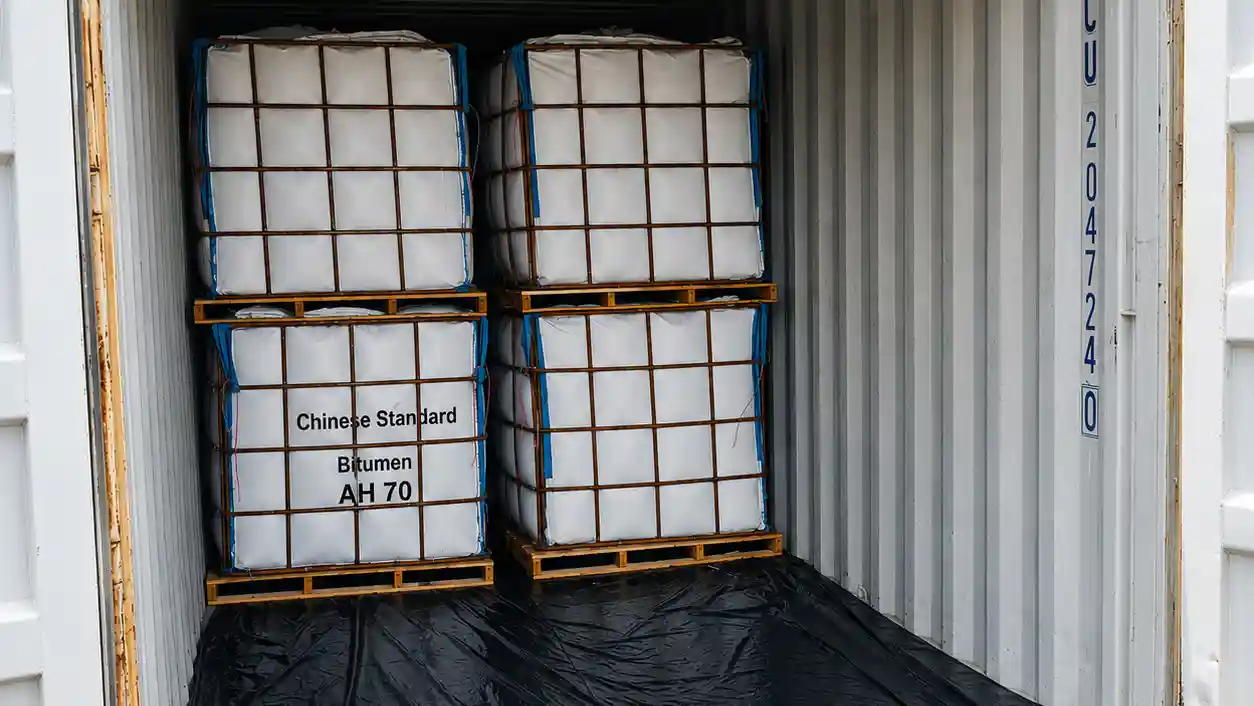
Chinese Standard Bitumen AH 70 is a penetration-grade asphalt binder produced under Chinese national road standards and used primarily in road construction and asphalt manufacturing. Contractors, asphalt plants, and paving companies rely on this grade to bind aggregate together in hot mix asphalt, giving flexible pavement the strength and flexibility it needs to handle traffic loads and weather changes.
Because road agencies and asphalt producers around the world source bitumen internationally, buyers frequently look for a dependable Chinese Standard Bitumen AH 70 supplier that can provide consistent quality, clear documentation, and reliable bulk supply. This page explains what the grade is, how it performs, where it is used, and what buyers should check before placing an order.
What Is Chinese Standard Bitumen AH 70?
Chinese Standard Bitumen AH 70 is a paving-grade asphalt binder classified under Chinese road bitumen standards, generally corresponding to a 70# penetration grade. It is produced from petroleum residue through refining processes designed to achieve a specific balance of hardness, flexibility, and temperature response.
The “AH” designation refers to a heavy-traffic road petroleum asphalt classification used in Chinese specifications, while “70” indicates the approximate penetration range at 25°C. Penetration measures how firm or soft the bitumen is at a standard test temperature, and this value directly affects how the binder behaves once it is mixed with aggregate.
In practical terms, AH 70 Bitumen needs to be soft enough to coat aggregate properly during mixing and compaction, yet firm enough to resist deformation once the pavement is in service. Because temperature-related properties such as softening point and penetration influence rutting resistance and cracking behavior, engineers evaluate these figures carefully when selecting a grade for a specific climate and traffic load. Within an asphalt mixture, AH 70 functions as the binding agent that holds aggregate particles together, forms a continuous film around each particle, and provides the flexible pavement with structural cohesion.
Chinese Standard Bitumen AH 70 Specifications
Buyers evaluating Chinese Standard Bitumen AH 70 specification sheets typically focus on a handful of core properties. Each one reflects a different aspect of how the bitumen will perform in the field.
Penetration at 25°C indicates the hardness of the binder and helps confirm that the material falls within the expected 70# range. Softening point shows the temperature at which the bitumen begins to soften, which matters for hot-weather performance and resistance to rutting. Ductility measures how far the bitumen can stretch before breaking, an important indicator of flexibility and crack resistance, particularly in colder conditions.
Flash point relates to safe handling and transport temperatures, since bitumen must be stored and applied well below this threshold. Viscosity affects how easily the material flows during mixing and application, while solubility confirms the purity of the bitumen and the absence of excessive inert material. Wax content is checked because higher wax levels can reduce adhesion and low-temperature flexibility, and aging performance, often assessed through thin-film oven testing, shows how much the binder hardens after exposure to heat and air during production.
Technical Specification Table
| Property | Typical Requirement | Test Method |
|---|---|---|
| Penetration at 25°C, 100g, 5s (0.1mm) | 60–80 | ASTM D5 / GB/T 4509 |
| Softening Point, Ring & Ball (°C) | ≥46 | ASTM D36 / GB/T 4507 |
| Ductility at 15°C, 5cm/min (cm) | ≥100 | ASTM D113 / GB/T 4508 |
| Flash Point, COC (°C) | ≥260 | ASTM D92 / GB/T 267 |
| Solubility in Trichloroethylene (%) | ≥99.5 | ASTM D2042 / GB/T 11148 |
| Wax Content (%) | ≤2.2 | GB/T 11147 |
| Density at 15°C (g/cm³) | 1.00–1.10 | GB/T 8928 |
| Mass Loss after TFOT/RTFOT (%) | ≤0.8 | ASTM D2872 / GB/T 5304 |
| Retained Penetration after TFOT/RTFOT (%) | ≥61 | GB/T 5304 |
Values may vary depending on the applicable Chinese standard, refinery specification, production source, and contractual requirement. Buyers should confirm the final specification through the supplier’s current TDS or COA before purchase.
Key Properties of AH 70 Bitumen
The practical value of AH 70 Bitumen comes from how its properties work together in a finished pavement. Suitable penetration allows the binder to coat aggregate evenly without becoming too fluid at working temperatures. Strong adhesion keeps the bitumen bonded to aggregate surfaces, while cohesion holds the binder film itself together under repeated traffic loading.
Bitumen also acts as a waterproofing layer, protecting the aggregate base from moisture infiltration that can weaken pavement structure over time. Temperature sensitivity, meaning how much the material’s stiffness changes with heat or cold, influences whether a pavement resists rutting in summer and cracking in winter. Durability and workability round out the picture: a well-balanced binder should be manageable during construction while continuing to perform reliably over the pavement’s service life. Together, these characteristics determine how effectively AH 70 binds asphalt aggregate into a cohesive, load-bearing surface.
Applications of Chinese Standard Bitumen AH 70
Highway Construction
AH 70 Bitumen is commonly used as the binder in asphalt pavement layers for highways, where consistent penetration and softening point help the pavement withstand sustained traffic loading and variable weather.
Urban Roads
Municipal and city road projects often specify AH 70 for surface and binder courses, since it offers a practical balance of workability and performance for typical urban traffic conditions.
Hot Mix Asphalt Production
Asphalt plants use AH 70 as the primary binder in hot mix asphalt, where it is heated, blended with aggregate, and compacted to form the finished road surface.
Airport and Infrastructure Projects
Some airport pavements and infrastructure projects may use AH 70 where project specifications and traffic loading requirements allow; however, buyers should always confirm suitability against the relevant design standard before use.
Road Maintenance and Rehabilitation
AH 70 also supports resurfacing and rehabilitation work, helping restore binder performance on aging pavement sections when the mix design calls for a comparable penetration grade.
AH 70 Bitumen is not automatically suitable for every climate or every project type, so specification review remains an important step regardless of application.
AH 70 Bitumen for Asphalt Production
Inside an asphalt plant, AH 70 Bitumen is heated to a controlled temperature and combined with graded aggregate to achieve full aggregate coating. Consistent mixing temperature matters because overheating can accelerate binder aging, while insufficient heat can leave aggregate poorly coated, weakening the finished mix.
After mixing, the asphalt is transported, placed, and compacted while still workable. Binder performance during this stage affects how well the mat compacts and how durable the final pavement layer becomes. Quality consistency in the bitumen itself, batch to batch, helps asphalt producers maintain predictable mix behavior and avoid unexpected adjustments on site.
It is worth noting that final asphalt mix performance depends on more than the binder alone. Aggregate grading, binder content, mix design, climate conditions, traffic loading, and construction practices all influence how a pavement performs over its service life.
AH 70 vs Bitumen 60/70
Buyers frequently ask whether AH 70 vs Bitumen 60/70 refers to the same product. Although AH 70 and penetration grade Bitumen 60/70 can show overlapping penetration characteristics, buyers should not automatically treat them as identical or interchangeable.
The two designations often come from different grading systems, with different test requirements, specification limits, and regional standards. AH 70 reflects Chinese national standards, while Bitumen 60/70 is a penetration grade commonly referenced in other regional or international specifications. Procurement requirements, including which test methods apply and which national standard a project references, can differ even when penetration ranges appear similar. For this reason, buyers should compare the full technical specification of each product rather than relying on the product name alone.
AH 70 vs AH 90 and AH 110
AH 70, AH 90, and AH 110 represent different penetration grades within the Chinese bitumen classification system, with the numbers generally indicating relative hardness. As penetration increases, the binder tends to become softer and more flexible at a given temperature, which can improve low-temperature crack resistance but may reduce resistance to rutting in hot conditions.
Choosing between these grades depends on climate, traffic loading, and pavement design requirements rather than a simple assumption that a higher or lower number performs better. Project engineers typically select the grade that matches local temperature ranges and expected traffic stress, since no single grade performs best across every condition.
Packaging Options for Bitumen AH 70
Export packaging for AH 70 Bitumen generally falls into a few common categories, each suited to different logistics scenarios.
New steel drums remain a widely used option for smaller or mixed shipments, offering straightforward handling at ports with limited bulk-unloading infrastructure. Bulk tanker supply, whether by sea in bulk vessels or by land tanker, suits buyers with heated storage tanks and larger order volumes, typically reducing per-ton packaging costs. Bitutainer or containerized bulk systems, where available, offer a middle option that allows bulk-style delivery without requiring dedicated tank terminal infrastructure at the destination port. Jumbo bags or other specialized packaging may suit specific project needs, though their use depends on commercial and technical suitability for the shipment in question.
Buyers should weigh destination port capabilities, available unloading infrastructure, shipment quantity, on-site storage facilities, and local import regulations when selecting a packaging method, since the right option varies by project and destination.
Storage and Handling
Proper storage and handling protect both product quality and workplace safety. Bitumen generally requires heated storage to remain workable, with temperature monitoring in place to avoid overheating, which can accelerate aging and affect binder properties. Storage tanks and drums should be kept free of contamination, and handling procedures should minimize exposure to moisture or foreign material.
Personnel working around hot bitumen should use appropriate personal protective equipment and ensure adequate ventilation, since fumes and high temperatures both present handling considerations. Detailed procedures should always follow the current Safety Data Sheet for the specific product batch, as handling requirements can vary slightly depending on packaging and storage conditions.
Chinese Standard Bitumen AH 70 Price
AH 70 Bitumen price depends on a range of factors that shift over time, which is why fixed prices are rarely meaningful without context. Crude oil prices and refinery production levels influence base feedstock costs, while overall market demand affects short-term pricing trends.
Order quantity, packaging choice, origin, shipping costs, destination port, currency fluctuations, applicable Incoterms, and seasonal demand patterns all affect the final delivered price per ton. Because these variables change frequently, buyers seeking an accurate AH 70 Bitumen price per ton should request an updated quotation based on their specific quantity, packaging preference, destination, and delivery terms rather than relying on general market estimates.
How to Choose an AH 70 Bitumen Supplier
Selecting a reliable AH 70 Bitumen supplier involves more than comparing quoted prices. Consistent specifications across shipments help ensure predictable mix design outcomes, so buyers should confirm that a supplier can maintain stable quality batch to batch.
Availability of a current Technical Data Sheet, Safety Data Sheet, and Certificate of Analysis allows buyers to verify product properties before and after shipment. Packaging quality affects product condition on arrival, while loading capacity and export experience influence how smoothly a shipment moves from origin to destination. Clear shipment documentation, reliable delivery timelines, traceability of product batches, and the availability of third-party inspection options all contribute to a smoother procurement process and reduce the risk of disputes after delivery.
AH 70 Bitumen Supplier and Exporter
Basekim supplies and exports Chinese Standard Bitumen AH 70 for international road construction, asphalt production, trading, and infrastructure projects, subject to the required specification, packaging, quantity, and destination. Buyers can request current technical documentation and shipment details to confirm suitability for their specific project before finalizing an order.
Documents Available for AH 70 Bitumen
Depending on the shipment and applicable regulations, buyers may request several standard product and shipment documents, including the Technical Data Sheet (TDS), Safety Data Sheet (SDS/MSDS), Certificate of Analysis (COA), commercial invoice, packing list, Certificate of Origin where applicable, and inspection documentation when an independent inspection has been arranged. Not every document applies to every shipment, so buyers should confirm document requirements before booking an order.
Why Specification Matching Matters
Matching the bitumen grade to a project’s actual requirements is one of the most important steps in the procurement process. National road standards, local climate conditions, pavement design parameters, expected traffic loading, asphalt mix design, and project consultant requirements all influence which grade is appropriate.
Selecting bitumen based only on grade name, without reviewing the full specification against these project factors, can lead to procurement errors and pavement performance issues later on. Reviewing the complete technical data sheet against project requirements, rather than assuming equivalence between similarly named grades, helps avoid these problems.
FAQ for Bitumen AH 70
Chinese Standard Bitumen AH 70 is a penetration-grade paving asphalt binder classified under Chinese road standards, generally corresponding to a 70# grade. It is used in road construction and asphalt production, where its penetration and temperature-related properties support flexible pavement performance.
Key specifications include penetration at 25°C (typically 60–80), softening point (≥46°C), ductility, flash point, solubility, and wax content. Exact limits vary by standard and supplier, so buyers should confirm figures through a current TDS or COA.
AH 70 Bitumen is used as an asphalt binder in highway construction, urban roads, hot mix asphalt production, road maintenance, and select infrastructure projects, subject to project specifications and climate suitability.