

Bitumen MC 800: Specification, Uses, Price, Application and Supply
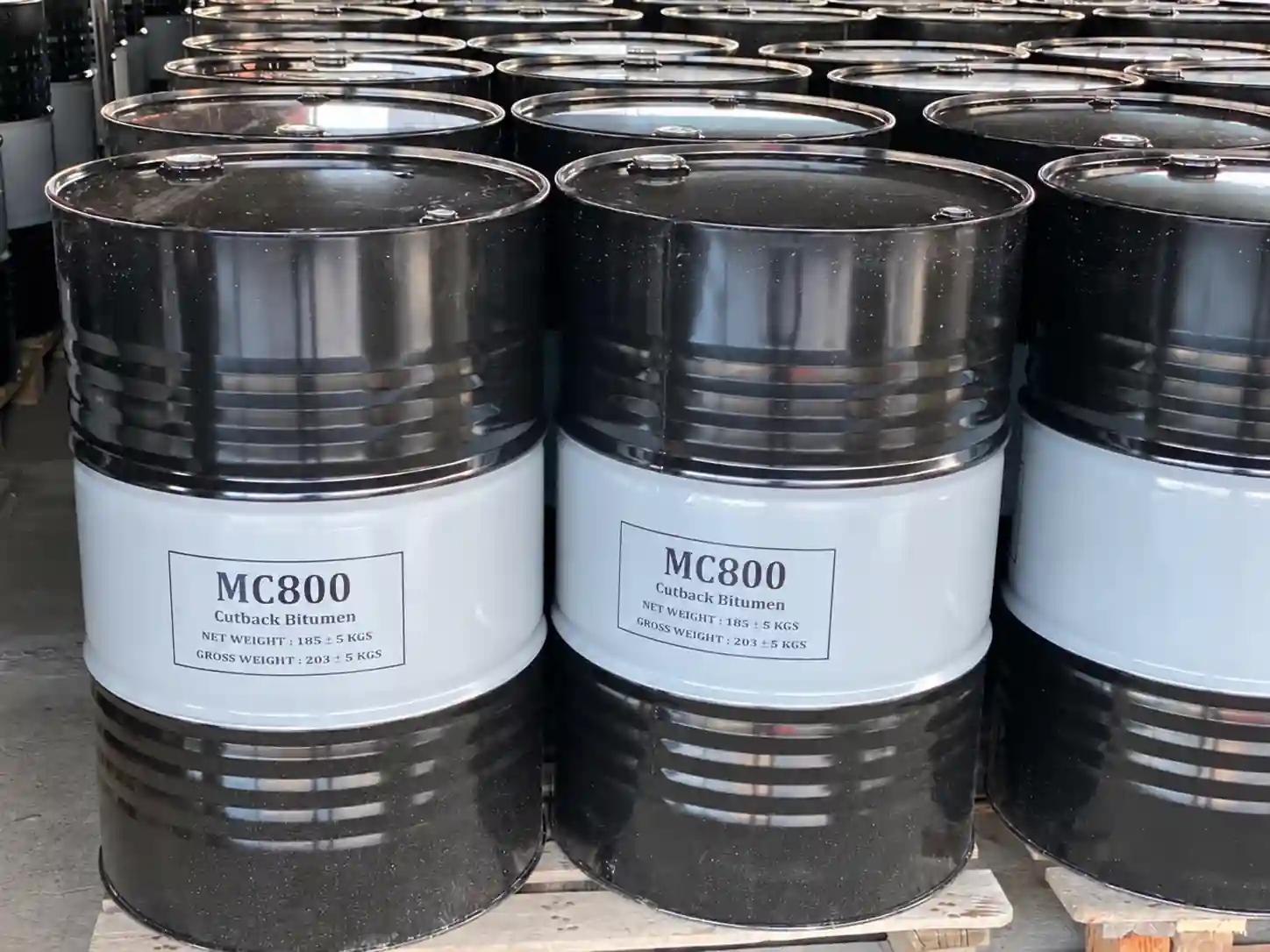
Bitumen MC 800 is a medium-curing cutback asphalt designed for road construction, stockpile mixes, patching, surface treatments, and other applications that need a workable bituminous binder with considerably higher viscosity than lighter MC grades. Its controlled solvent content allows contractors to mix, spread, and handle the binder without working at the temperatures normally required for conventional paving bitumen. With a typical kinematic viscosity range of 800–1,600 cSt at 60°C, MC 800 sits between MC 250 and MC 3000 and offers an effective balance between workability, coating strength, curing time, and retained asphalt residue.
For contractors and bulk buyers, choosing this grade is not simply a matter of asking whether MC 800 is available. The project must match the binder's viscosity, curing profile, aggregate condition, climate, mixing method, and required final film thickness. When those factors align, Cutback Bitumen MC 800 can provide reliable aggregate coating and leave behind a durable bituminous binder after the volatile components evaporate.
What Is Cutback Bitumen MC 800?
Cutback Bitumen MC 800 belongs to the medium-curing family of cutback asphalt products. Producers manufacture it by combining asphalt cement with a suitable petroleum distillate that temporarily lowers the viscosity of the asphalt.
The solvent gives the material enough fluidity for mixing, spraying, or coating. After application, the volatile portion gradually evaporates and leaves asphalt residue on the aggregate or treated surface.
The current ASTM D2027/D2027M specification covers medium-curing cutback petroleum asphalts intended for pavement construction and treatment.
The number 800 does not refer to penetration grade or temperature. Instead, it identifies the viscosity class. Under commonly referenced requirements, MC 800 Bitumen viscosity at 60°C falls between 800 and 1,600 mm²/s, or cSt.
This viscosity level gives MC 800 a noticeably heavier body than MC 70 or MC 250 while keeping it workable for applications where straight asphalt cement would be too viscous.
Why Choose MC 800 Instead of a Lighter Cutback Grade?
One of the most important purchasing decisions is selecting the correct viscosity rather than simply selecting a medium-curing product.
Lighter grades spread easily and can penetrate porous surfaces more readily. However, they contain a larger proportion of fluidizing components relative to their working behavior and create a thinner coating.
MC 800 provides a different balance.
Its higher viscosity helps produce a heavier bituminous film around aggregate particles. This can become important in stockpile mixtures, patching materials, certain plant mixes, and applications where the contractor wants better binder body without moving to an extremely viscous grade.
This distinction is particularly useful for procurement teams. A project may technically accept several cutback grades, but they will not behave identically during mixing or curing.
Selecting the correct grade can improve:
- aggregate coating;
- binder retention;
- mixture stability;
- handling characteristics;
- film thickness;
- resistance to binder drainage;
- storage performance of prepared patching mixtures.
Therefore, buyers should compare the grade with the actual project method rather than purchasing exclusively based on price.
Cutback Bitumen MC 800 Specification
The Cutback Bitumen MC 800 specification normally focuses on the liquid material and the asphalt residue that remains after distillation.
A typical specification framework is:
| Property | Typical Requirement |
|---|---|
| Product | Medium-Curing Cutback Asphalt |
| Grade | MC 800 |
| Kinematic Viscosity at 60°C | 800–1,600 cSt |
| Flash Point, Tag Open Cup | Min. 66°C |
| Water | Max. 0.2% |
| Distillate to 260°C | Max. 35% |
| Distillate to 315°C | 45–80% |
| Residue from Distillation to 360°C | Min. 75% |
| Ductility of Residue at 25°C | Min. 100 cm |
| Solubility of Residue | Min. 99% |
These values align with commonly referenced AASHTO MC-800 requirements.
Exact contractual requirements can vary by destination, project specification, test method, and customer agreement. Buyers should therefore review the Certificate of Analysis before shipment.
Why the Residue Percentage Matters More Than Many Buyers Realize
One useful way to evaluate MC 800 is to look beyond its delivery viscosity.
The liquid product is temporary.
What ultimately remains in the pavement or mixture after curing is the asphalt residue.
For this reason, residue after distillation provides important information about the binder that the road actually retains. A typical MC 800 specification requires at least 75% asphalt residue by volume after distillation to 360°C.
This matters commercially because two products that appear similar during unloading may not necessarily leave the same amount or quality of effective binder after curing.
When reviewing an MC 800 Bitumen TDS, procurement teams should therefore avoid checking viscosity alone. Residue properties, ductility, solubility, water content, and distillation behavior should also match the specified standard.
MC 800 Bitumen Viscosity
MC 800 Bitumen viscosity is the defining characteristic of this grade.
The commonly specified kinematic viscosity range is:
800–1,600 cSt at 60°C.
This relatively broad controlled range allows producers to manufacture material that remains within the MC 800 class while accommodating normal production and testing tolerances.
Viscosity affects several practical characteristics:
- pumping;
- transfer speed;
- aggregate coating;
- spray behavior;
- mixing energy;
- required application temperature;
- binder film thickness.
A product near the lower end of the allowable range will generally flow more readily than material close to the upper limit.
Contractors should therefore consider actual batch test results when precise pumping or spraying conditions matter.
MC 800 Bitumen Density
MC 800 Bitumen density is not normally the primary grading parameter.
Unlike viscosity, density can vary depending on the asphalt base, solvent type, blending ratio, temperature, and production source.
For this reason, buyers should avoid treating one generic density number found online as a universal specification.
The supplier should state batch-specific or typical density data in the relevant technical documentation when the value is required for tank calibration, freight calculations, mass-to-volume conversions, or equipment settings.
This approach becomes especially important in bulk deliveries because even a relatively small density difference can affect calculated shipment volume.
MC 800 Bitumen Flash Point
The MC 800 Bitumen flash point is especially important for storage, heating, transportation, and workplace safety.
A commonly referenced minimum is 66°C using the Tag Open Cup method.
Because MC 800 contains volatile petroleum components, operators must control ignition sources and avoid inappropriate heating practices.
The flash point should never be interpreted as a recommended heating temperature.
It represents a laboratory safety characteristic under a defined test procedure. Operational temperatures should follow the project's method statement, supplier documentation, tank design, and applicable safety regulations.
MC 800 Bitumen Uses
The most suitable MC 800 Bitumen uses generally involve applications where the contractor needs more body and binder retention than lighter cutback grades provide.
Typical uses can include:
1. Stockpile Patching Mixes
MC 800 can perform well in bituminous stockpile mixtures intended for road maintenance and patch repair.
Its medium-curing nature allows aggregate coating during production while maintaining a workable mixture for handling.
Some highway specifications specifically identify MC-800 for bituminous stockpile patching material.
2. Road Maintenance
Maintenance crews may use the grade in mixtures designed for repairing damaged pavement areas, depending on local specifications.
Its viscosity supports a substantial asphalt film around properly selected aggregate.
3. Premix Applications
In suitable mix designs, MC 800 can act as a binder for mineral aggregate where the project requires a medium-curing cutback rather than hot paving-grade asphalt.
4. Surface Treatment
Certain specifications may permit MC 800 in bituminous surface treatments where its spraying and curing characteristics match the equipment, aggregate, and environmental conditions.
5. Patch Material Production
The grade can support production of repair mixtures where contractors need sufficient cohesion while retaining practical workability during placement.
MC 800 Bitumen Application
A successful MC 800 Bitumen application depends on much more than the binder itself.
Contractors should control aggregate cleanliness, moisture, gradation, binder dosage, mixing temperature, curing conditions, and application rate.
The aggregate should provide enough surface area and compatibility for the binder to form a consistent coating.
Excessive binder can create an unstable or overly rich mix. Insufficient binder can leave aggregate particles only partially coated.
Temperature also changes handling behavior significantly. As temperature rises, viscosity decreases and the material becomes easier to pump and mix. However, uncontrolled heating creates safety risks and can accelerate loss of volatile components.
Operators should therefore work within the project-approved operating range rather than overheating the material simply to improve flow.
A Better Way to Think About MC 800 Curing
MC 800 does not “dry” in the same way as water-based paint.
Instead, the material gradually loses its volatile petroleum fraction.
As those lighter components leave the applied mixture, the asphalt phase becomes progressively more concentrated and viscous.
This means curing speed is not controlled by one fixed number.
It can change with:
- ambient temperature;
- wind;
- layer thickness;
- aggregate absorption;
- surface area;
- binder dosage;
- ventilation;
- solvent composition.
A thin exposed film can cure differently from MC 800 trapped inside a dense stockpile mixture.
Therefore, buyers should be cautious when a supplier gives one universal curing time without considering actual field conditions.
This practical curing behavior is one reason why project-specific trials can provide more useful information than relying only on generic product descriptions.
MC 800 Cutback Asphalt and Aggregate Compatibility
MC 800 Cutback Asphalt must form a continuous coating around the aggregate to perform properly.
Aggregate properties can change the result dramatically.
Dusty aggregate can interfere with adhesion. Excessive moisture can also reduce coating efficiency in some mixtures. Highly absorptive aggregate may require a different binder dosage from dense, low-absorption stone.
Gradation matters as well.
Fine aggregate creates substantially more total surface area than coarse aggregate. As a result, two mixtures containing the same total aggregate weight may need different amounts of binder.
For commercial projects, suppliers and contractors should therefore avoid determining MC 800 consumption only from a generic “kg per ton” estimate.
A laboratory mix design or field trial gives a far more reliable basis.
MC 800 vs MC 250
MC 250 and MC 800 both belong to the medium-curing cutback family, but their viscosity ranges differ significantly.
MC 250 commonly falls within approximately 250–500 cSt at 60°C, while MC 800 falls within approximately 800–1,600 cSt.
Therefore, MC 250 flows more easily under the same temperature conditions.
MC 800, however, provides a heavier binder consistency.
In practical terms:
| Property | MC 250 | MC 800 |
|---|---|---|
| Relative Viscosity | Lower | Higher |
| Flow | Easier | Heavier |
| Aggregate Film | Generally thinner | Generally heavier |
| Pumping Requirement | Lower | Higher |
| Grade Selection | Lighter applications | Heavier coating requirements |
Neither grade is automatically better.
The correct choice depends on the specified application.
MC 800 Bitumen Packing
Reliable MC 800 Bitumen packing is particularly important because the product contains volatile petroleum components.
Depending on order size, destination, transportation regulations, and supplier capability, packaging may include:
- new steel drums;
- bulk tanker supply;
- approved intermediate bulk systems where technically suitable.
Steel drums remain a practical export option for many destinations because they simplify handling, container loading, warehousing, and distribution to smaller projects.
Bulk supply can become more economical for high-volume road projects with suitable heated storage and unloading facilities.
Buyers should confirm net weight, drum condition, pallet requirements, container loading quantity, and dangerous-goods transportation requirements before finalizing a purchase.
Cutback Bitumen MC 800 Price
The Cutback Bitumen MC 800 price changes with several factors rather than following one permanent international rate.
Major price drivers include:
- asphalt cement cost;
- petroleum distillate cost;
- production volume;
- packaging type;
- steel drum price;
- order quantity;
- loading location;
- freight;
- destination;
- payment terms;
- required testing;
- Incoterm.
A bulk quotation can therefore differ considerably from a drum-packed export quotation.
Buyers should also compare quotations on the same commercial basis.
For example, an EXW price should not be compared directly with CFR or CIF without calculating inland transport, export handling, ocean freight, insurance, and port charges.
For an accurate offer, buyers should provide the destination port, required quantity, preferred packing, applicable standard, and Incoterm.
Choosing an MC 800 Bitumen Supplier
A reliable MC 800 Bitumen supplier should provide more than a competitive quotation.
The supplier should be able to offer appropriate documentation, consistent production, secure packaging, export support, and traceable quality control.
Basekim supplies MC 800 for international road construction and industrial buyers subject to required specifications, packaging, order volume, and destination.
Before confirming an order, buyers should request:
- recent Certificate of Analysis;
- specification sheet;
- packing details;
- product origin information where required;
- inspection options;
- shipment terms;
- loading capacity;
- delivery schedule.
Large buyers may also request third-party inspection before shipment.
MC 800 Bitumen Technical Data Sheet
An MC 800 Bitumen technical data sheet should give engineers enough information to evaluate product conformity and handling requirements.
The document normally includes:
- product identification;
- grade;
- viscosity range;
- flash point;
- water content;
- distillation results;
- residue percentage;
- residue properties;
- relevant test methods;
- recommended storage information.
An MC 800 Bitumen TDS should not replace the Certificate of Analysis.
The TDS describes the grade and its typical or required limits, while the COA reports actual results for a produced batch.
For major purchases, buyers should review both documents.
MC 800 Bitumen MSDS
An MC 800 Bitumen MSDS, now more commonly called an SDS, provides health, safety, handling, storage, fire-response, exposure-control, and transportation information.
Because MC 800 contains petroleum distillates, workers should avoid unnecessary inhalation of vapors and direct skin or eye contact.
Facilities should use suitable ventilation, appropriate personal protective equipment, controlled heating systems, and fire-safe storage procedures.
The SDS should also identify appropriate emergency procedures and extinguishing media.
Buyers should request the current SDS before shipment, particularly when the product will move through international ports or regulated storage facilities.
Storage and Handling
Store MC 800 in properly designed, closed containers or tanks suitable for petroleum-based cutback materials.
Protect the product from:
- open flames;
- sparks;
- excessive heat;
- water contamination;
- unsuitable oxidizing materials.
When heating is necessary, operators should use controlled systems and monitor temperatures carefully.
Avoid prolonged unnecessary heating because it can change the volatile fraction and therefore alter the material's handling properties.
Before pumping material that has remained in storage, check temperature and viscosity conditions to ensure the transfer system can handle the binder safely.
Quality Control Before Ordering
For large-volume procurement, use a structured approval process.
First, define the required standard and grade.
Next, request the technical data sheet and recent COA.
Then compare viscosity, flash point, distillation, residue, ductility, solubility, and water content.
If the project has unusual aggregate or climatic conditions, conduct a small-scale compatibility or mix trial before committing the entire volume.
This approach can reduce disputes after delivery because both supplier and buyer agree on the technical basis of the transaction before shipment.
Order Cutback Bitumen MC 800
MC 800 offers a practical combination of workability, controlled curing, and relatively high binder viscosity for road maintenance and construction applications requiring a medium-curing cutback asphalt.
Its real advantage lies in grade selection.
Projects that need more binder body than MC 250 provides, while still requiring the handling benefits of a cutback product, may find MC 800 particularly suitable.
For purchasing, provide the following information when requesting a quotation:
- product: MC 800;
- required quantity;
- specification or standard;
- packing type;
- destination port or delivery location;
- Incoterm;
- required inspection;
- target delivery schedule.
These details allow the supplier to prepare a technically relevant quotation rather than a generic price indication.
Frequently Asked Questions
1. What is Bitumen MC 800?
Bitumen MC 800 is a medium-curing cutback asphalt produced by reducing the viscosity of asphalt cement with a suitable petroleum distillate. It provides workable handling during application and leaves asphalt residue after the volatile components evaporate.
2. What is the viscosity of MC 800 Bitumen?
The typical specified kinematic viscosity is 800–1,600 cSt at 60°C.
3. What are the main MC 800 Bitumen uses?
Common applications include stockpile patching mixes, road maintenance mixtures, premix applications, and certain surface-treatment operations where project specifications permit the grade.
4. What is the flash point of MC 800?
A commonly referenced specification requires a minimum Tag Open Cup flash point of 66°C.
5. Is MC 800 thicker than MC 250?
Yes. MC 800 has a higher viscosity range than MC 250 and therefore provides a heavier binder consistency under comparable temperature conditions.
6. What affects Cutback Bitumen MC 800 price?
Raw-material costs, solvent costs, packing, quantity, freight, destination, inspection requirements, payment conditions, and Incoterms can all affect the final price.
7. Can MC 800 be supplied in drums?
Yes. Steel drums are commonly used for export supply, while bulk delivery may also be suitable for large projects with appropriate storage infrastructure.
8. What is the difference between an MC 800 Bitumen TDS and COA?
The TDS describes typical product characteristics and specification limits. A Certificate of Analysis reports laboratory results for a particular production batch.
9. Why is the residue from distillation important?
The residue represents the asphalt binder remaining after volatile components leave the material. It therefore provides useful information about the effective binder retained in the final road mixture.
10. How should MC 800 be stored?
Store it in appropriate closed petroleum-product tanks or containers, protect it from ignition sources and contamination, and follow the current SDS and local regulations for heating and handling.
Bitumen MC 800 is a medium-curing cutback asphalt produced by reducing the viscosity of asphalt cement with a suitable petroleum distillate. It provides workable handling during application and leaves asphalt residue after the volatile components evaporate.
The typical specified kinematic viscosity is 800–1,600 cSt at 60°C.
Common applications include stockpile patching mixes, road maintenance mixtures, premix applications, and certain surface-treatment operations where project specifications permit the grade.
A commonly referenced specification requires a minimum Tag Open Cup flash point of 66°C.