

Cutback Bitumen MC 250 – Specification, Uses, Price and Supply
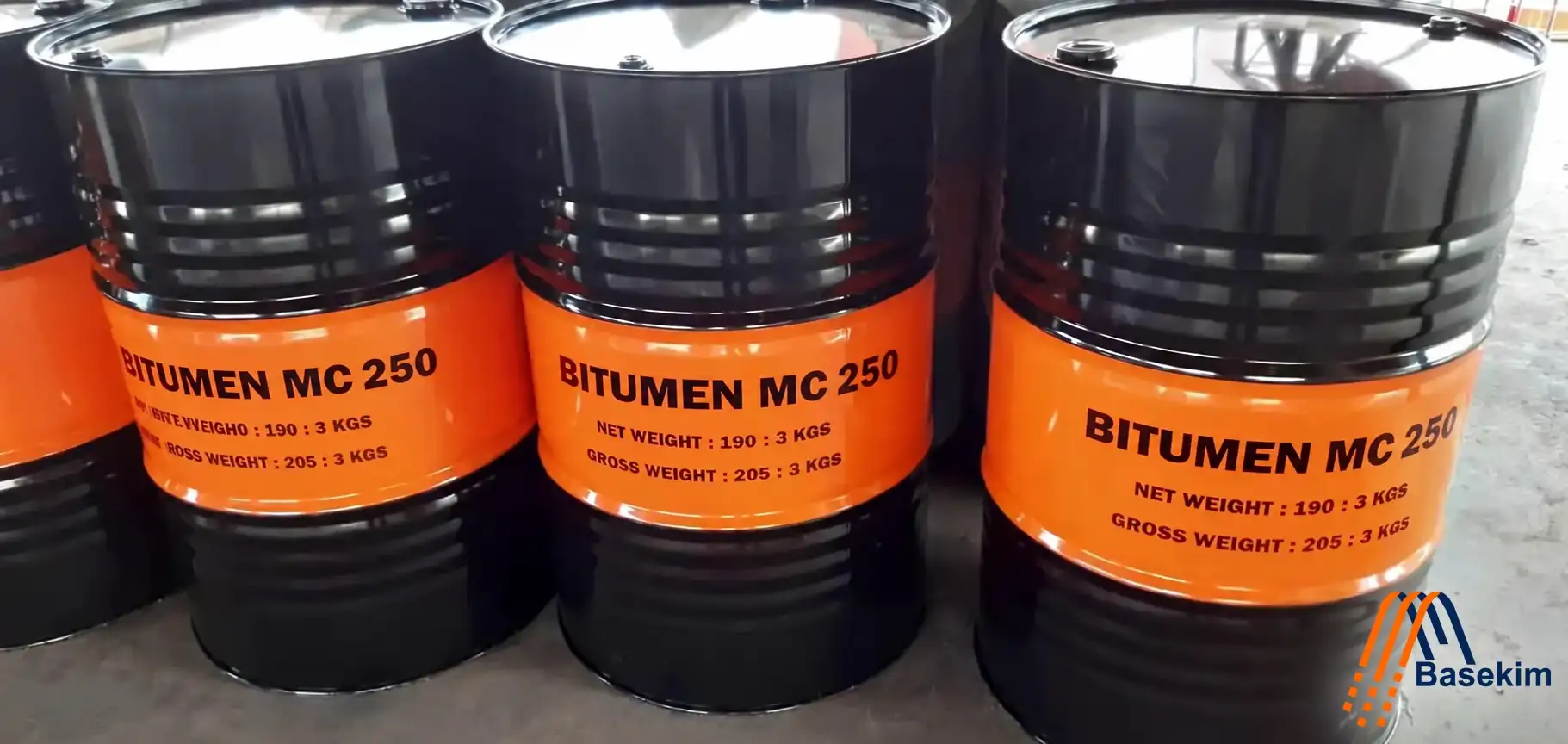
Cutback Bitumen MC 250 is a practical choice for road contractors, asphalt companies, infrastructure projects, and distributors that need a medium-curing binder with controlled viscosity and reliable application performance. Its working characteristics make it particularly suitable for pavement construction, surface treatment, patching, road maintenance, premix operations, and applications where conventional paving bitumen would require considerably higher heating. Buyers normally evaluate MC 250 according to viscosity, flash point, distillation behavior, residue quality, packaging, delivery terms, and compliance with the required standard. For commercial orders, selecting material with consistent batch quality and complete technical documentation can reduce application problems and help contractors maintain predictable performance throughout the project.
MC 250 Cutback Bitumen for Road and Infrastructure Projects
MC 250 belongs to the medium-curing family of cutback asphalt products. Producers manufacture it by reducing the working viscosity of asphalt binder with a suitable petroleum solvent. This process creates a material that contractors can spray, mix, distribute, or penetrate into aggregate more easily than conventional high-viscosity paving bitumen.
After application, the volatile portion gradually evaporates and leaves the asphalt binder behind. Therefore, contractors can achieve easier handling during placement while still obtaining the binding properties required after curing.
The designation MC 250 primarily relates to the viscosity range of the product. Under commonly referenced ASTM requirements, its kinematic viscosity at 60°C falls within the 250–500 mm²/s range.
This balance between workability and binder content makes MC 250 Bitumen suitable for projects where contractors require more body than lighter medium-curing grades but still need practical application without excessive heating.
Why Contractors Choose MC 250 Bitumen
Road construction projects require more than a binder that simply coats aggregate. Contractors also need controlled flow, predictable curing, strong adhesion, convenient application, and reliable storage characteristics.
MC 250 provides several commercial and operational advantages:
Controlled viscosity for easier application
Good coating of compatible aggregates
Useful penetration characteristics
Medium curing behavior
Reduced heating requirements compared with conventional paving bitumen
Reliable binder film after solvent evaporation
Suitability for several maintenance and pavement treatments
Convenient transportation in drums or approved bulk systems
Established testing methods for quality control
As a result, buyers commonly specify this grade for road construction and maintenance projects in regions where project conditions favor cutback asphalt technology.
Cutback Bitumen MC 250 Specification
A clear Cutback Bitumen MC 250 specification helps buyers compare quotations and confirm whether the supplied material matches project requirements.
A typical specification based on commonly used ASTM D2027 requirements includes:
| Property | Unit | Typical Specification |
|---|---|---|
| Kinematic Viscosity at 60°C | mm²/s | 250–500 |
| Flash Point, Tag Open Cup | °C | Min. 66 |
| Distillate to 225°C | Vol. % | Max. 20 |
| Distillate to 260°C | Vol. % | 5–55 |
| Distillate to 316°C | Vol. % | 60–90 |
| Residue from Distillation to 360°C | Vol. % | Min. 67 |
| Viscosity of Residue at 60°C | Pa·s | 30–120 |
| Ductility of Residue at 25°C | cm | Min. 100 |
| Solubility in Trichloroethylene | % | Min. 99 |
| Water Content | % | Max. 0.2 |
Actual contractual specifications should always follow the customer's purchase order, project standard, applicable national requirements, and latest batch certificate of analysis.
MC 250 Bitumen Viscosity
MC 250 Bitumen viscosity is one of the most important purchasing and quality-control parameters.
The commonly specified kinematic viscosity range at 60°C is:
250 to 500 mm²/s
This range gives the product enough fluidity for practical distribution while maintaining more consistency than lighter grades.
Viscosity directly influences pumping, spraying, aggregate coating, mixing, penetration, and application temperature. If viscosity becomes too high, contractors may struggle to distribute the material evenly. If it becomes too low, the binder may penetrate or flow more than the project requires.
For this reason, buyers should request the batch test report before accepting large-volume shipments.
MC 250 Bitumen Flash Point
The MC 250 Bitumen flash point is especially important for transportation, storage, heating, and job-site safety.
A commonly specified minimum Tag Open-Cup flash point for MC 250 is 66°C.
Because cutback products contain volatile petroleum components, contractors must control ignition sources carefully. Storage tanks, drums, pumps, heating equipment, and transfer systems should follow the appropriate safety procedures.
Operators should also consult the current Safety Data Sheet before handling the material.
Never treat the flash point as a recommended operating temperature. It is a safety-related test property, not an instruction to heat the product close to that temperature.
MC 250 Bitumen Density
Buyers also frequently search for MC 250 Bitumen density, particularly when calculating shipment volumes, tank capacity, consumption, or conversion between metric tons and liters.
However, density can vary according to the binder source, solvent composition, temperature, and production batch. Therefore, commercial buyers should use the density stated on the supplier's Certificate of Analysis or technical data sheet rather than relying on a universal value.
This approach becomes especially important when a project purchases MC 250 in bulk and calculates payment or consumption on a volume basis.
MC 250 Bitumen Uses
The main MC 250 Bitumen uses relate to pavement construction, maintenance, aggregate treatment, and road rehabilitation.
1. Prime Coat Applications
Contractors may use suitable cutback asphalt products as prime materials on prepared granular surfaces when project specifications allow them.
The fluid nature of the material helps it distribute over the surface and interact with the prepared base before subsequent pavement layers are installed.
Actual application rate should follow the pavement design, surface porosity, aggregate condition, climate, and project specification.
2. Road Surface Treatment
MC 250 can support selected surface treatment operations where contractors need asphalt binder to coat and hold aggregate particles.
Proper spray control remains essential because uneven binder distribution can cause inconsistent aggregate retention or excessive asphalt in localized areas.
3. Patch and Maintenance Work
Road maintenance teams can use suitable medium-curing materials in certain patching and repair systems.
Their workable consistency can simplify aggregate coating and placement where a conventional hot asphalt process is not the preferred construction method.
4. Premix Operations
Another common MC 250 Bitumen application involves premixing selected mineral aggregates with the binder.
The material spreads over the aggregate surface more easily than highly viscous asphalt cement. As curing progresses, the volatile portion leaves the mixture and the remaining asphalt binder provides cohesion.
5. Stockpile and Maintenance Mixes
Depending on local specifications and aggregate design, medium-curing cutbacks can also serve selected maintenance mixes that contractors prepare before final placement.
The exact formulation requires laboratory evaluation because aggregate absorption, grading, moisture, climate, and curing conditions can affect performance.
MC 250 Bitumen Application Considerations
Successful application depends on more than choosing the correct grade.
Before applying MC 250, contractors should evaluate:
Surface cleanliness
Aggregate grading
Aggregate moisture
Ambient temperature
Surface temperature
Required application rate
Spray equipment condition
Binder temperature
Expected curing time
Traffic opening requirements
Dust, loose particles, standing water, incorrect spray rates, and unsuitable weather can reduce performance.
For large road projects, contractors should conduct a trial section before full-scale application. A controlled field trial allows the project team to confirm spray rate, penetration, curing behavior, aggregate compatibility, and equipment settings.
MC 250 vs MC 70 Bitumen
The comparison between MC 250 vs MC 70 Bitumen mainly starts with viscosity.
MC 70 has a lower viscosity and flows more easily, while MC 250 has a thicker consistency. Therefore, the two grades do not always serve identical project conditions.
| Feature | MC 70 | MC 250 |
|---|---|---|
| Relative Viscosity | Lower | Higher |
| Fluidity | Higher | Lower |
| Binder Body | Lighter | Heavier |
| Penetration Ability | Generally Higher | More Controlled |
| Typical Selection | More penetrative applications | Heavier surface or mix applications |
| Handling | Easier flow | More body during application |
Project engineers should select the grade according to pavement design rather than simply choosing the cheaper option.
Aggregate type, surface porosity, required penetration, climate, application equipment, and curing conditions should guide the final decision.
Cutback Bitumen MC 250 Price
The Cutback Bitumen MC 250 price does not remain fixed throughout the year because several market variables influence production and export costs.
Major price factors include:
Bitumen Feedstock Price
The cost of the asphalt base directly affects the final product price. Changes in refinery output and regional bitumen markets can quickly influence quotations.
Petroleum Solvent Cost
MC 250 requires a suitable petroleum solvent. Therefore, changes in solvent prices also affect production cost.
Order Quantity
Bulk orders may provide better unit economics than small drum shipments because production, handling, inspection, and logistics costs spread across a larger volume.
Packaging
New steel drums, bulk tanker loading, and other approved packaging systems have different costs.
Drummed cargo usually requires additional material, labor, palletizing, container loading, and handling compared with some bulk shipments.
Destination and Freight
Ocean freight, inland transport, port charges, container availability, documentation, and destination regulations can significantly change the delivered cost.
Inspection and Documentation
Independent inspection, laboratory testing, certificates, legalization, special labels, and project-specific documentation may increase the final quotation.
For an accurate MC 250 quotation, buyers should provide the required quantity, packaging type, destination port, delivery term, specification, and requested inspection conditions.
How to Choose an MC 250 Bitumen Supplier
Selecting an experienced MC 250 Bitumen supplier becomes especially important for international projects because product quality represents only one part of the transaction.
A capable supplier should also manage production control, documentation, packaging, inspection, loading, and export logistics.
Before placing an order, buyers should request:
Technical Data Sheet
Safety Data Sheet
Certificate of Analysis
Packing details
Product photographs when required
Origin information
Loading capacity
Delivery schedule
Inspection options
Commercial quotation
Incoterms
Payment terms
For large orders, buyers may also request third-party inspection before or during loading.
Packaging and Export Options
Commercial MC 250 Cutback Bitumen shipments can use different packaging systems depending on order size and destination requirements.
Common options may include:
Steel Drums: Suitable for containerized export, smaller distribution networks, and customers without bulk storage facilities.
Bulk Supply: Suitable for large-volume projects that have appropriate storage tanks, unloading systems, and transportation infrastructure.
The final packaging option should consider local transport regulations, climate, unloading facilities, order quantity, and project consumption rate.
Every package should include clear identification and comply with applicable transport and handling requirements.
Storage and Handling
Store MC 250 in suitable closed containers or tanks designed for petroleum products.
Keep the material away from open flames, sparks, hot surfaces, and uncontrolled ignition sources.
During handling:
Use suitable protective equipment.
Avoid unnecessary vapor exposure.
Maintain controlled product temperatures.
Keep storage areas properly ventilated.
Follow SDS recommendations.
Prevent release into drains or waterways.
Use approved pumps and transfer equipment.
Follow local transport and environmental requirements.
Cutback materials contain volatile components, so proper safety procedures remain essential from loading to final application.
Quality Control Before Shipment
Commercial buyers should not rely only on the product name printed on a drum.
Quality control should verify key properties against the agreed specification.
Important tests can include:
Kinematic viscosity
Flash point
Distillation characteristics
Residue percentage
Residue viscosity
Ductility
Solubility
Water content
A batch Certificate of Analysis allows the buyer to compare actual production results with contractual limits before shipment.
For major infrastructure contracts, independent inspection can provide another level of verification.
Ordering Cutback Bitumen MC 250
A complete purchase inquiry allows the supplier to prepare a faster and more accurate quotation.
Include the following information when requesting an offer:
Product: Cutback Bitumen MC 250
Quantity: Required metric tons
Specification: ASTM or project-specific standard
Packaging: Drum or bulk
Destination: Port and country
Incoterm: EXW, FOB, CFR, CIF, or other required term
Inspection: If required
Delivery Schedule: Required loading period
Documentation: Any special project or customs requirements
Providing these details at the beginning reduces unnecessary correspondence and helps suppliers calculate the correct commercial offer.
The commonly specified kinematic viscosity of MC 250 at 60°C ranges from 250 to 500 mm²/s. Buyers should verify the actual batch result on the Certificate of Analysis.
Common applications include selected road surface treatments, pavement maintenance systems, prime-related work where project specifications permit it, patching, and premix applications.
Bitumen feedstock cost, petroleum solvent prices, order quantity, packaging, freight, destination, inspection, and commercial delivery terms all affect the final price.
A commonly referenced ASTM specification requires a minimum Tag Open-Cup flash point of 66°C. Buyers should always check the applicable project specification and batch test certificate.