

Bitumen 80/100 Supplier – High Quality Road Construction Bitumen
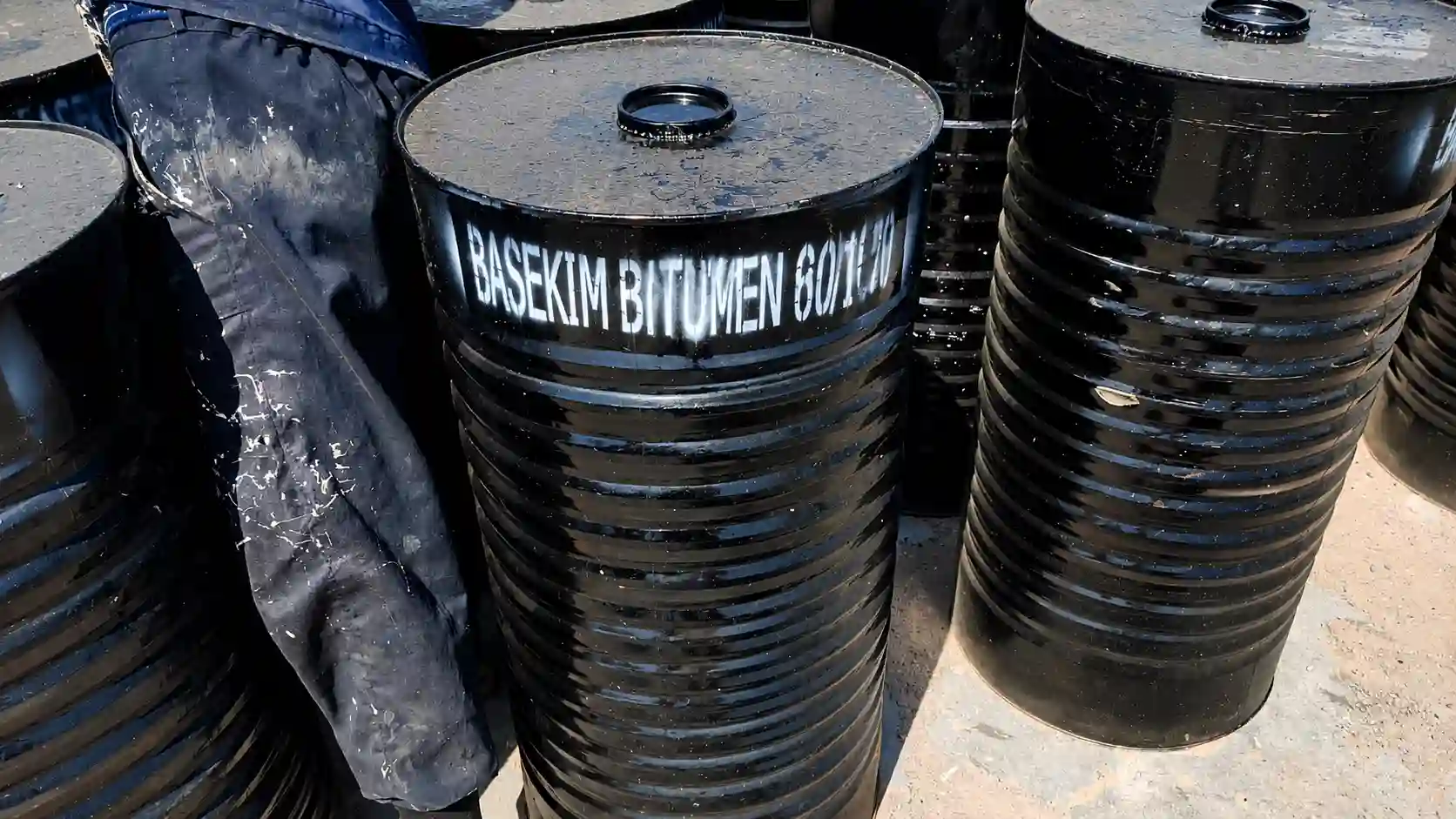
Bitumen 80/100 is a penetration-grade paving bitumen manufactured through the vacuum distillation and refining of crude oil. The designation 80/100 refers to its penetration value, measured according to ASTM D5, indicating that a standard needle penetrates between 80 and 100 dmm (0.1 mm) under controlled laboratory conditions. This penetration range classifies the product as a relatively soft paving bitumen that offers excellent flexibility and workability.
Compared with harder grades such as Bitumen 60/70, Bitumen 80/100 performs better in moderate and cooler climates where asphalt pavements require greater resistance to cracking caused by temperature changes and traffic movement. Its balanced combination of flexibility, adhesion, durability, and waterproofing performance makes it one of the most commonly used paving binders in road construction and infrastructure projects around the world.
As a leading UAE bitumen supplier, BASEKIM supplies premium-quality Bitumen 80/100 that complies with international standards and is available in various export packing options for customers worldwide.
What Is Bitumen 80/100?
Bitumen is a black or dark brown hydrocarbon material obtained from the refining of crude oil. It is composed primarily of high-molecular-weight hydrocarbons that provide excellent waterproofing, adhesive, and binding properties.
The penetration grading system is one of the most widely used methods for classifying paving bitumen. Under this system, Bitumen 80/100 has a penetration value between 80 and 100 dmm, meaning it is softer than Bitumen 60/70 and harder than Bitumen 120/150.
Because of this intermediate softness, Bitumen 80/100 provides:
- Better flexibility under traffic loading
- Reduced risk of pavement cracking
- Excellent coating of mineral aggregates
- Good resistance to water penetration
- Reliable long-term pavement performance
Its physical properties allow contractors to produce durable asphalt mixtures while maintaining good workability during mixing, transportation, and paving.
Key Features of Bitumen 80/100
Bitumen 80/100 is designed to deliver reliable engineering performance across a wide range of paving and construction applications.
Its major advantages include:
- High flexibility in moderate climates
- Excellent adhesion to mineral aggregates
- Stable viscosity during asphalt production
- Strong resistance to oxidation and aging
- Outstanding waterproofing capability
- Long pavement service life
- Easy pumping, heating, and handling
- Good resistance to moisture damage
- Consistent quality from refinery production
- Available in multiple export packing options
These characteristics make Bitumen 80/100 one of the preferred grades for road authorities, asphalt plants, contractors, and infrastructure developers worldwide.
Technical Specifications of Bitumen 80/100
| Property | Test Method | Typical Value |
|---|---|---|
| Penetration @25°C | ASTM D5 | 80–100 dmm |
| Softening Point | ASTM D36 | 42–50°C |
| Flash Point | ASTM D92 | >230°C |
| Ductility @25°C | ASTM D113 | >100 cm |
| Solubility | ASTM D2042 | >99% |
| Density | ASTM D70 | 1000–1020 kg/m³ |
Actual values may vary slightly depending on refinery production and customer requirements.
Density of Bitumen 80/100
The density of Bitumen 80/100 generally ranges between 1000 and 1020 kg/m³ under standard laboratory conditions.
Density is an important physical property because it directly affects:
- Transportation planning
- Storage capacity calculations
- Asphalt mix design
- Material consumption estimates
- Weight calculations during export
Consistent density indicates stable refinery production and helps asphalt manufacturers maintain uniform pavement quality throughout the project.
Manufacturing Process
Bitumen 80/100 is produced during the final stages of crude oil refining. After lighter petroleum products such as gasoline, kerosene, diesel, and lubricating oils are separated, the remaining heavy residue undergoes vacuum distillation.
The refinery carefully controls temperature, pressure, and processing conditions to achieve the desired penetration grade. Quality control laboratories then test the finished product for penetration, softening point, ductility, flash point, viscosity, and other key properties before shipment.
This controlled manufacturing process ensures consistent quality and reliable field performance.
Advantages in Asphalt Pavements
One of the main reasons engineers choose Bitumen 80/100 is its excellent balance between flexibility and durability.
Its softer consistency allows asphalt pavements to better absorb traffic stresses and minor ground movement without developing premature cracks. This makes the material especially suitable for:
- Urban road networks
- Residential streets
- Secondary highways
- Airport service roads
- Parking areas
When combined with high-quality aggregates and proper asphalt mix design, Bitumen 80/100 contributes to pavements with long service life and reduced maintenance costs.
Applications of Bitumen 80/100
Road Construction
Bitumen 80/100 is extensively used in highway construction, municipal roads, residential streets, rural roads, and airport pavements.
Its flexibility helps reduce thermal cracking while maintaining sufficient strength under vehicle loads.
Asphalt Production
This grade is widely used in:
- Hot Mix Asphalt (HMA)
- Warm Mix Asphalt (WMA)
- Asphalt base courses
- Binder courses
- Wearing courses
- Surface treatments
Its excellent aggregate adhesion helps improve pavement durability and reduce stripping caused by moisture.
Waterproofing
Bitumen 80/100 is commonly used in waterproofing systems for:
- Roofs
- Basements
- Foundations
- Tunnels
- Retaining walls
- Concrete structures
- Underground facilities
Its water-resistant properties create durable protective barriers against moisture infiltration.
Industrial Coatings
The material is also suitable for industrial protective coatings applied to:
- Steel pipelines
- Water pipelines
- Storage tanks
- Underground structures
- Marine facilities
- Steel foundations
These coatings help minimize corrosion and extend equipment service life.
Building Construction
Construction companies use Bitumen 80/100 in numerous building applications, including:
- Damp-proof courses
- Moisture barriers
- Insulation systems
- Expansion joints
- Concrete protection layers
Its excellent waterproofing characteristics help improve building durability.
Storage and Handling
Proper storage is essential to maintain product quality.
Recommended practices include:
- Store away from water contamination.
- Keep tanks clean and insulated.
- Maintain recommended heating temperatures.
- Avoid prolonged overheating.
- Prevent direct contact with flames.
- Use appropriate personal protective equipment during handling.
Maintaining proper storage conditions helps preserve the bitumen’s physical properties throughout its service life.
Quality Control
Before shipment, Bitumen 80/100 undergoes comprehensive laboratory testing to verify compliance with customer specifications and international standards.
Typical quality control tests include:
- Penetration
- Softening point
- Flash point
- Ductility
- Solubility
- Specific gravity
- Loss on heating
- Viscosity
- Water content
These tests ensure consistent quality for every production batch.
Bitumen 80/100 Price
The price of Bitumen 80/100 depends on several market variables, including:
- Global crude oil prices
- Vacuum Bottom (VB) cost
- Refinery supply
- Order quantity
- Packing method
- Shipping destination
- Ocean freight rates
- Exchange rates
- Seasonal demand
- Port charges
- Export documentation costs
Customers purchasing larger volumes often benefit from lower unit costs because transportation and handling expenses are distributed across more material.
For an accurate quotation, suppliers generally require the destination port, required quantity, preferred packing type, and delivery terms (FOB, CFR, or CIF).
Packing Options
BASEKIM supplies Bitumen 80/100 in a wide range of export packing solutions to meet different logistics and customer requirements.
Available packing includes:
- 180 kg new steel drums
- 180 kg reconditioned steel drums
- 300 kg jumbo bags
- 380 kg jumbo bags
- 1-ton jumbo bags
- Flexitanks
- Bitutainers
- Bulk vessels
- Heated tanker trucks
Selecting the appropriate packing depends on shipment volume, destination, transportation method, unloading facilities, and project requirements. Bulk shipments are generally the most economical option for large infrastructure projects, while drums and jumbo bags offer greater flexibility for smaller orders and destinations without bulk handling facilities.
Bitumen 80/100 performs best in moderate and relatively cool climates, where greater pavement flexibility helps reduce cracking.
The typical softening point is 42–50°C, measured according to ASTM D36.
The numbers indicate the penetration value measured according to ASTM D5. A penetration of 80–100 dmm means the bitumen has medium softness, providing good flexibility and workability.